USO Clubs in Spokane: A Soldiers Home Away From Home
As the Second World War raged on soldiers returning home on leave or based in the states needed recreational centers to destress. Black soldiers did not always feel welcome in USO clubs so separate USO facilities like the George Washington Carver Club were founded.
Text
When the United States entered the Second World War President Roosevelt felt a need to create a home-based organization to provide recreational activities for soldiers. The United Service Organization or USO was then founded and USO clubs began operating to be a “home away from home” for soldiers. Due to the city’s proximity to a major airfield and a Naval Training Center, Spokane needed such centers for the tens of thousands of soldiers coming into the region every year.
While the city had civilian founded centers that offered similar services since 1941, the first official USO Club in Spokane opened on 3rd and Monroe in 1942. It was the 1200th USO club to open in the United States. During its first year of operation, thousands of soldiers would go there to dance, drink, play games, read, write letters, or make phone calls.
There were three USO clubs in Spokane, two for white soldiers and one for African American servicemen. The USO’s official policy was to not operate segregated facilities; however, in segregated communities, the clubs would reflect their surroundings. In the nonsegregated clubs, many black soldiers still found notable tension when they participated in club activities. This led some cities to open separate clubs for the black soldiers, such as Spokane’s George Washington Carver Club. By 1943, there were nearly 200 USO clubs designated specifically for black soldiers.
The George Washington Carver Club officially opened on August 9th, 1943 on the corner of first and division and offered the same sort of recreation as the other USO clubs in town. Rose Malone the club director recruited over 100 local women to work as hostesses to dance and play games with the black soldiers in Spokane. Between the many dances and playing cards, the George Washington Carver Club offered an important respite for the black servicemen in the Inland Northwest.
With the inland northwest having facilities for every branch of the military, including a navy training center, two major airfields, and one of the busiest military hospitals in the country between the three clubs, there were nearly 2 million visitors throughout the war. After the end of the war, the USO clubs continued to operate for a short time but in December 1947 the three Spokane clubs closed along with the other clubs across the country.
Files
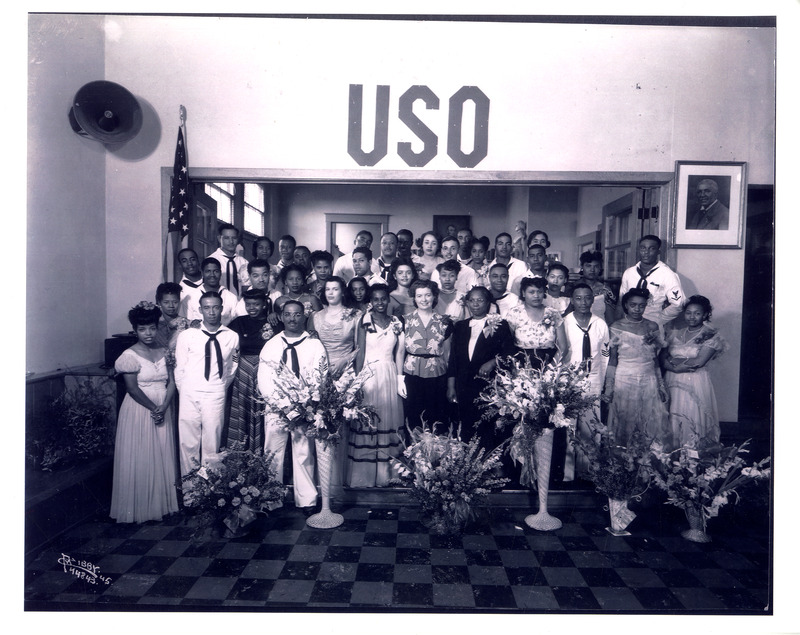
USO Function
Big dances held at the USO clubs in Spokane were often advertised in the local newspapers in the weeks leading up to the events. | Source: NWBP-L87-1,44843-045 The Eastern Washington State Historical Society, Northwest Museum of Arts and Culture | Date: 1945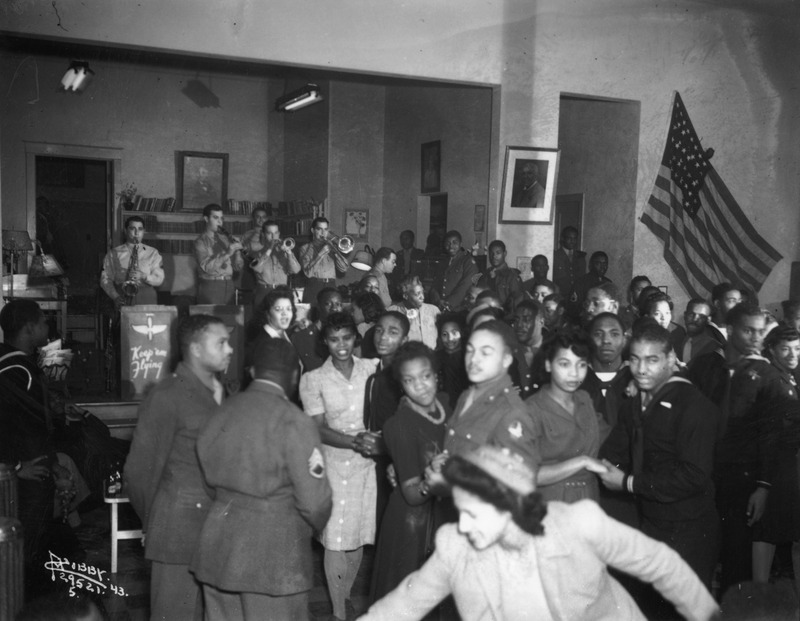
Dance at George Washington Carver Club
The USO clubs regularly held dances as events for the soldiers. Local women who volunteered at the clubs as hostesses to dance with the soldiers often held other jobs but viewed their work for the USO as a patriotic way to maintain their social lives. The band from Fort George Wright playing for the black servicemen would not have been a typical sight, as normally the racial roles would have been inversed. | Source: L87-1.29521C-43 The Eastern Washington State Historical Society Northwest Museum of Arts and Culture | Date: 1943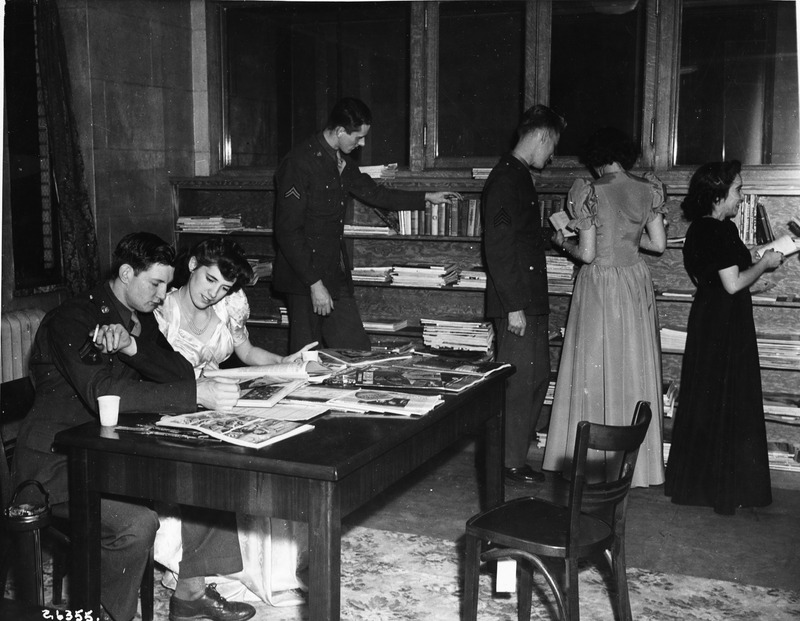
USO Club Library
Uso clubs provided many different forms of entertainment including libraries for soldiers who just wanted a quiet place to relax and read. The American Library Association assembled over 117 million books to give to USO clubs and military base libraries as part of the Victory Book Campaign. | Source: L87-1.26355-42 The Eastern Washington State Historical Society Northwest Museum of Arts and Culture | Date: December 31, 1942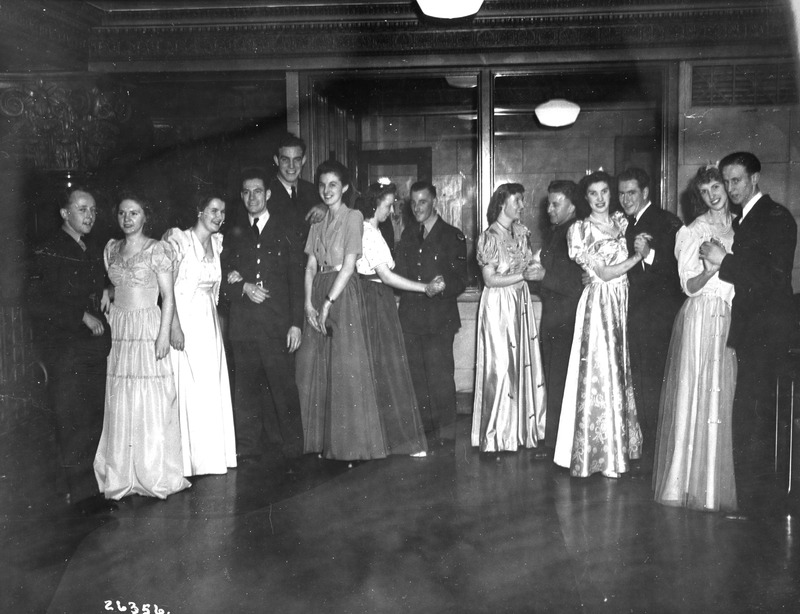
New Years Eve Dance
While the USO clubs believed that it was good for the morale of soldiers to interact with women the organization did its best to avoid becoming a dating service. Rules were in place to prevent the hostesses from dating the soldiers, they weren't allowed to give out phone numbers, and were encouraged to bring chaperones to dances and leave with those chaperones. | Source: L87-1.26356-42 The Eastern Washington State Historical Society Northwest Museum of Arts and Culture | Date: December 31, 1942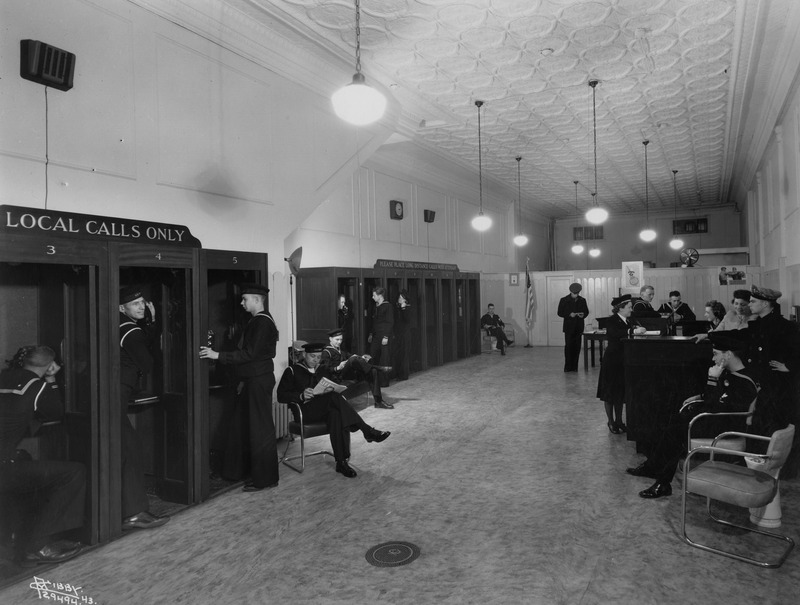
Telephone Center at USO Club
One service provided by the USO clubs was telephone centers so servicemen could place calls to friends and family around the country. | Source: L87-1.29494-43 The Eastern Washington State Historical Society Northwest Museum of Arts and Culture | Date: 1943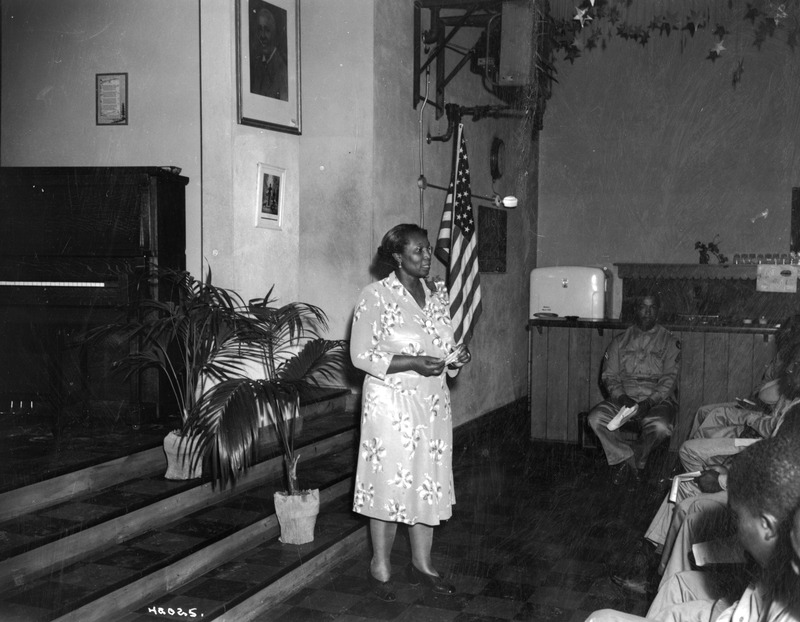
Rosa Malone Speaks at the George Washington Carver Club
Rosa Malone was the founder and director of activities for the Booker T Washington Center, which was a local black community center the provided many of the same services as the YMCA and YWCA in Spokane. During the War years, the Booker T Washington Center closed and Malone turned her focus to the George Washington Carver USO Club, serving as its director. Many of the USO clubs across the country were run by local women. | Source: L87-1.42025-44 The Eastern Washington State Historical Society Northwest Museum of Arts and Culture | Date: 1944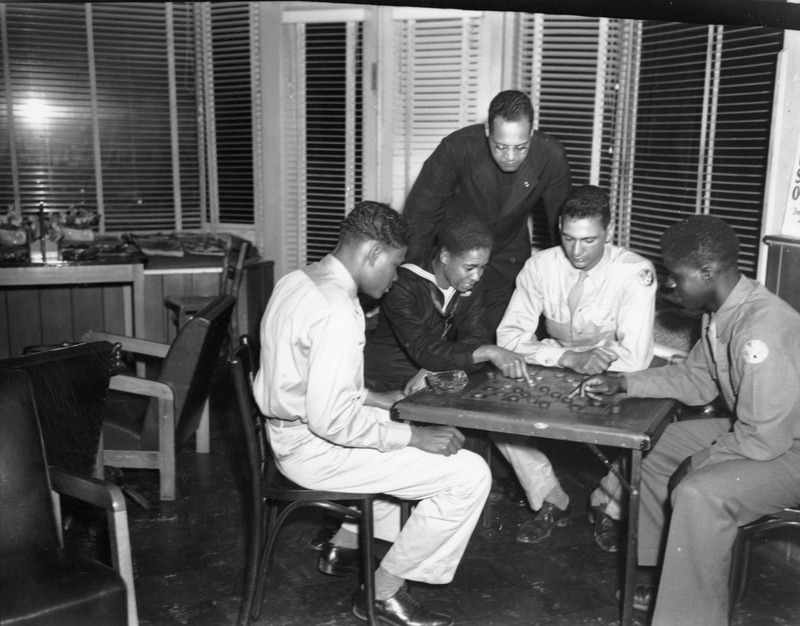
A Game of Checkers
Source: L87-1.44507-45 The Eastern Washington State Historical Society Northwest Museum of Arts and Culture | Date: 1945
Inside the Snack Bar
Officially the USO snack bars were allowed to sell the soldiers cigarettes but not alcohol. This didn't always stop the guests from finding a drink. | Source: L87-1.44508-45 The Eastern Washington State Historical Society Northwest Museum of Arts and Culture | Date: 1945