Prisoners of War Camps: Axis POWs in the Inland Northwest
As the Second World War progressed, Americans captured many Axis prisoners--particularly in Europe. What to do with these men?
Text
Prisoners of war camps were common in the Pacific Northwest. German and Italian prisoners captured in the European Theater of operations were often transported to the United States, many to our region. The most prominent local POW camp was in Farragut, Idaho.
German prisoners first arrived at camp Farragut in February of 1945. When arriving at camp they were forced by the war department to view films of concentration camps. It is reported that prisoners were seen to be holding handkerchiefs to their eyes and some bowing their heads in sadness while watching the footage.
For the German POW's they had a special camp called the “idea factory” which was set up to try ideas that involved different methods of teaching the prisoners about democracy. The camps would even have their own dedicated newspaper that prisoners could volunteer to work for.
These prisoners were also used for labor. POW labor was a cheap way to help farm agriculture and even build roadways. Prisoners arrived during the wartime labor shortage, so many were put to work. There were jobs in agricultural fields, gardening, and groundskeeping jobs, and some prisoners were moved to the west coast to work in shipyards and aircraft factories. Most prisoners wanted to work the agriculture jobs and earned 80 cents to a dollar a day for their work. There also was a group of POW volunteers that helped fight forest fires. It is said that without the labor of the POW's several important crops including sugar beets would have seen a shortage.
Files
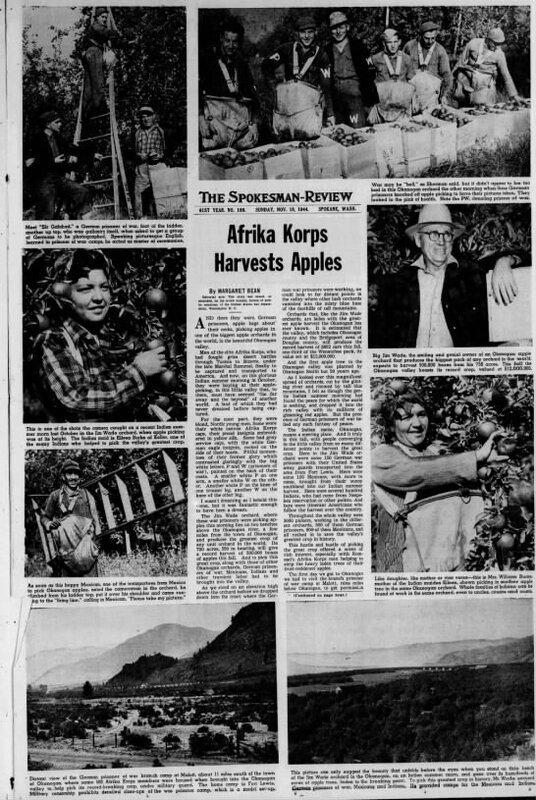
The Spokesman Review Article
A Spokesman Review journalist recounting his interactions with the German prisoners on their way back from their apple picking who's moods seem to be very joyful. | Source: newspaper.com, The spokesman Review | Date: November 19th, 1944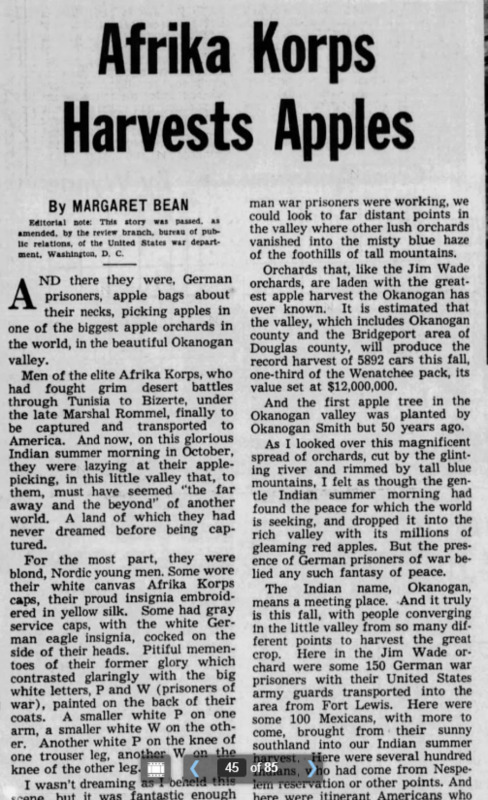
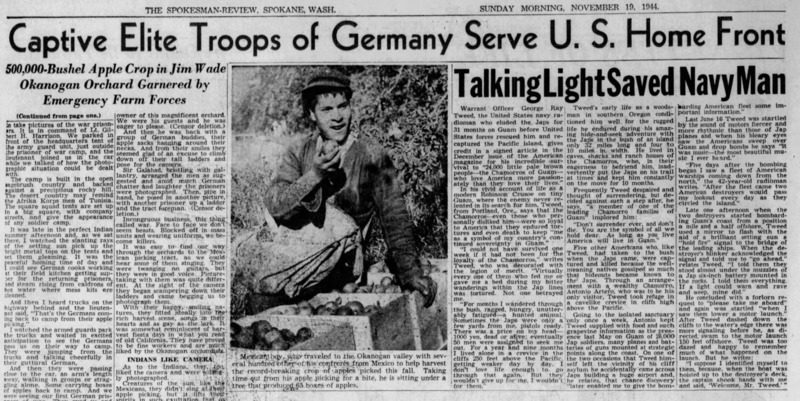
The Spokesman Review Article
in this article from the Spokesman Review discusses the German Afrika Korps who served under Marshal Rommel in the desert battles of Tunisia to Bizerte being captured and while prisoners had to now harvest apples. | Source: The Spokesman-Review -Image courtesy of Google News Archive. | Date: November 19th, 1944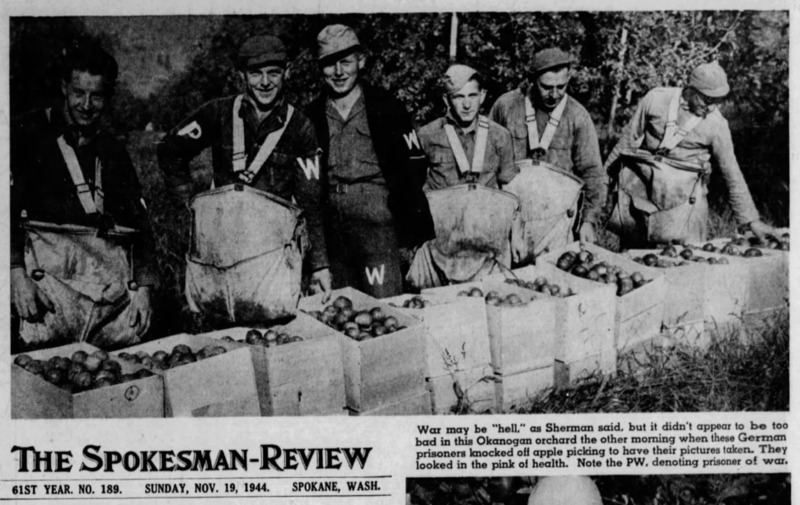
The Spokesman Review Article
prisoners of war were a very cost effective way to do manual labor which included farming, grounds keeping, gardening, etc. the prisoners would learn the ways to do this from the accompanying Mexican and Native American workers working these fields with them. | Source: newspaper.com, The Spokesman Review | Date: November 19th, 1944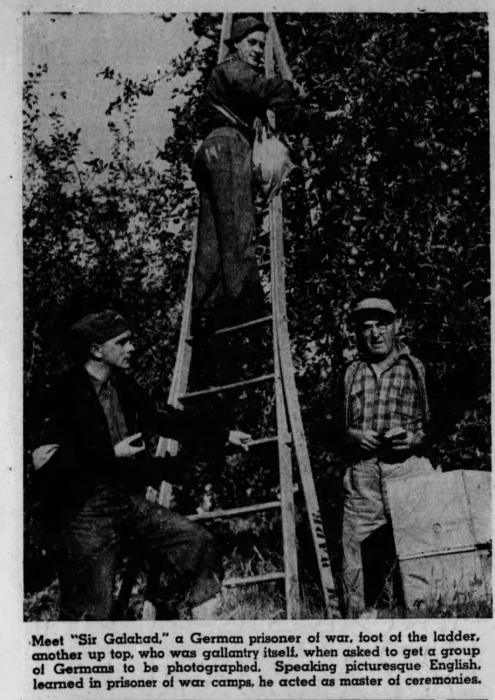
The Spokesman Review
the German workers were very photogenic and loved being in pictures as it would make them feel prideful and would actively pose for them. | Source: The Spokesman-Review, Courtesy of Google News Archive. | Date: November 19th, 1944