Discriminatory Housing in Spokane
In Spokane as in the rest of the United States, structural racism has taken many forms. Among the most consequential has been segregated housing. Restricting racial minorities to certain "redlined" neighborhoods served to prevent the targeted groups from building political power or inter-generational wealth. Though legally abolished by the Fair Housing Act of 1968, racial discrimination in housing continued to be written into legal documents for decades and shapes the city to this day.
The exhibits in this tour tell some of these stories, from the earliest days of Spokane when African Americans could live where they liked, to the rise of racially-restricted neighborhoods in the mid-20th century, to the long shadow that racial housing discrimination has on the very infrastructure of Spokane today, from the location of the interstate highway to neighborhood tree canopies. Follow along and learn some of the histories of our community that are too little talked about.
Stories 8

Historical African American Neighborhoods in Spokane: In Spokane's earliest decades, neighborhoods were segregated by wealth, not by race.
Before 1920, Spokane neighborhoods had no formal policies segregating housing by race. Successful Black Spokanites erected fine residents all over town, many of which still stand today.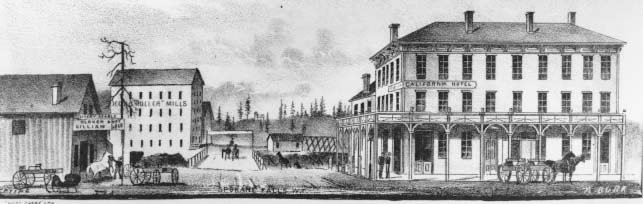
Early African-American Pioneers in Spokane
These early African-American pioneers helped to define the city's black community.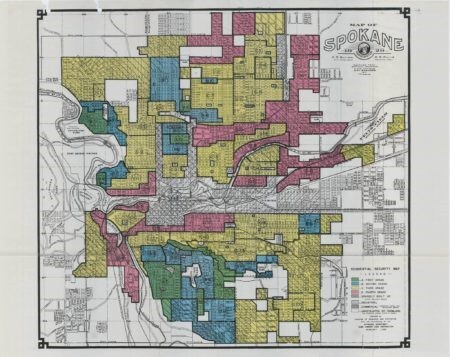
The Origins of Segregated Neighborhoods in Spokane: It Started in the Cemeteries
By the mid-20th century, racially segregated neighborhoods became common in Spokane. Some were segregated by the force of law.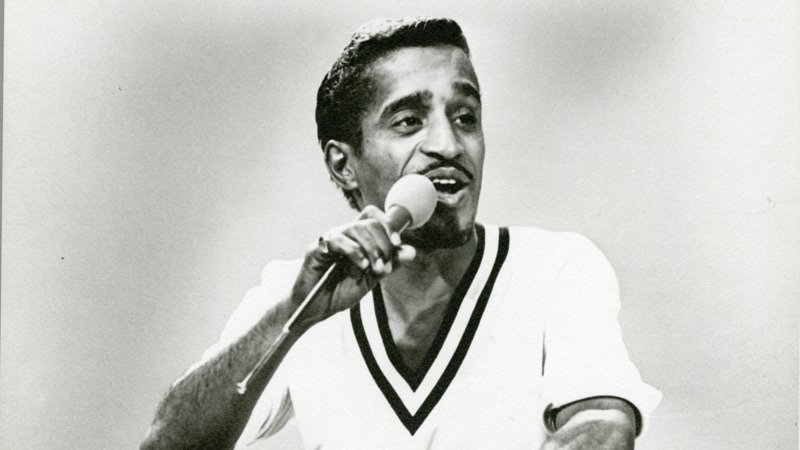
No Vacancy, Racial Bigotry Raises Its Ugly Head: Spokane had its own segregated public facilities in the Jim Crow era, and the Davenport Hotel was one such business.
Before making his claim to fame in 1945 the up-and-coming visited Spokane Washington where he was schedule to perform at a theater. The black musician Sammy Davis Jr. was refused a room at the Davenport Hotel in Spokane, Washington.
Airway Heights, Washington’s Unknown Sundown Town: One of Eastern Washington's newer communities was founded with racial restrictions
“Airway Heights celebrated its 50-year history June 14, 2005 and has Carl M. and Flora K. Lundstrom to thank for early city-building. The Lundstrom’s were the first to plat the land, donate parcels for initial city building and worked towards incorporation in 1955. Carl M. and Flora K. Lundstrom had worked in real estate in Seattle and Electric City in the early 1940s and owned Rocket Investment Company. Discussions with officials at Galena Air Depot (which later became Fairchild Air Force Base) showed the need for local housing”.
Spokane's Debate for Fair Housing: The 1968 Debates between Carl Maxey and James S. Black
In 1968, two powerful men squared off in a series of debates that would help to shape Spokane
The Segregated South Hill: William H. Cowles, Jr.'s push for an all-white neighborhood
How one prominent Spokanite used racial discrimination to promote his real estate empire.
Redlinging's Lingering Shadows: Housing discrimination shaped Spokane in ways that are still visible today
The East Central is a primary example of the ways that raciallly restricted housing policies altered a neighborhood.Tour curated by: The EWU Students in History 451: Digital Humanities, Fall 2022