<?xml version="1.0" encoding="UTF-8"?>
<feed xmlns="http://www.w3.org/2005/Atom">
  <title type="text">Spokane Historical</title>
  <updated>2026-02-12T21:42:40+00:00</updated>
  <generator uri="http://framework.zend.com" version="1.12.20">Zend_Feed_Writer</generator>
  <link rel="alternate" type="text/html" href="https://mail.spokanehistorical.org/"/>
  <link rel="self" type="application/atom+xml" href="https://mail.spokanehistorical.org/items/browse?output=rss2"/>
  <id>https://mail.spokanehistorical.org/</id>
  <author>
    <name>Spokane Historical</name>
    <uri>https://mail.spokanehistorical.org</uri>
  </author>
  <link rel="hub" href="https://pubsubhubbub.appspot.com/"/>
  <entry>
    <title type="html"><![CDATA[WWII Convalescent Hospital]]></title>
    <summary type="html"><![CDATA[<img src="https://mail.spokanehistorical.org/files/fullsize/27dc9636887c70461619618365a3e2c5.jpg" alt="Stowe House Officer&#039;s Quarters" /><br/><p>Training for combat at Fort George Wright gave way to recovery and recuperation during the Second World War.  In 1941, Fort Wright had changed hands and become part of the United States Army Air Force.  Being used as a base hospital for its first few years, in early 1944 Fort Wright was turned into a full fledged army convalescent center. </p><p>Soldiers and airmen who had been wounded in action fighting against Japan and Germany found a place of peaceful healing at Fort George Wright.  Aside from direct medical care supplied by the Army and Red Cross staff, the Fort was designed to heal the spirit of the wounded warriors as well.  </p><p>Music formed a core of the recovery process.  The 707th Army Air Force band was headquartered at Fort Wright, and played music for the sick and recovering.  Members of the band also volunteered their time to instruct patients in music.  This became so popular, that a mess hall was converted into a GI Music Conservatory, in which band members worked full time.  </p><p>Patients of a non-musical persuasion could take up classes in the arts.  Others choose to work at the bases' fully functional farm.  The sounds of livestock and the regularity of the agricultural lifestyle comforted those who had seen and done so much on the battlefields of Europe and Asia.  Many chose to keep up their skills at the fort's indoor rifle range.  And others learned aeronautical engineering by taking apart and re-assembling a B-17 Flying Fortress, which had been shipped to Fort Wright for that purpose.  </p><p>Gradually the convalescent program was brought to a close, and by 1949 the Fort George Wright had become George Wright Air Force Base.  It existed as an extension and surplus area of Fairchild AFB until its abandonment in 1957.   </p><p><em><strong><a href="https://mail.spokanehistorical.org/items/show/177">For more (including 7 images&#32;&amp;&#32;1 video) view the original article</a></strong></em></p>]]></summary>
    <published>2012-06-03T02:35:56+00:00</published>
    <updated>2026-02-12T21:42:32+00:00</updated>
    <link rel="alternate" type="text/html" href="https://mail.spokanehistorical.org/items/show/177"/>
    <id>https://mail.spokanehistorical.org/items/show/177</id>
    <author>
      <name>Lee Nilsson</name>
    </author>
  </entry>
  <entry>
    <title type="html"><![CDATA[World War II Airshow Catastrophe: Horror Rode the Skies Crashing Down to Earth]]></title>
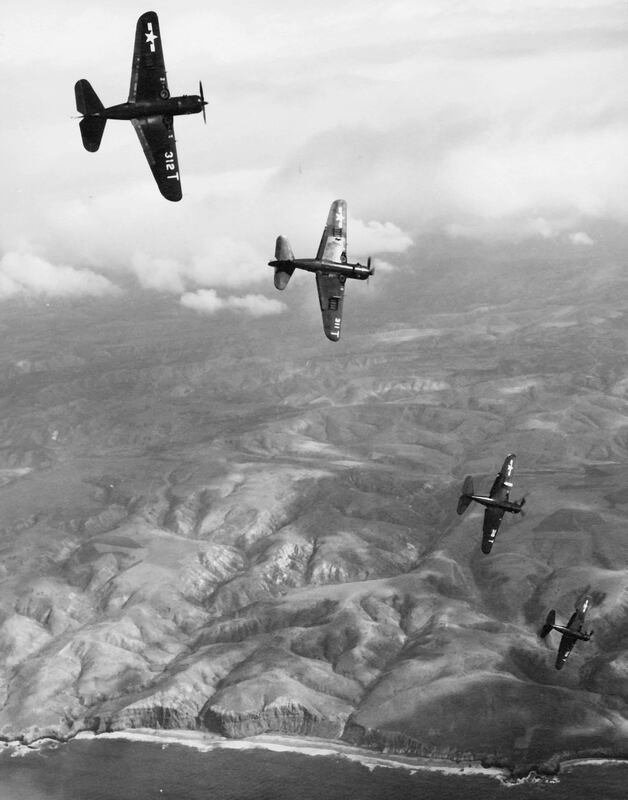
    <summary type="html"><![CDATA[<p><strong><em>For a crowd of 100,000 in the Inland Northwest a war show became a little too real when two airplanes crashed and exploded.</em></strong></p><img src="https://mail.spokanehistorical.org/files/fullsize/414d8315a9885ff493eebfd359606417.jpg" alt="Curtis A-25A Shrike" /><br/><p> During World War Two war shows, like airshows today, were a popular way the military drummed up a patriotic spirit in local communities. The shows demonstrated military equipment to awe viewers and show just what all of the homefront efforts had produced. </p><p>Spokanintes were looking forward to attending the “Stay On The Job” war show on the afternoon of July 23, 1944. The show was conceived by Spokane air service command deputy commander Colonel Paul Schidecker to encourage the workers of the Inland Northwest to keep working to produce military equipment and vehicles. By having mock firefights and air battles to show how effective the equipment was in use along with how much wear and tear they underwent, the SPASC hoped to curve the high turnover rate the defense industry was seeing. </p><p>With the show beginning at 3 P.M., a crowd of over 100,000 viewers gathered in a natural amphitheater north of Spokane to watch the parades, weapons demonstrations, aerial maneuvers, and bomb droppings. About half an hour after the show began, during the parade of military aircraft the crowd’s attention was called to three A-25 dive-bombers flying into sight. Moments later tragedy struck as two of the planes collided and fell to the ground, bursting into flames. The crowd initially believed the explosions to be a part of the show, which promised realism, but soon they began to realize just what they had witnessed. Crews rushed to control the fires, and after a 45-minute interruption, the show continued. The next day it was announced that four men died in the crash, two pilots and two engineers. </p><p>The deaths of these young men lived on, in a sense, in the 1956 science fiction film Earth vs. the Flying Saucers. Film crews recording the event caught the accident on camera and the footage of the two planes crashing and exploding became stock footage for Hollywood movies. </p><p><em><strong><a href="https://mail.spokanehistorical.org/items/show/862">For more (including 5 images) view the original article</a></strong></em></p>]]></summary>
    <published>2020-06-14T03:06:23+00:00</published>
    <updated>2026-02-12T21:42:39+00:00</updated>
    <link rel="alternate" type="text/html" href="https://mail.spokanehistorical.org/items/show/862"/>
    <id>https://mail.spokanehistorical.org/items/show/862</id>
    <author>
      <name>Devrick Barnett</name>
    </author>
  </entry>
  <entry>
    <title type="html"><![CDATA[Working Women of the Silver Valley]]></title>
    <summary type="html"><![CDATA[<img src="https://mail.spokanehistorical.org/files/fullsize/e7a1107e33b54f25361aa33f24051b95.jpg" alt="Molly &#039;B Damn" /><br/><p>Not all the wealth of Wallace came from the mines. Some came from bedrooms of the working women of the brothels like the Oasis or the Bi-Metallic.  As the miners extracted the ore from the ground, the second wave of workers arrived to mine the wages of the miners and provide an escape from the dark underworld in which they worked. The majority of the men who came to the mines were young, single, and hoping to become rich. The women who came to work above ground were had the same aspirations.</p><p>Western prostitutes were not necessarily victims.  According to historian Paula Petrik, who refers to some Montana prostitutes as "capitalists with rooms," there were two types of houses in which women worked. Large cities had Parlor Houses where young attractive girls were employed. They were elegant and catered to a higher class of men.  Out west women worked in the Volume Houses, where women were hired mostly for short periods of time by the Madams who ran them. Volume House gave the women more freedom and were more closely connected to the community than their larger city counterparts. This close connection to the community and the scarcity of marriageable women, meant that for many women prostitution was short-term and often led to marriage and a new, more respectable line of work.</p><p>Brothels in the Silver Valley started as far back as 1876. Maggie Hall, also known as Molly B'damn, was an Irish immigrant, who came to the Silver Valley and opened a brothel in Murray in 1884. Though well educated, the only work she could find was as a barmaid, and her first husband forced her into prostitution. In the Silver Valley Hall was known for her generosity and good deeds, including nursing the sick during the smallpox epidemic of 1886. Hall died from tuberculosis in 1888, and the whole town mourned her passing. Even today the town of Murray has Molly B'Damn Gold Rush Days days every summer.</p><p>By the late 1970's prostitution was reaching the end of the line in the Silver Valley. Mine closings, corruption charges and bribery allegations closed many of the brothels. By 1988 only one brothel remained open, the Oasis Room.  On June 23 1988, 150 F.B.I agents descended on Wallace raiding businesses over illegal gambling machines.  The eight ladies working at the Oasis were tipped off and fled before the agents arrived leaving everything behind including the shopping they had just brought in. That marked the end of prostitution in the Silver Valley. Today the Oasis is a museum and you can see it just as it was the day the women left--a snapshot of what brothels were like in this small mining town.</p><p><em><strong><a href="https://mail.spokanehistorical.org/items/show/521">For more (including 2 images) view the original article</a></strong></em></p>]]></summary>
    <published>2015-03-03T19:24:08+00:00</published>
    <updated>2026-02-12T21:42:36+00:00</updated>
    <link rel="alternate" type="text/html" href="https://mail.spokanehistorical.org/items/show/521"/>
    <id>https://mail.spokanehistorical.org/items/show/521</id>
    <author>
      <name>William Selanders</name>
    </author>
  </entry>
  <entry>
    <title type="html"><![CDATA[Workers&#039; Memorial : &quot;Making a Living Should Not Include Dying.&quot;]]></title>
    <summary type="html"><![CDATA[<img src="https://mail.spokanehistorical.org/files/fullsize/5d8c66bc2e7dfd687320d7e8e7713bbf.jpg" alt="Spokane Workers&#039; Memorial Ceremony April 28, 2012" /><br/><p>Since 1989, Spokane unions and workers have observed Workers' Memorial Day to remember those who have died on the job or as a result of work-related illness.  The Workers' Memorial here at Mission Park was dedicated on April 25, 1993.  Held each year on April 28, the anniversary of the Occupational Safety and Health Administration, the names of those who have died are read.  </p><p>President Richard Nixon signed the Occupational Safety and Health Act of 1970 after a decade of public outcry about the increase in occupational injuries and illnesses.  In urging the passage of the bill, members of the House of Representatives argued passionately.  "In only 4 years time, as many people have died because of their employment as having been killed in almost a decade of American involvement in Vietnam.  Over 2 million workers have disabled annually through job-related accidents," stated Representative Carl D. Perkins.  Representative William S. Broomfield argued, "When 75 out of every 100 teenagers now entering the workforce can expect to suffer a disabling injury sometime in his working career, I believe it is time that we face the goal of occupational safety and health not as a matter for partisan politics, but as a challenge to the science and technology of our country."  In addition to the loss of life, proponents of the bill added that in addition to the pain and suffering for workers and their families, the injuries cost billions of dollars in medical expenses, lost wages, and production.  </p><p>Spokane has long been a workingman's town.  It served as the hub of employment for mining, lumbering, railroads, and agricultural jobs, some of the most dangerous jobs.  After decades of struggle and organizing by unions, improvements have been made in working conditions.  However, deaths and injuries are still high.  In 2004 more than 56,000 workers died from workplace injuries and illnesses, and another 6 million were seriously injured.  </p><p>On April 28, 2012 people gathered here to remember "a young construction worker, a veteran firefighter, a grandmother working a sales job, a popular corrections officer - these were among the 69 people honored at 2012 Worker Memorial Day ceremonies around Washington state," said Jeff Johnson, President of the Washington State Labor Council.  </p><p><em><strong><a href="https://mail.spokanehistorical.org/items/show/245">For more (including 4 images) view the original article</a></strong></em></p>]]></summary>
    <published>2012-06-16T01:32:09+00:00</published>
    <updated>2026-02-12T21:42:33+00:00</updated>
    <link rel="alternate" type="text/html" href="https://mail.spokanehistorical.org/items/show/245"/>
    <id>https://mail.spokanehistorical.org/items/show/245</id>
    <author>
      <name>Renee Cebula</name>
    </author>
  </entry>
  <entry>
    <title type="html"><![CDATA[Willie Willey: Spokane&#039;s Nature Boy: Short on clothes but long on intrigue]]></title>
    <summary type="html"><![CDATA[<img src="https://mail.spokanehistorical.org/files/fullsize/6a2b0421ab001f95a2c0f28431752351.jpg" alt="Willey Ice Skating" /><br/><p>Short on clothes but long on intrigue, Willie Willey and his choice in dress (or lack thereof) made an impression on twentieth century Spokane.  Born in 1884, Willis (Willie) Willey grew up in Iowa but moved to Spokane in 1905. As a young twenty year-old man he worked odd jobs to support himself including farming, hunting, and fishing. In 1920 Willey purchased a forty acre plot of land just east of Hillyard to be his permanent home and sanctuary.</p><p>This ordinary life changed to extraordinary shortly after his move. There are many stories about why Willie stopped wearing clothes. Some say it was the death of his mother, others claim it was a dispute with his church, still others claim a failed romance. Whatever the reason, Willey stopped wearing traditional clothing in favor of khaki shorts. In all weather he stuck to this uniform only adding a green sun visor in the summer and rubber boots in the winter. </p><p>Spokane area newspapers began paying special attention to Willey because of his appearances in court wearing only khaki shorts and a long beard. He became involved in a dispute with a nephew over his property, his nephew suing him for $141.70. Willey refused to pay and in return the court ordered his land sold at a sheriff’s auction and Willey to serve jail time. This was just the beginning of his problems with the law. After serving jail time, and his property sold to another owner, Willey refused to leave the land he believed was rightfully his. The new owner took issue with this and continually contacted the police in an effort to remove Willey from the land. </p><p>In 1933 Willey decided to get out of Spokane for a time and travel across the country to the World’s Fair in Chicago. His plan was to sell photographs of himself along the way and at the fair. Willey was not met with open arms in many of the cities he visited, spending time in jail in both Portland and Chicago. Because of his arrest, Willey did not get to spend much time at the World’s Fair but he headed on to his home state of Iowa to visit family and hopefully escape further persecution.</p><p>Willey headed back to Spokane and to his former property in 1940. After turning his truck into a camper he left again in 1946 with his pets: one coyote, one bull snake, two dogs, five skunks, six white rats, and twelve guinea pigs. He again returned to Spokane in 1951, having added a few more pets to his entourage. They lived out of his camper while Willey went back to work attempting to recover the land he once owned. Willey was never able to regain ownership. </p><p>On May 13th, 1956 Willey died in a car accident at the age of 72. Known across the country as “Spokane County’s Wild Man” this eccentric individual's death was reported as far as Ottowa, Canada. </p><p>Long gone, Willie Willey has not been forgotten. In 1978, a large rock in the Spokane River was named Willie Willey Rock. And in 2015, a new mural at the corner of Division and Sprague features a smiling Willie-with a strategically-posed marmot in front of him, symbolizing Willie’s love of nature and covering what he would not.</p><p><em><strong><a href="https://mail.spokanehistorical.org/items/show/642">For more (including 3 images) view the original article</a></strong></em></p>]]></summary>
    <published>2016-05-11T18:58:03+00:00</published>
    <updated>2026-02-12T21:42:37+00:00</updated>
    <link rel="alternate" type="text/html" href="https://mail.spokanehistorical.org/items/show/642"/>
    <id>https://mail.spokanehistorical.org/items/show/642</id>
    <author>
      <name>Allie Honican</name>
    </author>
  </entry>
  <entry>
    <title type="html"><![CDATA[Willard Hotel]]></title>
    <summary type="html"><![CDATA[<img src="https://mail.spokanehistorical.org/files/fullsize/5e70f5b2be5b7c72ef94f2833f7c69ba.jpg" alt="The Otis Hotel" /><br/><p>The hotel located on the 1100 block of W. 1st Avenue has changed hands many times from when it was built in 1911.  In 1911 the Single Residence Occupancy hotel, or SRO, was named the Willard Hotel.  In 1921 the building changed hands and became the Atlantic Hotel.  By 1941 the building was known as the Milner Hotel.  In 1948 the Milner hotel became the Earle Hotel, and in 1956 the structure changed hands again to become the current Otis Hotel.  Throughout the tumultuous initial semicentury, this hotel remained true to its SRO roots. </p><p>SRO hotels were very important to Spokane's economic development, providing workers with affordable housing and private lodgings.  These hotels typically offered tenants a room to sleep in, usually with a closet and occasionally a sink.  Tenants would share a communal restroom for the floor of residents.  These hotels were innovative since they had only one tenant per room, which was common in luxury hotels of the time, however it was rare for working class hotels.  These hotels, and the Otis is no exception, typically had retail space on the ground floors which helped them to maintain profitability during times of lean tenants. </p><p><em><strong><a href="https://mail.spokanehistorical.org/items/show/170">For more (including 5 images&#32;&amp;&#32;1 video) view the original article</a></strong></em></p>]]></summary>
    <published>2012-05-31T23:41:45+00:00</published>
    <updated>2026-02-12T21:42:32+00:00</updated>
    <link rel="alternate" type="text/html" href="https://mail.spokanehistorical.org/items/show/170"/>
    <id>https://mail.spokanehistorical.org/items/show/170</id>
    <author>
      <name>Zachary Wnek</name>
    </author>
  </entry>
  <entry>
    <title type="html"><![CDATA[Wildlife on the South Hill Bluffs]]></title>
    <summary type="html"><![CDATA[<img src="https://mail.spokanehistorical.org/files/fullsize/4d61122f4430e75d632f16f2ac03d424.jpg" alt="Arrowleaf flowers on the Bluffs" /><br/><p>Like most of the landscape in Eastern Washington, the South Hill Bluffs in Spokane reveal the incredible influence of Lake Missoula’s ice dam that broke apart and surged through the area around 20,000 years ago. The layers of clay, silt, and rock, can be seen in the ridges of the Bluffs all along the valley.</p><p>Today, evidence of the flood waters can also be seen in fossilized vegetation as well as present day flora throughout the Bluffs. Native wildflowers include sunflowers, buttercups and yellow bells, as well as plants that provided rich sources of food to the local tribes in the form of roots, berries, herbs and seeds. Arrowleaf balsamroot, biscuitroot and bunchgrass are still seen in abundance along the trails that wind through the Bluffs from High Drive downwards.</p><p>Though the Spokane Tribe members that once used these resources were forcibly dispossessed and relocated by the federal government in the late 19th century, many Spokanes still visit and live in the area. The plants and flowers now provide food and shelter for various animals and birds. Just recently, Black bear scat was found along one of the trails and there is also occasional evidence of coyotes as well as the more familiar sightings of raccoons, skunks and porcupines. As more people use the trails, whether hiking or biking, it’s important to maintain a balance that allows dog walkers and nature lovers to peacefully coexist with native wildlife.</p><p>The Friends of the Bluffs help preserve this balance by keeping the trails clearly marked, cutting back overhanging or encroaching vegetation, and preserving the surrounding habitat. </p><p><em><strong><a href="https://mail.spokanehistorical.org/items/show/692">For more (including 2 images) view the original article</a></strong></em></p>]]></summary>
    <published>2016-12-14T23:13:43+00:00</published>
    <updated>2026-02-12T21:42:38+00:00</updated>
    <link rel="alternate" type="text/html" href="https://mail.spokanehistorical.org/items/show/692"/>
    <id>https://mail.spokanehistorical.org/items/show/692</id>
    <author>
      <name>Joanne Percy</name>
    </author>
  </entry>
  <entry>
    <title type="html"><![CDATA[Who Was Harlen Bretz?<br />
]]></title>
    <summary type="html"><![CDATA[<img src="https://mail.spokanehistorical.org/files/fullsize/4f4697992f128f75c1c3a2dda8430d05.jpg" alt="Dry Falls at Sun Lakes-Dry Falls State Park
" /><br/><p>J Harlen Bretz, whose given name was Harley J. Bretz, was born in 1882 in Michigan. The oldest of five children, Bretz had an early interest in astronomy and the natural environment that surrounded him on the farm where he grew up. Originally intending to be a missionary, he entered Albion College in 1901. His focus of study changed, however, and he graduated in 1905 with a degree in biology. A few years later, he earned his Ph.D. in geology from the University of Chicago.</p><p>In 1923, the Journal of Geology published Bretz’s paper, “The Channeled Scablands of the Columbia Plateau,” in which he presented his theory that the unique landscape was created by a massive flood originally called the Spokane Flood. The academic world of geologists was not ready for this controversial idea, however, and in 1927 the Washington Academy of Sciences invited him to a meeting to defend his hypothesis. After his presentation, six other presenters followed with scathing rebuttals of the flood theory in an effort to silence Bretz and his unconventional notion.</p><p>The biggest flaw with Bretz’s hypothesis was that he didn’t have a water source for his cataclysmic flood. The answer to that lay in the hands of another geologist, J.T. Pardee. Working for the U.S. Geological Survey, he had been studying ripple marks from Glacial Lake Missoula. It wasn’t until 1940 that Pardee was able to prove that Lake Missoula had gotten deep enough to break up the ice that had damned it and flowed to the only place it could, the scablands, thus giving Bretz’s theory credence.</p><p>Over the subsequent years, more evidence of the great flood, now thought to have been many floods, began to be discovered. In 1974, satellite imagery showing the dramatic landscape was the last bit of evidence that geologists needed to fully accept what Bretz had been saying for decades. The Geological Society of America awarded him the Penrose Medal in 1979, and a plaque was dedicated to him at Dry Falls State Park in Coulee City, Washington. J Harlen Bretz died in 1981 at the age of 98.</p><p><em><strong><a href="https://mail.spokanehistorical.org/items/show/855">For more (including 3 images) view the original article</a></strong></em></p>]]></summary>
    <published>2020-06-12T15:10:54+00:00</published>
    <updated>2026-02-12T21:42:38+00:00</updated>
    <link rel="alternate" type="text/html" href="https://mail.spokanehistorical.org/items/show/855"/>
    <id>https://mail.spokanehistorical.org/items/show/855</id>
    <author>
      <name>Jessica L. Bell</name>
    </author>
  </entry>
  <entry>
    <title type="html"><![CDATA[Whitworth Veteran Memorial: In Memory of Those who Died Protecting the U.S.: Here lies the memories of some of the soldiers that attended Whitworth]]></title>
    <summary type="html"><![CDATA[<img src="https://mail.spokanehistorical.org/files/fullsize/72bde656747097576a9a8be41091d502.jpg" alt="Whitworth Veterans Memorial " /><br/><p>Here Whitworth honors and remembers those who made the ultimate sacrifice in defense of the United States.   These Whitworth students were American heroes and deserve to be remembered.  To honor these brave men, please take a moment to learn more about each one of our Whitworth heroes. If you wish to know more details, there will be links that you are welcome to follow</p><p>Harry Olson:</p><p>Harry Olson graduated from Whitworth University in 1918 and was enlisted into the Army's 161st Infantry Division. Olson, was a good and kind-hearted man; he once said, "With malice toward none; with charity for all." Olson had a deep family bond and cared for those around him, he was never afraid to put his faith in God. After the war, his parents kept the letters exchanged between them; they treasured these letters to remember their 22 year old, loving and optimistic son who died for his country in WWI. </p><p>Frank L. Tiffany:</p><p>A man of many talents and trades. At Whitworth, Tiffany served as an editor for the Whitworthian, a member of the Glee Club, football player, a part of the orchestra, a member of the executive board, an English major, and Sunday school teacher; he graduated in 1924. As chaplain of the military, he was a savior to many. Tiffany counseled and ministered to thousands of Americans and Philippines in the Japanese prison camps of WWII. He served in Bataan and built an underground organization to get many needed supplies for his fellow prisoners. When the Japanese Secret Police found out, he was tortured and added to the list of prisoners to be sent to Japan. The ship was torpedoed on the way and sank. 9 out of 1770 prisoners survived, Frank Tiffany was not one of them. Tiffany lives on through his wife and daughter who lived and live in Cheney, WA.</p><p>Tom Sachi Haji:</p><p>Tom Haji was a Japanese-American who was loved by many friends and was involved with many things at Whitworth. He majored in pre-engineering at Whitworth College. After Pearl Harbor, Haji was debating on if he should go to school or not. His ethnicity has never haltered him before this moment. His friends eagerly coaxed him into coming back to school. He was expected to graduate in 1947. Later that year, Haji and his family were forced into an American Japanese camp in Idaho. It was here that he joined the army as part of the 442nd. Haji was part of the Italian Campaign and the spring 1945 offensive in Italy. His Japanese ethnicity did not stop him from becoming an American hero, he died in the offensive at 20 years old.</p><p>Forrest P. Ewens:</p><p>Forrest Ewens was one of the few kinds of people that his smile would seemingly light up the room. He had courage and faced things head on with unwavering determination, the good and the ugly. At Whitworth he was a loved to many, an athlete and a History major. Fellow Whitworthians praised him for his leadership and unwavering determination as the Track team's captain. Ewens was in Afghanistan during Operation Enduring Freedom when an Improved Explosive Device (IED) hit his truck. The blow was a fatal one to Ewens and one other comrade. Forrest died at 25 years old, he lives through his loving wife and identical twin, Oaken Ewens. </p><p>Ralph Goodsell </p><p>Ralph Goodsell attended Whitworth from 1939-1943.  He was well-known among students and involved with the Whitworthian and with school plays. Ralph Goodsell participated in the Whitworth Players, which were a small group of actors. During his time working with the Whitworthian, he worked as a reporter. The next year , Goodsell worked as the VP of the French club. After that, he served as an ASWC (Associated Students of Whitworth College) social committee member and as an assistant Business manager for Natsihi.  </p><p>Ralph Goodsell served in the Army Air Corps. In-route from Colorado Springs to Reno, eleven airmen, including himself died when they struck a mountain about 36 miles west of Austin, Nevada. </p><p>Paul Okert</p><p>Paul Okert grew up in Spokane and attended Lewis and Clark High School before coming to Whitworth</p><p>Paul Okert served in the Army; he was a part of the 21st Armored Infantry Battalion which was within the 11th Armored Division. One of the significant places that they served was the Battle of the Bulge, and which was when Paul Okert died on January 14, 1925.</p><p>The Battle of the Bulge was one of the biggest turning points for the Allied invasion of Nazi Germany. US troops dug into the Ardennes forest that covers Belgium and Luxembourg, held off the largest Nazi counterattack and opened the way to Germany. The long battle started on December 16, 1944 and lasted until January 25, 1945.</p><p><em><strong><a href="https://mail.spokanehistorical.org/items/show/801">For more (including 4 images) view the original article</a></strong></em></p>]]></summary>
    <published>2018-11-30T01:16:14+00:00</published>
    <updated>2026-02-12T21:42:39+00:00</updated>
    <link rel="alternate" type="text/html" href="https://mail.spokanehistorical.org/items/show/801"/>
    <id>https://mail.spokanehistorical.org/items/show/801</id>
    <author>
      <name>Keaton Oberlander</name>
    </author>
  </entry>
  <entry>
    <title type="html"><![CDATA[Whitworth University Fieldhouse: A House For Indoor Sports: Current home for the Pirates basketball and volleyball teams]]></title>
    <summary type="html"><![CDATA[<img src="https://mail.spokanehistorical.org/files/fullsize/53495a2b4b09f05d00f34868a0e7b519.jpg" alt="Whitworth&#039;s Center for Indoor Athletics" /><br/><p>The official announcement came in late July of 1961; Whitworth College was getting a fieldhouse. Dr. Frank F. Warren, president at the time, broke the exciting news to the college after a luncheon in which Mr. C. Davis Weyerhaeuser of Tacoma, WA, a trustee of the school, announced his intent to donate necessary funds for this new facility. C. Davis Weyerhaeuser was the grandson of the timber baron, Frederick Weyerhaeuser.  When asked about his donation, Davis said, “I feel that Whitworth College has a unique opportunity of training Christian young people to be coaches and teachers in our schools.” The enthusiasm for  this announcement was felt not only by members of the members of the college, but also by many throughout the Spokane community.   When making the announcement Dr. Warren said, the Fieldhouse would also “be a great asset in developing and promoting athletics in the entire Spokane area… it could provide an opportunity for high school students in the Spokane area to carry on indoor track meets.” </p><p>Construction was finished on the Fieldhouse by October 1962,  Davis Weyerhaeuser presented symbolic keys of the building to both Dr. Warren and the Mayor of Spokane, Neal R. Fosseen. </p><p>The community welcomed the addition of the new Fieldhouse with enthusiasm. As the years went by more elements were added which included a basketball facility, batting cages for baseball, a golf simulator and a dance studio.</p><p>During the past three decades, the men's basketball and women's volleyball teams have had remarkable success.  The basketball team has won the conference championship fifteen times since 1990.  In 1996, the men finished runner-up in the national championship for Division II of the NAIA.   The volleyball team has won the conference championship ten times since 1990.  </p><p><em><strong><a href="https://mail.spokanehistorical.org/items/show/782">For more (including 3 images) view the original article</a></strong></em></p>]]></summary>
    <published>2018-08-28T17:24:16+00:00</published>
    <updated>2026-02-12T21:42:39+00:00</updated>
    <link rel="alternate" type="text/html" href="https://mail.spokanehistorical.org/items/show/782"/>
    <id>https://mail.spokanehistorical.org/items/show/782</id>
    <author>
      <name>Tallie Carlson&#13;
</name>
    </author>
  </entry>
  <entry>
    <title type="html"><![CDATA[Whitworth Aquatic Center: A legacy of great swimmers]]></title>
    <summary type="html"><![CDATA[<img src="https://mail.spokanehistorical.org/files/fullsize/7ef8d519b5f4e1ed0538f94334ca8b8f.jpg" alt="Whitworth Aquatic Center" /><br/><p>Built in 1984, the Aquatic Center is home to Whitworth's men's and women's swimming teams.  The pool consists of six lanes that are forty yards long.  The pool has been the host to the 1986 NAIA championship,as well as the Northwest Conference championships on four different occasions,</p><p>Plans for the swimming pool had been made as early as the 1960s.  . Finally in 1983, a ground breaking ceremony took place. A private donor contributed nearly $1.7 million for just the swimming pool, which led to a successful bid for the 1986 NAIA swimming and diving championships which were co-hosted with Eastern Washington University. </p><p>Whitworth has assembled a remarkable swimming tradition under coaches Tom Dodd and Steve Schadt.  They have led the Pirates to numerous conference championships and have coached scores of all-Americans.</p><p><em><strong><a href="https://mail.spokanehistorical.org/items/show/796">For more (including 2 images) view the original article</a></strong></em></p>]]></summary>
    <published>2018-10-31T22:29:27+00:00</published>
    <updated>2026-02-12T21:42:39+00:00</updated>
    <link rel="alternate" type="text/html" href="https://mail.spokanehistorical.org/items/show/796"/>
    <id>https://mail.spokanehistorical.org/items/show/796</id>
    <author>
      <name>Zach Caraway </name>
    </author>
  </entry>
  <entry>
    <title type="html"><![CDATA[Whitten Block]]></title>
    <summary type="html"><![CDATA[<img src="https://mail.spokanehistorical.org/files/fullsize/d0c96141f7a150172d8401c701928bd6.jpg" alt="The modern Whitten Block." /><br/><p>Leydford B. Whitten (commonly refered to as L.B. Whitten) moved from Virginia to Spokane County in 1880 after having initially moved west to The Dalles, Oregon.  L.B. Whitten was a curious man who was trained as a master carpenter before leaving Virginia but was always pursuing education and business.  In 1881 he built a wood frame building which served as a pharmacy until 1888.   By 1887 L.B. Whitten called himself Dr. L.B. Whitten and printed bills to that effect, although no proof of this degree has been found.  In 1890 the Whitten Block was built as it stands today.  The Whitten Block was one of the first buildings constructed after the great Spokane fire of 1889. It was home to many prominent members of society people who weren't as fast to rebuild, such as Louis Davenport.  L.B. Whitten continued to buy downtown and farm real estate and became very well known in real estate circles throughout Spokane.</p><p>In 1888 L.B. Whitten married Georgia J. Ballou, who was one of Spokane's earliest female physicians.  Georgia J. Ballou had earned a degree in medicine from the Women's Medical College of Philadelphia.  Georgia and L.B. had four children, three of which survived to adulthood.  Paul, the eldest son, helped L.B. run his real estate business.  By 1903, Georgia and L.B. had divorced, granting Georgia ownership over the Whitten Block.  Georgia managed the apartments until she died in 1950.</p><p><em><strong><a href="https://mail.spokanehistorical.org/items/show/172">For more (including 4 images&#32;&amp;&#32;1 audio file) view the original article</a></strong></em></p>]]></summary>
    <published>2012-06-01T01:24:30+00:00</published>
    <updated>2026-02-12T21:42:32+00:00</updated>
    <link rel="alternate" type="text/html" href="https://mail.spokanehistorical.org/items/show/172"/>
    <id>https://mail.spokanehistorical.org/items/show/172</id>
    <author>
      <name>Zachary Wnek</name>
    </author>
  </entry>
  <entry>
    <title type="html"><![CDATA[Whistalks Way: Fort George Wright Drive Renamed Whistalks Way ]]></title>
    <summary type="html"><![CDATA[<p><strong><em>After Colonel Edward Steptoe's defeat by local Native tribes, Colonel George Wright was sent to avenge the U.S. military. Wright's murderous rampage resulted in a street sign memorial in his name. Prof. Margo Hill contributed to a protest that resulted in renaming the street in 2020 as Whistalks Way. </em></strong></p><img src="https://mail.spokanehistorical.org/files/fullsize/7acd11d918e6355397855bd780af255b.jpg" alt="Whistalks Way signage changed in 2020 following Spokane City Council decree" /><br/><p>In 1858, tensions between the white settlers and the native population grew in the Palouse. In May of 1858, Col. Edward Steptoe led an expedition meant to end at Fort Colvile. His plan was to suppress Indian resistance. Steptoe and his men were ill equipped for battle, though, being small in number and carrying outdated weapons. He and his soldiers encountered an overwhelming force of warriors from local tribes, which ended in his retreat to Fort Walla Walla, Washington. After his defeat at the Tohotonimmee battlefield, at the present-day Steptoe Butte, Colonel Wright was sent to restore order. </p><p>Colonel Wright's invasion of the Spokane Valley was so  forceful and extreme that the Native resistance was immediately overwhelmed. On September 8, 1858, Wright slaughtered hundreds of Indian horses and demolished the tribe's food supply and economy. During his crusade, Wright also destroyed crops and food stores. He pronounced judgment </p><p>upon and hung many Indians whom he considered to be insurgents. Wright's battles against the Spokane, Coeur d’Alene, Palouse, and Yakama tribes culminated in a final victory at the new Fort Spokane, which was formally renamed Fort George Wright in 1899. </p><p>In Spokane, Washington, a street running alongside present-day Spokane Falls Community College was named Fort George Wright Drive in commemoration of Wright's military accomplishments. Margo Hill, a lawyer, Eastern Washington University Urban Planning professor, and member of the Spokane Tribe of Indians, became a spokesperson and contributed efforts to change the street name. In 2020, Hill united with African Americans, Asians, Muslims, Natives, and whites to conduct a protest march. On December 14th, 2020, the Spokane City Council unanimously approved the change and the street was officially renamed.</p><p>The name accepted by all of those concerned was Whistalks Way. The name honored the daughter of Chief Polatkin and the wife of Qualchan. Whis-talks was a Native American warrior that fought in combat in 1858. She "rode alongside her husband into battle and carried the medicine eagle feather staff into the U.S. military post to parley," Margo Hill wrote later. After Qualchan was hanged, Whis-talks and Lokout, Qualchan's half-brother, escaped Wright's grasp. They lived out their lives as domestic partners near the Spokane and Columbia rivers . Not only was the name change meant to honor the Native American warrior, but to honor Native American women in general.</p><p>After the successful change of the street name, Margo Hill wrote the article that exhibits her belief that the actions of George Wright in 1858, were hate crimes against Native American people. She explains, in her article </p><p>that the city resolution pronounced Wright's name a "continual stain" because of his acts of terrorism and genocide. In her opinion, Wright went beyond his duties as a general by murdering Indigenous peoples and destroying supplies that led to the disruption of their economy. Hill believes Wright intentionally engaged in terrorist acts against the Spokane, Coeur d’Alene, Palouse, and Yakama tribes. </p><p>Because of the successful efforts of the Spokane Tribe of Indians and other protestors, the city of Spokane now “honors the history of the original inhabitants, the Sp̓oq̓ínš, and their relationship to their sacred place. With ‘Whistalks Way,’ we honor women warriors and tell their story; we sing the songs of our ancestors and work to empower the next generation of Indigenous people,” Hill wrote. If you are driving near Spokane Falls Community College and see the street sign, remember the history and the struggles for change that resulted in Whistalks Way.</p><p><em><strong><a href="https://mail.spokanehistorical.org/items/show/935">For more (including 4 images) view the original article</a></strong></em></p>]]></summary>
    <published>2022-12-14T18:54:46+00:00</published>
    <updated>2026-02-12T21:42:40+00:00</updated>
    <link rel="alternate" type="text/html" href="https://mail.spokanehistorical.org/items/show/935"/>
    <id>https://mail.spokanehistorical.org/items/show/935</id>
    <author>
      <name>HarleyQuinn Wahl</name>
    </author>
  </entry>
  <entry>
    <title type="html"><![CDATA[What Happened to Saltese Lake?]]></title>
    <summary type="html"><![CDATA[<img src="https://mail.spokanehistorical.org/files/fullsize/3f86a36b85d5b5a9fc0e62140f4d671e.jpg" alt="Peter Morrison, circa 1890" /><br/><p>Most Spokane-area residents are familiar with Liberty Lake near the Idaho-Washington border, but few are aware that there once existed an even larger lake only a few miles west of Liberty Lake. </p><p>Saltese Lake (named after Coeur d' Alene Chief Andrew Seltice who once resided near the lake) was completely drained in the 1890s by Valley pioneer Peter Morrison who homesteaded the area that included Saltese Lake. Morrison and crews of his hired laborers spent years trenching several canals to drain the lake in order to expose the lake bed to grow what he felt would be the best Timothy Hay in the Northwest. Morrison's idea is representative of how American and European settlers transformed an agriculturally-inhospitable region into an economically profitable enterprise.</p><p>Starting in 1894, Morrison went to work draining Saltese Lake. He hired crews of laborers to perform the duty and they used horse teams that pulled the "fresno," which was a bucket-like scoop used to dig the canals. The process was long and arduous as several canals were trenched, totaling nearly 10-miles in length. By 1900, Morrison's workers were finished and in a matter of weeks there remained nothing of Saltese Lake except for a small amount of marshy lake bottom.</p><p>The main drainage canal, which still helps drain the lake to this very day, is known as Saltese Creek. It flows into a small body of water directly behind Central Valley High School known as Shelley Lake, which was formed as a result of the lake's initial drainage. Several other smaller canals still surround the west side of the former lake. Much of the east side of the lake is maintained as the Saltese Uplands Conservation area, and the marshy lake bottom that could not be drained is in the works of being turned into a protected wetlands area by Spokane County.</p><p>The Morrison family still live on their ancestor's original homestead property and Timothy Hay is still harvested on the farm that was once a lake. The hay grown on the Morrison farm is still considered to be some of the best of its kind in the region. </p><p><em><strong><a href="https://mail.spokanehistorical.org/items/show/559">For more (including 6 images) view the original article</a></strong></em></p>]]></summary>
    <published>2015-04-18T18:53:40+00:00</published>
    <updated>2026-02-12T21:42:36+00:00</updated>
    <link rel="alternate" type="text/html" href="https://mail.spokanehistorical.org/items/show/559"/>
    <id>https://mail.spokanehistorical.org/items/show/559</id>
    <author>
      <name>Robert M. Lambeth</name>
    </author>
  </entry>
  <entry>
    <title type="html"><![CDATA[What Happened to Allan C. Powell: The Lost Powell Son]]></title>
    <summary type="html"><![CDATA[<p><strong><em>Alan Campbell Powell flew a dangerous mission over enemy territory in World War II--and never returned</em></strong></p><img src="https://mail.spokanehistorical.org/files/fullsize/f522bd69d0f67c5d711f0addab2243aa.jpg" alt="Allan Campbell Powell" /><br/><p>Among the many Spokanites who answered the call to service in World War Two was Allan C. Powell, son of William Weaver Powell and Helen Powell--formerly Helen Campbell.</p><p>The second son of the wealthy Powell family, 1st. Lt. Allan C. Powell flew as a B-17 Flying Fortress pilot during World War II. Powell was a student at the University of Washington when the US entered into World War 2 and he decided to leave the university and enlist in the United States Army in 1942. “I haven’t any job I can return to when the war is over, I’m liable to be drafted at any day now, and I don’t have enough college credits to get a commission, I sure made of mess of things,” he wrote his father at the time.</p><p>Powell learned to fly B-17 bombers and was given his first crew at Geiger Field in Spokane, Washington. He was assigned to the 410th Bomb Squadron, part of the 94th Bomb Group, and was based in England. Powell flew nine missions with the squadron, dropping bombs on targets in Germany and Norway. He participated in the infamous second raid on Schweinfurt known as Black Thursday where 60 US B-17s were shot down and 650 American soldiers died. Flying in B-17s was dangerous, the crew of ten men had a less than 50% chance of returning from any mission. A crewmember had to complete 25 missions to finish a tour of duty, something only one out of every four men was able to do.</p><p>In the last letter to his parents in 1943, Powell wrote  “I received my ticket to Boise, I go at the end of the week” after this, it is a blur what his timeline is from when he left the United States to when he died. In January 1944 Powell went missing on his ninth mission over the mountains of Bordeaux, France, when his bomber was shot down. His body was never found. The Spokesman-Review reported “the plane is said to have crashed in the vicinity of St. Laurent de Medoe, near the western coast of France while returning to base. But two of the crew survived.” In January of 1945, the Army officially declared Allan C. Powell to have been killed in action.</p><p>Powell's mother, Helen Powell had previously donated her family home, The Campbell House, to the Eastern Washington State Historical Society after her mother, Grace Campbell died. Now to honor the memory of her son she decided to donate the six lots of land adjoining the house as well, on the condition that a plaque dedicated to the sacrifice of her son be placed on the property. Lt. Powell’s headstone rests in the Rhone American Cemetery and Memorial in Provence-Alpes-Cote d’Azur, France.</p><p><em><strong><a href="https://mail.spokanehistorical.org/items/show/866">For more (including 6 images) view the original article</a></strong></em></p>]]></summary>
    <published>2020-06-25T21:40:29+00:00</published>
    <updated>2026-02-12T21:42:39+00:00</updated>
    <link rel="alternate" type="text/html" href="https://mail.spokanehistorical.org/items/show/866"/>
    <id>https://mail.spokanehistorical.org/items/show/866</id>
    <author>
      <name>Harley Belisle</name>
    </author>
  </entry>
  <entry>
    <title type="html"><![CDATA[Western Spokane Historic Transportation Corridor]]></title>
    <summary type="html"><![CDATA[<img src="https://mail.spokanehistorical.org/files/fullsize/b871932f3d6c32171e984b308e624ef5.jpg" alt="The Sunset Highway Approach to Spokane, 1930s." /><br/><p>Of the eighty-seven ghost signs in the greater Spokane area, ninety percent are within two blocks of Sprague Avenue (once known as U.S.10) and the Northern Pacific Railroad, in an area known as the Western Spokane Historic Transportation Corridor.  Commissioned in 1926, U.S. 10 was one of the first major highways to cross the northwestern states.  Affectionately referred to as the Sunset Highway, the road crossed the Sunset Highway Bridge before entering the west side of town.  From there the highway ran east-west through the middle of the downtown area, always within sight of the railroad line.  Before the construction of I-90, the modern six-lane freeway that crosses the state, the vast majority of people and products coming in and out of Spokane used one of these two routes.    </p><p>Many of the biggest businesses in Spokane sprouted up along the corridor where they had easy access to the rail line, and as the city rapidly expanded between 1890 and 1920 these businesses attracted many itinerant workingmen.  It is no surprise, then, that the bulk of Spokane's ghost signs are found within a block or two of the Transportation Corridor, or that they mostly advertise single resident occupancy hotels (SROs), tobacco, cigars, or staple food items like flour or oats.  Moreover, before the advent of large-scale outdoor signage or neon, businesses along the corridor identified themselves by name and logo in high-contrast hues.  It all amounted to a surprising tableau of color in the industrial heart of Spokane, perhaps the least likely place.</p><p>U.S. 10 was decommissioned as the major route from Seattle to Spokane in 1969.  Many of the ghost signs once astride the Transportation Corridor have faded, and others have been obscured by subsequent building.  Others, however, are still visible, drawing the viewer's attention to "Blair Business College," "the Frederick Hotel," or "Washington Cracker Company."  While U.S. 10 and the Northern Pacific are not the arteries they once were, these remaining ghost signs are a reminder of the rough-and-tumble beginnings of Spokane.</p><p><em><strong><a href="https://mail.spokanehistorical.org/items/show/355">For more (including 6 images) view the original article</a></strong></em></p>]]></summary>
    <published>2013-09-19T22:52:34+00:00</published>
    <updated>2026-02-12T21:42:34+00:00</updated>
    <link rel="alternate" type="text/html" href="https://mail.spokanehistorical.org/items/show/355"/>
    <id>https://mail.spokanehistorical.org/items/show/355</id>
    <author>
      <name>Frank Oesterheld</name>
    </author>
  </entry>
  <entry>
    <title type="html"><![CDATA[Welcome to the Japanese Americans of Spokane Tour]]></title>
    <summary type="html"><![CDATA[<p>The Japanese have a long history in Spokane. Arriving in the 1890s as railroad workers, many decided to settle Spokane in hope of new opportunities in the city. Men set up farms and small businesses. As their success grew, families were sent for, and a small community developed. Despite being strangers in a new land, the Japanese-American community prospered, even publishing a photographic book of their enterprises.</p><p>After Pearl Harbor, national concerns about American Japanese loyalty grew. Although national intelligence reported “no Japanese ‘problem’ on the coast,” the U.S. War Department deemed American Japanese a threat to national security. Anyone with a drop of Japanese blood now considered an “enemy alien.” By spring of 1942, approximately 117,000 Japanese individuals were forced to leave their homes and relocate inland to internment camps—away from the newly established coastal military zones in Washington, Oregon, California, and Arizona. Nearly two-thirds of those affected by the relocation program were American citizens. </p><p>For the Japanese communities located beyond the military zones, like Spokane, life was radically altered. In 1940, a little over three hundred Japanese families lived in Spokane. By 1943 the number had reached into the thousands, as families from Portland and Seattle moved into town to escape internment. But for those living in Spokane, the aftershock of Pearl Harbor hung around like a looming shadow. Being Japanese was associated by many as a display of anti-Americanism. </p><p>Fred Shiosaki remembered all too well the cloud of suspicion he experienced in the months after Pearl Harbor. Working as a photographer for the Rogers High School yearbook, Shiosaki was used to attending events and snapping photographs. Local FBI agents became suspicious of his behavior and the school was forced to hire a professional photographer. Other Japanese residents recall the animosity of other immigrant groups like the Chinese, who wore “I am Chinese” buttons to separate themselves from the Japanese. The prejudice against Japanese-Americans lingered after the war. According to a 1945 survey, nearly half of Spokane’s homeowners said they would sell their home if a Japanese family moved onto the same block. Japanese families gradually moved away, returning to their prewar homes.</p><p>For those that remained, Spokane was their home. Despite the hardships, Spokane’s Japanese-American community has left a lasting legacy, filled with activism, entrepreneurship, and community engagement. Throughout the city their presence and history can be seen. This tour is just a small sampling of rich history of Spokane’s Japanese-American community. </p><p><em><strong><a href="https://mail.spokanehistorical.org/items/show/566">For more view the original article</a></strong></em></p>]]></summary>
    <published>2015-05-28T21:17:15+00:00</published>
    <updated>2026-02-12T21:42:36+00:00</updated>
    <link rel="alternate" type="text/html" href="https://mail.spokanehistorical.org/items/show/566"/>
    <id>https://mail.spokanehistorical.org/items/show/566</id>
    <author>
      <name>Anna Harbine</name>
    </author>
  </entry>
  <entry>
    <title type="html"><![CDATA[Welcome to Greenwood Cemetery]]></title>
    <summary type="html"><![CDATA[<img src="https://mail.spokanehistorical.org/files/fullsize/528a100a64af4c7fcaa86fe7a64f1099.jpg" alt="Greenwood Main Entry" /><br/><p>Welcome to Greenwood Memorial Terrace. A walk through this cemetery will be a tour through Spokane's history.</p><p>In the late nineteenth century, Spokane Falls of the Washington Territories had a problem. Entrepreneurs were flocking to the young city attracted by mining, railroad, and timber opportunities. People came to make their fortune, and others came to leverage a fortune they already had. The small city cemeteries, once on the edges of town, had been rolled over by development and were strained by a population that threatened their capacity. </p><p>Established in 1888 and designed on some of Europe's great Victorian garden cemeteries, Greenwood was a place for the general public to enjoy refined outdoor family leisure. Developed as domesticated landscape with natural features including paths, a water fall, spring fed fountains, and serpentine roads winding along natural contours of the land, Greenwood was no less than the grand vision of the young city itself.</p><p>The first burial in Greenwood is that of Mrs. H.F. Nothbohm, on July 1, 1888. About fifty bodies exhumed from the old Mountain View Cemetery located in Cannon's Addition on the lower South Hill, were moved to Greenwood, along with a number of bodies from the Moran Prairie Cemetery, the pioneers cemetery in Spokane.</p><p><em><strong><a href="https://mail.spokanehistorical.org/items/show/30">For more (including 4 images&#32;&amp;&#32;1 video) view the original article</a></strong></em></p>]]></summary>
    <published>2011-05-25T13:50:53+00:00</published>
    <updated>2026-02-12T21:42:31+00:00</updated>
    <link rel="alternate" type="text/html" href="https://mail.spokanehistorical.org/items/show/30"/>
    <id>https://mail.spokanehistorical.org/items/show/30</id>
    <author>
      <name>Anne Coogan-Gehr</name>
    </author>
  </entry>
  <entry>
    <title type="html"><![CDATA[Welcome to Fort Spokane]]></title>
    <summary type="html"><![CDATA[<img src="https://mail.spokanehistorical.org/files/fullsize/eeca5755f2dcf9173b4ef72f7c38c740.jpg" alt="View of Fort Spokane in 1895" /><br/><p>As Washington Territory began to grow and attract more settlers looking to make a better life, conflicts between settlers and Indian tribes escalated. Unlike the fixed settlements of pioneers, who viewed land as private property, tribal communities were accustomed to migratory and temporary settlements on land they believed was communally owned. This fundamental difference in the ways Indian tribes and white settlers approached land ownership and settlement led to conflicts over territory and land use. In the 1860's the United States government began to forcibly remove Washington tribes to established reservations, opening up more land for settlers. </p><p>The arrival of the railroads in the 1870s allowed for more settlers to arrive by rail causing the government to move more tribes onto reservations. Many tribes, already facing a loss of land, saw resettlement attempts as an attack on tribal sovereignty and independence. By the late 1870s the small series of armed resistance, known as the Indian Wars, arrived in the Pacific Northwest. The Nez Perce War (1877) and the Bannock War (1878) fought over resettlement and land disputes lead many settlers to call for increased military presence in the area.</p><p>In 1880, near the Big Bend area where the Spokane and Columbia rivers meet, Camp Spokane was established to ensure peace between settlers and tribes in the area. The camp was strategically located between both the Colville Indian Reservation and the Spokane Indian Reservation. By 1882 Camp Spokane was renamed Fort Spokane and permanent structures were built to house troops, keep prisoners, and hold supplies. By the late 1890s the threat of clashes between settlers and tribes had subsided. When the United States entered the Spanish American War in 1898, most of the troops garrisoned at Fort Spokane were deployed to Cuba, and  the fort was decommissioned. </p><p>In 1899, the fort was taken over by the Colville Indian Agency, who saw it as the perfect place for establishing an Indian Boarding School. As the United States was a "civilized nation", popular opinion dictated that other cultures should adopt a Protestant Western culture in order to become part of civil society. Indian Boarding Schools served as a way of reeducating native children in an attempt to encourage civilized habits over the perceived savage behavior of their parents. Here the children donned western apparel, took Western names, and learned a variety of skills needed to live in civil society. </p><p>In response to dwindling attendance and the establishment of day schools on the reservations, the school was converted to a hospital in 1916, where it remained until the fort was abandoned in 1929. After 31 years of vacancy, the site was taken over by the National Park Service in 1960. Of the estimated 45 original buildings, only 4 remained intact on the site, and were restored for educational purposes. Today the fort is part of Lake Roosevelt National Recreation Area and gives visitors a glimpse into what life was like on the frontier. </p><p><em><strong><a href="https://mail.spokanehistorical.org/items/show/354">For more (including 6 images) view the original article</a></strong></em></p>]]></summary>
    <published>2013-09-11T19:16:38+00:00</published>
    <updated>2026-02-12T21:42:34+00:00</updated>
    <link rel="alternate" type="text/html" href="https://mail.spokanehistorical.org/items/show/354"/>
    <id>https://mail.spokanehistorical.org/items/show/354</id>
    <author>
      <name>Anna Harbine</name>
    </author>
  </entry>
  <entry>
    <title type="html"><![CDATA[Weapons of War at Fort Spokane]]></title>
    <summary type="html"><![CDATA[<p><strong><em>This powder magazine once held the latest weapons of war, along with tons of gunpowder.</em></strong></p><img src="https://mail.spokanehistorical.org/files/fullsize/047b7a97038549fb7e8354d359054721.jpg" alt="Powder Magazine " /><br/><p>Soldiers need weapons, and in the era of combustible black powder, a safe place to store weapons and ammunition was especially important. Powder magazines like this one were present on every military base.</p><p>Black powder is inherently dangerous and accidents were common in 19th century America. To avoid disaster, the black powder was isolated in fireproof buildings away from the living quarters.  </p><p>Soldiers of Fort Spokane were typically issued one of two kinds of rifles during their service.  Before 1894 they were issued the Model 1873 .45 Springfield rifle. This was a breech loaded single shot rifle that used the black powder stored in the forts powder magazine. There was a shorter, easier to handle carbine variant of the rifle used by cavalry troops. After 1894 the Army began to adopt the Danish Krag-Jorgensen rifle. This rifle featured a bolt-action mechanism and its own internal magazine storage for ammunition. Soldiers could fire faster, reload quicker, and also benefited from the smokeless powder the ammunition used.  </p><p>Along with their rifles, soldiers at Fort Spokane were supported with a few different field guns. The fort had two to four of these field guns, There is a good chance that they were old artillery pieces from the Civil War, known as 12-pounder Napoleons. They fired 12 pound projectiles with black powder stored from the powder magazine. Even though the fort saw no military action with Native Americans, there’s a good chance that at least one of the field guns was used to sound reveille in the mornings. In addition to these field guns, the Fort was also assigned a Hotchkiss gun. </p><p>In 1898, the 16th Infantry of Fort Spokane was deployed to Cuba to fight in the Spanish-American War, bringing with them their Hotchkiss gun and other weapons that had been stored here. The Army would never return.</p><p><em><strong><a href="https://mail.spokanehistorical.org/items/show/662">For more (including 2 images) view the original article</a></strong></em></p>]]></summary>
    <published>2016-12-05T21:28:47+00:00</published>
    <updated>2026-02-12T21:42:38+00:00</updated>
    <link rel="alternate" type="text/html" href="https://mail.spokanehistorical.org/items/show/662"/>
    <id>https://mail.spokanehistorical.org/items/show/662</id>
    <author>
      <name>Josh Van Veldhuizen</name>
    </author>
  </entry>
  <entry>
    <title type="html"><![CDATA[Wayne Struck, Resident Since 1944]]></title>
    <summary type="html"><![CDATA[<img src="https://mail.spokanehistorical.org/files/fullsize/38bf224999e865a4887ca6758d1fd2fe.jpg" alt="Emmanuel Lutheran Church, 1910s (image L2004-32.585 courtesy of the Northwest Museum of Arts and Culture)" /><br/><p>"[The effects of I-90 were] very negative.  I don't know, it just seemed to take the heart out of the people."</p><p>Wayne Struck has lived in the East Central neighborhood since 1944.  One the neighborhood's longest continuous residents, Wayne remembers it as a mainly middle-class place peopled by Swedes, Germans, and Norwegians.  This is consistent with immigration patterns of the late nineteenth century when Spokane was founded.  Many of its earliest citizens were farmers of northern European extraction who moved from the Midwest in the years of rapid westward expansion after the Civil War.  Wayne's earliest memories center on Grace Lutheran Church, one of the largest, most influential churches at the time.  It founded the SPEAR program (Serving People through Education, Arts, and Entertainment) to address some of the needs that emerged after the construction of I-90 (see interview #12, Claudia Holtz, for more information).</p><p>Sadly, Grace Lutheran eventually became a casualty of the problems they were working so hard to solve.  After the freeway was completed, the church's members, most of whom lived on the north side, stopped coming in favor of other churches that were easier to reach.  Membership declined steadily through the 1970s and 1980s; by the mid-1990s Grace Lutheran was had a congregation of less than one hundred.  Still, it continued to commit considerable resources to the SPEAR program, which eventually spread to half a dozen other churches.  Ultimately, Grace was forced to close its doors in 2006, but its board members made every effort to insure the long-term viability of its vision by donating office space and member  expertise to SPEAR.  Although it has had to scale back its activities, SPEAR continues to work in the same community it was created to serve almost fifty years ago.</p><p>Although the story of Grace Lutheran has a happy ending, it remains a symbol of the devastating impact construction of I-90 had on the East Central community.  No organization, not even the most sacred and long-lived, escaped its effects.</p><p><em><strong><a href="https://mail.spokanehistorical.org/items/show/482">For more (including 5 images&#32;&amp;&#32;1 audio file) view the original article</a></strong></em></p>]]></summary>
    <published>2014-11-10T21:04:33+00:00</published>
    <updated>2026-02-12T21:42:35+00:00</updated>
    <link rel="alternate" type="text/html" href="https://mail.spokanehistorical.org/items/show/482"/>
    <id>https://mail.spokanehistorical.org/items/show/482</id>
    <author>
      <name>Spokane Regional Health District&amp;#039;s Neighborhoods Matter Program, &amp;amp; Frank Oesterheld</name>
    </author>
  </entry>
  <entry>
    <title type="html"><![CDATA[Washington Water Power]]></title>
    <summary type="html"><![CDATA[<img src="https://mail.spokanehistorical.org/files/fullsize/f22bee1052d3f3a70ca630b2659d71a7.jpg" alt="The Washington Water Power Building" /><br/><p>Washington Water Power (WWP), renamed Avista in 1999, is one of few local institutions to trace its history to when Washington was a territory. In early 1889, a group of Spokane businessmen organized to harness hydroelectric power from the Spokane River, incorporating as Washington Water Power. The first generator - the Dynamo - only provided enough power for ten street lamps. Once Washington Water Power took over that number grew to 1200 street lamps. However this initial success would soon be threatened by an unprecedented event. </p><p>The Great Fire of 1889 devoured the 32-block Spokane business district. With an estimated loss of $6,000,000.00 Spokane Fall's recovery looked bleak. Washington Water Power, only a few months prior old, scrambled to restore electricity to the devastated city. Workers salvaged lights and fixtures wherever possible. Baling wire and barbed wire were used to restore electricity to Spokane's charred business district. </p><p>Washington Water Power built its first hydroelectric generating facility on Monroe Street in 1890, and has been producing power from this location ever since. Located at the heart of downtown Spokane, the dam was instrumental in providing electric lighting for Spokane's streets and businesses as opposed to lighting via candles and oil lamps. The dam was rebuilt just before the 1974 World's Fair, and a new underground powerhouse was added in 1992, replacing the vintage 1900-era turbines and generators with a modern generating unit that produced twice the electrical power using the same amount of water flow. WWP also donated 5 acres for expos that later became part of the Spokane Riverfront development. </p><p>At the turn of the 20th century, WWP expanded beyond the Spokane city limits. In 1903, Washington Water power constructed the world's largest transmission line, stretching from Spokane to the silver mines of Burke, Idaho. In 1908 the Nine Mile Hydroelectric Development opened coinciding with the peak years of Spokane's Street Cars. Washington Water Power went on to build several other notable dams such as the Long Lake Hydroelectric Development in 1915 which possessed the world's largest spillway.</p><p>Like other electric companies, WWP sought to increase the market for electricity with inventions and demonstrations. Demonstrations included the Annual Housekeeper's week at the University of Idaho, the local appliance shop on wheels which took products directly to the streets, and cooking schools held at the Elks Temple. WWP employees even invented and improved electric appliances. Lloyd Copeman developed a temperature control for the electric stove in 1910. Another WWP employee invented the first electric home water heater, while WWP employee Guy Arthur made improvements to the heating coil to prevent mineral build up. WWP even built a series of all electric "model" homes in Spokane, several of which still stand today.</p><p><em><strong><a href="https://mail.spokanehistorical.org/items/show/498">For more (including 5 images) view the original article</a></strong></em></p>]]></summary>
    <published>2014-12-05T04:56:50+00:00</published>
    <updated>2026-02-12T21:42:36+00:00</updated>
    <link rel="alternate" type="text/html" href="https://mail.spokanehistorical.org/items/show/498"/>
    <id>https://mail.spokanehistorical.org/items/show/498</id>
    <author>
      <name>Paige M. Nash</name>
    </author>
  </entry>
  <entry>
    <title type="html"><![CDATA[Washington Street Bridge]]></title>
    <summary type="html"><![CDATA[<img src="https://mail.spokanehistorical.org/files/fullsize/0455cd429a239ed01523be2c2ea68d9f.jpg" alt="Nearly Completed Bridge in 1909" /><br/><p>In 1908, the Washington Street Bridge was constructed over the Spokane River, to provide an avenue for the rapidly growing city's population.  The 242 feet bridge was constructed by the Wallace-Coates Engineering Company of Chicago.  They used a series of ribbed concrete arches for stability.  The bridge's costs inflated a great deal during construction.  One Spokane city councilmen reportedly said that if they ever spent that much again, "the council would never be able to bond the city for another dollar for any purpose."  Nevertheless, the bridge was completed in 1909.  </p><p>In 1910, a group of Spokane businesses offered Harry Houdini an undisclosed cash sum to perform one of his daring magic tricks on the Washington Street Bridge.  Houdini reportedly had chains placed around his legs and his hands put in handcuffs, before plummeting to the Spokane River below. Houdini sunk deep into the freezing waters for a moment, before triumphantly arising to the surface unchained.  The marketing stunt was a great success, and marks the Washington Street Bridge's only claim to fame. </p><p>In 1982 a local writer for the Spokane Chronicle reported that Harry Houdini jumped from the Washington Street Bridge in 1910. The stunt was performed in 1908, but not by Houdini. Rather by his less famous brother Theo Hardeen. Hardeen performed a stunt where his wrists were handcuffed and his feet were shackled. While plunging into the river, and rising to the surface.</p><p>The bridge continued in relatively uninterrupted use until the late 1970s, when cracks and holes were discovered in the concrete superstructure.  Weight limits and other stopgap measures were proposed, but in the end the decision was made to re-build it entirely, and by 1985 nothing remained of the original structure.  Before its demolition, the Washington Street Bridge had the honor of being the oldest concrete bridge in the State of Washington.  </p><p><em><strong><a href="https://mail.spokanehistorical.org/items/show/266">For more (including 11 images, 1 audio file,&#32;&amp;&#32;1 video) view the original article</a></strong></em></p>]]></summary>
    <published>2012-11-12T16:49:17+00:00</published>
    <updated>2026-02-12T21:42:33+00:00</updated>
    <link rel="alternate" type="text/html" href="https://mail.spokanehistorical.org/items/show/266"/>
    <id>https://mail.spokanehistorical.org/items/show/266</id>
    <author>
      <name>Lee Nilsson</name>
    </author>
  </entry>
  <entry>
    <title type="html"><![CDATA[Washington State Archives, Digital Archives]]></title>
    <summary type="html"><![CDATA[<img src="https://mail.spokanehistorical.org/files/fullsize/645cd52cd483164e2b5444e30412e276.jpg" alt="Washington State Archives Building " /><br/><p>Opening in 2004, the Washington State Archives Building was created to house both the Eastern Washington Regional Archives and both state and local government Digital Archives. It was the first archives building to be built from the ground up that would be able to house the new technology needed to take on such a large project. </p><p>The Secretary of State of Washington desired an archives center to preserve documents that have either legal, fiscal or historical value. GlassHouse Technologies, Inc. was hired to help create the digital software needed to test the new system and find anything wrong with it during the initial stages of development.   The creators also wanted this system to be easily accessible and allow its users to find what they needed quickly and efficiently. The new system kept in line with all the legal requirements for "e-records" and can access the records when needed for a wide variety of agencies. </p><p>The archives building was planned in 2000 and was approved for the 2001-2003 Capital Budget which gave the Secretary of State the power to fund such an expensive project. There were some alternate locations discussed during the initial surveying but according to the Washington State Digital Archives Feasibility Study printed in 2004, the other alternatives did not meet the legal requirements, could not ensure against loss of electrical archiving records due to natural disasters and other catastrophic events, as well as keep the project cost effective.  When the building was finally completed in 2004, the first records to be housed at the Archives building were marriage records from Snohomish, Chelan, and Spokane counties as well as Historic Census and Naturalization records from the State Archives and State Library. </p><p>The Eastern Washington Regional Archives, which houses hundreds of thousands of paper records, is on the first floor and the Digital Archives is housed on the second. The building boasts a research room with computer work stations, a classroom fully equipped with the latest technology as well as a state-of-the-art data center. Currently, the archives building houses state and local government documents and is starting to help other states develop their own systems of digital archiving. </p><p>In October 2009, a plaque was installed commemorating the 5-year anniversary of the dedication of the building. The State Archives Building was dedicated and named after Secretary of State Belle Reeves. Reeves was appointed to be the interim Secretary of State after the current title holder Dr. E.N. Hutchinson died in 1940. She was the first female appointed to such a high political station in Washington State and was elected to the same position in 1944. </p><p><em><strong><a href="https://mail.spokanehistorical.org/items/show/156">For more (including 10 images&#32;&amp;&#32;1 video) view the original article</a></strong></em></p>]]></summary>
    <published>2012-05-25T03:20:36+00:00</published>
    <updated>2026-02-12T21:42:32+00:00</updated>
    <link rel="alternate" type="text/html" href="https://mail.spokanehistorical.org/items/show/156"/>
    <id>https://mail.spokanehistorical.org/items/show/156</id>
    <author>
      <name>Laura Glasgow </name>
    </author>
  </entry>
  <entry>
    <title type="html"><![CDATA[Was it a Spokane High School Teacher who Solved the Riddle of the Ice Age Floods?]]></title>
    <summary type="html"><![CDATA[<img src="https://mail.spokanehistorical.org/files/fullsize/49e42205b1366d880fceffe8aea7a55b.jpg" alt="Faculty Photo from June 1934 Yearbook" /><br/><p>We have learned to think of J. Harlen Bretz as the genius who first realized that many of the geologic features of Eastern Washington were carved by catastrophic flooding. However, there is some evidence that Bretz actually got the idea from a high school science teacher at Spokane’s Lewis and Clark High School named Alonzo Pearle Troth. A 1936 publication by Joseph G. McMacken, also a Lewis and Clark High School Physics teacher, credited A.P. Troth with first thinking of the flood theory, though he acknowledges that the flood theory was first mentioned in print by Bretz.</p><p>“… the basis of the “Flood Theory,” first mentioned in print by Bretz. However one of the first suggestions of the “Flood Theory” was made by A.P. Troth, of the Lewis & Clark high-school, and if Bretz is the father of the scablands, surely Troth is the grandfather.” (McMacken, 1937)</p><p>Alonzo Troth was a zoology teacher and head of the natural science department at Lewis and Clark at the same time McMacken was the head of the physical science department. Troth’s theory could reasonably have been discussed with J H. Bretz through a mutual friend, Thomas Large, who was also a natural science teacher at Spokane’s Lewis and Clark High School, as shown in the attached yearbook records. Thomas Large has been described as a benefactor to Bretz and also worked with Bretz and J.T. Pardee in the scablands (Baker, 1995 and 2008).</p><p>Regardless, J H. Bretz stands by his notion that he came up with the theory of the Channeled Scablands while looking at one of the first topographic maps of the Quincy Basin. No matter who planted the seed of the “Flood Theory,” it was J Harlen Bretz that first published it and whose conviction and plethora of scientific work ultimately defended the theory against very strong opposition. This unquestionably makes J Harlen Bretz the father of scabland geology.</p><p><em><strong><a href="https://mail.spokanehistorical.org/items/show/845">For more (including 4 images) view the original article</a></strong></em></p>]]></summary>
    <published>2020-04-19T00:03:42+00:00</published>
    <updated>2026-02-12T21:42:39+00:00</updated>
    <link rel="alternate" type="text/html" href="https://mail.spokanehistorical.org/items/show/845"/>
    <id>https://mail.spokanehistorical.org/items/show/845</id>
    <author>
      <name>The Floods Explorer Team</name>
    </author>
  </entry>
  <entry>
    <title type="html"><![CDATA[Warren Hall: Honoring one of Whitworth&#039;s greatest presidents]]></title>
    <summary type="html"><![CDATA[<img src="https://mail.spokanehistorical.org/files/fullsize/f2087b77cd94c208aed99a7e6a6bf942.jpg" alt="Warren Hall" /><br/><p>The post-World War II decades were good ones for Whitworth College, which saw great expansion and growth.  In particular, student enrollment vastly increased, due to the GI Bill and a greater sense of optimism, freedom, and prosperity.   To serve this vast influx of students, Whitworth underwent several large construction projects, including three major residence halls. </p><p>One of these three residence halls was Warren Hall.  Financed with approximately $400,000 in U.S. government loans, the building was designed by architects Funk, Molander, and Johnson.   Construction began in November 1952;  it was completed in September 1953.   The hall, originally built as a women’s dormitory, consisted of two interconnected wings, East Warren and West Warren (each with three floors), which together housed 124 students.   Privately dedicated in October 1953, Warren Hall received an official dedication ceremony in mid-November 1953 with Homecoming festivities.   The women of Warren Hall, and specifically Thai medical student Janie Ko (Class of ‘55), composed the litany which accompanied the dedications.   In 1963, South Warren—an additional three-floor wing which housed 75 students—was added to the hall.   From its beginnings, Warren Hall became quickly integrated into the Whitworth community, its residents participating in a variety of different campus events and activities.  Since 1953, Warren Hall has been home to many Whitworth students; a haven of laughter, learning, and life.</p><p>Warren Hall was named in honor of Dr. Frank Furniss Warren, President of Whitworth College from 1940 to 1963.   Born in Michigan in 1899 to a family in the Free Methodist tradition,  Frank Warren attained a robust education from Seattle Pacific College, New York Biblical Seminary, and Drew University.   He married Lucile Secord in 1922, and together they had three children.   Warren briefly served as minister of a Presbyterian church in New Jersey between 1924 and 1925,  after which he commenced seven years of missionary work in Japan.  Warren served as a teacher at the Osaka Biblical Seminary on Honshu until 1928, and then as head of the mission on the Island of Awaji until 1932, where he established ten Protestant churches and worked to make Christianity known to the island’s approximately 250,000 Japanese residents.   After returning to the United States, Warren served as head of the Bible Department at his Alma Mater (Seattle Pacific College) from 1933 until 1940.   During this time, he also held positions as interim minister of three different Presbyterian churches, most notably, at Reverend Mark Matthews’ First Presbyterian Church of Seattle one of the largest Presbyterian churches in terms of membership in the country.</p><p>In 1940, Warren accepted the presidency of Whitworth College in Spokane, Washington, where he served until he passed away from cancer in 1963.   As president of Whitworth, Warren led the college through World War II and the early part of the Cold War.  When Warren took office, Whitworth had 364 students and 24 faculty members, covering a total of 16 majors.  Whitworth also had 5 buildings, an income of $77,235, and less than $247,000 in net assets.  By the end of Warren’s administration, Whitworth sported 1,654 students and 67 faculty members, covering a total of 35 majors.  Whitworth also owned 25 buildings, an income of $1,714,936, and over $5.5 million in net assets.   </p><p>During World War II, Warren's experiences as a missionary to Japan influenced his decision to accept approximately 20 Japanese American students into Whitworth as a way for them to escape internment.  </p><p>Widely known and loved by Whitworth students and faculty, his legacy is perhaps best summed up in a quote from Whitworth’s 1941 Yearbook: “Frank F. Warren, M.A.; President. A hard working prexy, with the good of Whitworth uppermost in his mind always. A ready smile and a willing hand make him capable of dealing with any situation, at any time. His Christian character is an outstanding inspiration to Whitworth students.”   </p><p>In addition to his role as president of Whitworth, Warren served as a significant spiritual leader in both the Whitworth and Spokane communities.  Based on his sermons and diaries, Warren placed great emphasis on serving God,  In 1940 (also the year he was ordained into the Presbyterian Church ), Warren started a popular Sunday-morning radio program called the “Whitworth Chapel Hour,” which aired on the Spokane radio station KHQ. and later aired on other radio stations in Seattle, Yakima, Kennewick, and Pasco.  A weekly program, Warren maintained it for over twenty years,  In addition to his radio program, Warren spoke on Whitworth’s campus, as well as across the United States. Transcripts of his speeches indicate that he firmly believed in the idea of Christian education and Christian values transforming and shaping American culture.  Likely, it was from this belief that Warren established the tradition of hiring only Christian faculty.  He believed that an exclusively Christian faculty was the best way to express the  institution's mission of providing “an education of the mind and heart.” It is arguably his most lasting contribution to Whitworth.</p><p><em><strong><a href="https://mail.spokanehistorical.org/items/show/799">For more (including 6 images) view the original article</a></strong></em></p>]]></summary>
    <published>2018-11-28T00:55:40+00:00</published>
    <updated>2026-02-12T21:42:39+00:00</updated>
    <link rel="alternate" type="text/html" href="https://mail.spokanehistorical.org/items/show/799"/>
    <id>https://mail.spokanehistorical.org/items/show/799</id>
    <author>
      <name>Alex Fergus </name>
    </author>
  </entry>
  <entry>
    <title type="html"><![CDATA[Walldogs: The Men Who Painted the Ghost Signs]]></title>
    <summary type="html"><![CDATA[<p><strong><em>Painting advertisements on the sides of tall buildings was dangerous work--in more ways than one.</em></strong></p><img src="https://mail.spokanehistorical.org/files/fullsize/5269392b5b41128650613aa299749c1f.jpg" alt="Worley&#039;s Sign Works" /><br/><p>Faded, sometimes cryptic, advertisements are still visible on old buildings throughout Spokane. Outdoor advertisements in the early days of Spokane were mostly hand-painted. It was hard and dangerous work. Painters held heavy buckets of paint maneuvering six stories from the ground. The popular name given to these professional painters was "walldogs." </p><p>The painting business was at its peak through the beginning of the 20th century. Due to the demand, many young painters wanted to become walldogs. Some aspiring painters went to school to sharpen professional skills but most of the business knowledge was handed down through generations from one skilled walldog to another.</p><p>Companies like Worley's Sign Works and W.G. Doyle Signs created advertisements in Spokane. Rather than use scaffolding painters would hang from the sides of buildings while balancing heavy cans of paint to work. Even the ingredients used in paints were hazardous, with poisonous lead, and combustible linseed oil to name a few being used to add color to paint. However these materials, lead in particular, are why we can still see the ghost signs today. </p><p>Evidence of growing businesses and industries in downtown Spokane is shown through today's ghost signs. The signs mark a significant demand for painting businesses as Spokane developed into a growing city. It didn't take much to become a walldog other than some painting skill, and a willingness to paint in high altitudes with minimal safety precautions.</p><p><em><strong><a href="https://mail.spokanehistorical.org/items/show/348">For more (including 2 images) view the original article</a></strong></em></p>]]></summary>
    <published>2013-08-06T17:46:38+00:00</published>
    <updated>2026-02-12T21:42:34+00:00</updated>
    <link rel="alternate" type="text/html" href="https://mail.spokanehistorical.org/items/show/348"/>
    <id>https://mail.spokanehistorical.org/items/show/348</id>
    <author>
      <name>Mayra Villalobos</name>
    </author>
  </entry>
  <entry>
    <title type="html"><![CDATA[Wallace District Mining Museum]]></title>
    <summary type="html"><![CDATA[<img src="https://mail.spokanehistorical.org/files/fullsize/e330d57d63cd36f04b3cfadd994b117e.jpg" alt="A Winter in Wallace" /><br/><p>Any exploration of the Silver Valley should include a stop at the Wallace District Mining Museum. The museum captures the flavor of the mining industry in Northern Idaho from the days of the early gold rush to the more recent period of world-record silver production. </p><p>Artifacts, models, photographs, paintings and displays of mining activity and techniques take you back in time and deep into the history of one of the most lucrative mining districts in the country. Many of the exhibits are inside timbered mine for an authentic mining experience. One of our featured exhibits is the large three dimensional model of the largest silver producing mine in the world - the Sunshine Mine. </p><p>A documentary video on area history is included in your admission fee. Your admission is good all day so you can come and go as you please. There is a free public research kiosk accessing our databases and archives. We also provide visitor information services. </p><p>The entire town of Wallace is listed on the National Register of Historic Places, has three museums, a mine tour, the 1910 Fire Memorial, several good places to eat, two breweries, and is the starting point for world class cycling, skiing, and off road / backcountry excursions. It's well worth a stop.</p><p><em><strong><a href="https://mail.spokanehistorical.org/items/show/514">For more (including 9 images) view the original article</a></strong></em></p>]]></summary>
    <published>2015-02-24T19:01:53+00:00</published>
    <updated>2026-02-12T21:42:36+00:00</updated>
    <link rel="alternate" type="text/html" href="https://mail.spokanehistorical.org/items/show/514"/>
    <id>https://mail.spokanehistorical.org/items/show/514</id>
    <author>
      <name>Wallace District Mining Museum</name>
    </author>
  </entry>
  <entry>
    <title type="html"><![CDATA[Waldo Rosebush&#039;s House]]></title>
    <summary type="html"><![CDATA[<img src="https://mail.spokanehistorical.org/files/fullsize/61d07d3da439b57a68253578892fe29d.jpg" alt="One of the first homes in Millwood, c.1923" /><br/><p>[Private Residence]</p><p>The Rosebush House is one of the best-preserved houses in Millwood. Built in 1923 by Waldo Rosebush, it is a prime example of the French Eclectic architectural style. It also illustrates one of the many new architectural designs that were introduced to the United States by veterans of WWI, replicating the residences they had seen overseas. </p><p>Rosebush, the General Manager of the Inland Empire Paper Company, was one of the first paper employees to build his home near the mill. Rumor has it that Rosebush designed the house to convince a young French woman to come back with him to America. Rosebush, however, remained a bachelor for the rest of his life. His two-story home is adorned with false half-timbering, exterior stucco walls, and various casement windows.  The interior features 8 &nbsp;½ foot-high ceilings and beautiful oak and red fir woodwork. The rear of the house has a covered patio and a balcony that looks onto the garden. A fearsome concrete Lucifer-head guards the northeast corner, overlooking a small oval-shaped pond.</p><p>Built just south of the house in 1928, the carriage house includes enough living space for hired help. Both the house and carriage house were designed with the assistance of Spokane architect Harold Whitehouse, locally famous for his design of the Cathedral of St. John the Evangelist located on the South Hill. With a basement and second floor containing a bathroom, the garage hosts three brick-arched horse stalls. Another feature that makes this home's design truly exceptional, however, is the seventeen-foot tunnel that joins the basement of the house and garage. The design of the main building and the carriage house reflects both Rosebush's inspiration from French cottages during his service in Normandy during WWI, as well as Whitehouse's extensive study of European architecture</p><p>Rosebush was an avid gun collector and historian. He wrote several books, including one titled Frontier Steel, about historic men and their weapons. He worked very closely with the Eastern State Historical Society. His home reflects his passion, featuring a lead-lined nine-inch hole in the concrete basement wall used for target practice still containing spent lead shot. Just outside the gun room, the French words "Ils ne passeront pas" are etched into a concrete panel, translated "They will not pass." These words were most likely used to deter trespassers and were probably inspired by the same motto used in France during WWI .</p><p>When Waldo Rosebush retired in 1942 from the Inland Empire Paper Company, he was again active in the military during WWII. He eventually moved to Wisconsin, but kept his residency in Millwood. He only returned occasionally to vote and visit the community he considered his home. The Rosebush House remains in immaculate condition and today looks much the same as it did when he owned it in the 1920-30s.</p><p><em><strong><a href="https://mail.spokanehistorical.org/items/show/552">For more (including 6 images) view the original article</a></strong></em></p>]]></summary>
    <published>2015-03-19T20:53:31+00:00</published>
    <updated>2026-02-12T21:42:36+00:00</updated>
    <link rel="alternate" type="text/html" href="https://mail.spokanehistorical.org/items/show/552"/>
    <id>https://mail.spokanehistorical.org/items/show/552</id>
    <author>
      <name>Hannah Bancroft</name>
    </author>
  </entry>
  <entry>
    <title type="html"><![CDATA[Violet Noble, Resident Since the 1940s]]></title>
    <summary type="html"><![CDATA[<img src="https://mail.spokanehistorical.org/files/fullsize/2bfe176a1831d06057ac16b14c587689.jpg" alt="A roadside fast food restaurant, 1930 (image L87-1.42468-30 courtesy of the Northwest Museum of Arts and Culture)." /><br/><p>"We didn't like the things they did and they didn't like the things we did."</p><p>Born in Meridian, Mississippi in 1927, Violet Noble came to the East Central neighborhood during the growth period of the 1940s.  This was also a time when East Central was undergoing a dramatic demographic shift following a steady drop in property values during the 1920s and 1930s.  Like others, Violet remembers it as "run down."  By the 1960s, East Central was known as the predominantly black area of Spokane.  Like many other American neighborhoods, there was a concurrent element of "white flight": as more African Americans moved into the neighborhood, whites moved up the hill or out of the area altogether.  Those that stayed often lived separate lives from their African-American neighbors.  </p><p>Violet's memories of the impact of the I-90 freeway are also representative of others.  Because she lived higher up on the hill, neither construction nor the changes that followed it affected her daily life very much, but it undoubtedly affected some of her habits, albeit in more subtle ways.  For instance, as businesses along Sprague closed after the freeway was completed, new ones began to sprout up the hill on 29th street.  Where many of the residents who lived "above the bluff"  would have traveled down the hill to shop before construction of the freeway in the 1960s, it was less trouble to go the other direction once the I-90 barrier was in place.  Thus began the spiral that would sink the lower part of the East Central neighborhood deeper into poverty by the 1970s and 1980s, from which it is only now beginning to emerge.</p><p><em><strong><a href="https://mail.spokanehistorical.org/items/show/473">For more (including 5 images&#32;&amp;&#32;1 audio file) view the original article</a></strong></em></p>]]></summary>
    <published>2014-11-07T20:40:26+00:00</published>
    <updated>2026-02-12T21:42:35+00:00</updated>
    <link rel="alternate" type="text/html" href="https://mail.spokanehistorical.org/items/show/473"/>
    <id>https://mail.spokanehistorical.org/items/show/473</id>
    <author>
      <name>Spokane Regional Health District&amp;#039;s Neighborhoods Matter Program, &amp;amp; Frank Oesterheld</name>
    </author>
  </entry>
</feed>