<?xml version="1.0" encoding="UTF-8"?>
<feed xmlns="http://www.w3.org/2005/Atom">
  <title type="text">Spokane Historical</title>
  <updated>2026-03-10T20:24:09+00:00</updated>
  <generator uri="http://framework.zend.com" version="1.12.20">Zend_Feed_Writer</generator>
  <link rel="alternate" type="text/html" href="https://mail.spokanehistorical.org/"/>
  <link rel="self" type="application/atom+xml" href="https://mail.spokanehistorical.org/items/browse?output=rss2"/>
  <id>https://mail.spokanehistorical.org/</id>
  <author>
    <name>Spokane Historical</name>
    <uri>https://mail.spokanehistorical.org</uri>
  </author>
  <link rel="hub" href="https://pubsubhubbub.appspot.com/"/>
  <entry>
    <title type="html"><![CDATA[Spokane&#039;s Trolley Cars]]></title>
    <summary type="html"><![CDATA[<img src="https://mail.spokanehistorical.org/files/fullsize/f81f83ec7e356d830bf932ffa1f243fc.jpg" alt="Trolley Tracks Still Remain in Spokane" /><br/><p>The steel rails that still peek through the pavement here and there in Spokane remind us of the days of trolley cars. At one time, the tracks that lay before you carried Spokanites to work, shops, restaurants, and leisure. Residents even had a safe ride home from the downtown bars and theaters with night owl service.</p><p>The first trolley cars in Spokane began in 1888 and allowed the city to expand out of the downtown core. People had the option to live away from the hub of shopping, working, and sometimes rowdy downtown. Trolley lines were created by local real estate developers to entice people to buy lots outside of the city's core, thus many lines preceded the building of homes further west into neighborhoods such as Browne's Addition. The first trolleys in Spokane were horses-drawn cars between downtown and Browne's Addition, and opened for business in 1888. The fare was just a nickel.</p><p>Horses needed a significant amount of care and had trouble on some of Spokane's steep streets. Companies began experimenting with steam, cable, and electric cars as early as 1889. Because of Spokane's proximity to the river, electricity was cheap. Electric trolleys proved superior to the loud steam engines, and the lines were easily moved compared to cable cars. By 1894 all of Spokane's trolley lines converted to electric power.</p><p>The real estate companies were not interested in running the trolley lines after their lots were sold, so the various trolley companies were sold to either Spokane Traction Co. or Washington Water Power Co. by 1903. For Washington Water Power it was good business. The company had the ability to supply cheap electricity to the trolleys because of their operation of dams on the Spokane River, and then make an additional profit from ridership fees.</p><p>At their height, electric trolleys and interurban railways carried passengers all across the Inland Northwest. A rider could travel from Cheney to Coeur d'Alene or from 38th and Grand on the South Hill all the way to Francis and Howard on the north side. In 1910 Washington Waterpower's lines boasted 150 trolley cars and 24,000,000 riders!</p><p>The arrival of the first automobiles in Spokane in the 1910s signaled the decline of the trolleys. In 1922, Spokane Traction Co. and Washington Waterpower Co. joined to become Spokane United Railways. Ridership declined significantly in this period due to the availability of cars, Spokane's population stagnation, and the companies seeking cheaper transportation alternatives to trolleys. Busses proved far easier for public transportation routes because they required no rails or electric lines to be hung, the routes could be changed easily, and also the companies would not be responsible for maintaining the roads where the tracks lay. Because of these reasons the last trolley car retired in 1936. Spokane United Railways car No. 202 made its final journey to Natatorium Park in a parade where the wooden trolley was filled with bales of hay and lit on fire.</p><p><em><strong><a href="https://mail.spokanehistorical.org/items/show/499">For more (including 5 images&#32;&amp;&#32;1 audio file) view the original article</a></strong></em></p>]]></summary>
    <published>2014-12-06T23:02:58+00:00</published>
    <updated>2026-02-12T21:42:36+00:00</updated>
    <link rel="alternate" type="text/html" href="https://mail.spokanehistorical.org/items/show/499"/>
    <id>https://mail.spokanehistorical.org/items/show/499</id>
    <author>
      <name>Allie Honican</name>
    </author>
  </entry>
  <entry>
    <title type="html"><![CDATA[Mr Blandings Builds his Dream House]]></title>
    <summary type="html"><![CDATA[<img src="https://mail.spokanehistorical.org/files/fullsize/18d69e41611a81dccbb8609bd804de5a.jpg" alt="Blandings House, 1948" /><br/><p>[Note: This location is a private residence, not open to the public.]</p><p>This Spokane home has a Hollywood pedigree. It was built to promote the 1948 film, Mr. Blandings Builds His Dream House. Seventy-three similar Blandings homes were built across the country. The homes were built by different contractors and the styles varied greatly by location. In contrast to the film these homes not only came worry-free, but also fully furnished and with all of the latest household gadgets.</p><p>The film Mr. Blandings Builds His Dream House released to theaters in 1948 and starred Cary Grant and Myrna Loy. This comedy chronicled the Blandings family's move out of New York City to the countryside in Connecticut. The Revolutionary-era home they bought ended up being a tear down, just the beginning of their problems. The new home they decided to build was far more expensive than anticipated and the plot follows as everything goes wrong in the completion of the new homes construction.</p><p>Tours of this South Hill home took place over two weeks in September of 1948. In some locations a small fee was charged for entrance to view the home, but in Spokane entrance was free. The New England style farmhouse listed for sale for $75,000 came fully furnished by the Crescent and boasted three bedrooms, three and a half bathrooms, and a den. </p><p>The latest household gadgets that would have saved any housewife hours per day were included in the purchase price, those gadgets being a garbage disposal, clothes washer and dryer, and electric dishwasher. But there was also something for husbands, an automatic garage door opener in the two-car garage. </p><p>The Spokesman Review reported: "Visitors seemed most impressed by the luxurious master bedroom with its canopied bed and connecting dressing room and bath." The house still stands in Spokane's Comstock neighborhood, with few changes besides a paint job and the addition of a backyard pool.</p><p><em><strong><a href="https://mail.spokanehistorical.org/items/show/500">For more (including 3 images&#32;&amp;&#32;1 video) view the original article</a></strong></em></p>]]></summary>
    <published>2014-12-07T04:05:17+00:00</published>
    <updated>2026-02-12T21:42:36+00:00</updated>
    <link rel="alternate" type="text/html" href="https://mail.spokanehistorical.org/items/show/500"/>
    <id>https://mail.spokanehistorical.org/items/show/500</id>
    <author>
      <name>Allie Honican</name>
    </author>
  </entry>
  <entry>
    <title type="html"><![CDATA[Willie Willey: Spokane&#039;s Nature Boy: Short on clothes but long on intrigue]]></title>
    <summary type="html"><![CDATA[<img src="https://mail.spokanehistorical.org/files/fullsize/6a2b0421ab001f95a2c0f28431752351.jpg" alt="Willey Ice Skating" /><br/><p>Short on clothes but long on intrigue, Willie Willey and his choice in dress (or lack thereof) made an impression on twentieth century Spokane.  Born in 1884, Willis (Willie) Willey grew up in Iowa but moved to Spokane in 1905. As a young twenty year-old man he worked odd jobs to support himself including farming, hunting, and fishing. In 1920 Willey purchased a forty acre plot of land just east of Hillyard to be his permanent home and sanctuary.</p><p>This ordinary life changed to extraordinary shortly after his move. There are many stories about why Willie stopped wearing clothes. Some say it was the death of his mother, others claim it was a dispute with his church, still others claim a failed romance. Whatever the reason, Willey stopped wearing traditional clothing in favor of khaki shorts. In all weather he stuck to this uniform only adding a green sun visor in the summer and rubber boots in the winter. </p><p>Spokane area newspapers began paying special attention to Willey because of his appearances in court wearing only khaki shorts and a long beard. He became involved in a dispute with a nephew over his property, his nephew suing him for $141.70. Willey refused to pay and in return the court ordered his land sold at a sheriff’s auction and Willey to serve jail time. This was just the beginning of his problems with the law. After serving jail time, and his property sold to another owner, Willey refused to leave the land he believed was rightfully his. The new owner took issue with this and continually contacted the police in an effort to remove Willey from the land. </p><p>In 1933 Willey decided to get out of Spokane for a time and travel across the country to the World’s Fair in Chicago. His plan was to sell photographs of himself along the way and at the fair. Willey was not met with open arms in many of the cities he visited, spending time in jail in both Portland and Chicago. Because of his arrest, Willey did not get to spend much time at the World’s Fair but he headed on to his home state of Iowa to visit family and hopefully escape further persecution.</p><p>Willey headed back to Spokane and to his former property in 1940. After turning his truck into a camper he left again in 1946 with his pets: one coyote, one bull snake, two dogs, five skunks, six white rats, and twelve guinea pigs. He again returned to Spokane in 1951, having added a few more pets to his entourage. They lived out of his camper while Willey went back to work attempting to recover the land he once owned. Willey was never able to regain ownership. </p><p>On May 13th, 1956 Willey died in a car accident at the age of 72. Known across the country as “Spokane County’s Wild Man” this eccentric individual's death was reported as far as Ottowa, Canada. </p><p>Long gone, Willie Willey has not been forgotten. In 1978, a large rock in the Spokane River was named Willie Willey Rock. And in 2015, a new mural at the corner of Division and Sprague features a smiling Willie-with a strategically-posed marmot in front of him, symbolizing Willie’s love of nature and covering what he would not.</p><p><em><strong><a href="https://mail.spokanehistorical.org/items/show/642">For more (including 3 images) view the original article</a></strong></em></p>]]></summary>
    <published>2016-05-11T18:58:03+00:00</published>
    <updated>2026-02-12T21:42:37+00:00</updated>
    <link rel="alternate" type="text/html" href="https://mail.spokanehistorical.org/items/show/642"/>
    <id>https://mail.spokanehistorical.org/items/show/642</id>
    <author>
      <name>Allie Honican</name>
    </author>
  </entry>
  <entry>
    <title type="html"><![CDATA[Captain Mullan: The Bombastic Little Lieutenant]]></title>
    <summary type="html"><![CDATA[<img src="https://mail.spokanehistorical.org/files/fullsize/0e87a8e387cf23a486f17215109b9b0f.jpg" alt="Captain John Mullan" /><br/><p>From an early age, John Mullan had big visions for his future. Born in 1830 in Maryland, Mullan graduated from St John’s College in 1847, and from West Point where he studied engineering. Soon his skills and military training were tested in the vast wilderness of the northwest. </p><p>In 1853, Mullan joined Governor Isaac Stevens in a survey effort to find a suitable rail route for a northwest passage from St. Louis to the Washington Territory. This survey, the first of its kind since Lewis and Clark fifty years earlier, boasted a wide variety of specialists including astronomers, meteorologists, and artists like Gustavus Sohon. Not only did the Stevens Expedition establish several navigable overland routes into the Pacific Northwest, the description of vast resources and tribal conflict prompted demands for a strengthened military presence in the region. </p><p>Upon leaving the Stevens Expedition, Mullan was assigned the difficult task of building a military road spanning over 624 miles, connecting Fort Benton in Montana, to Fort Walla Walla in Washington. This was no easy feat. Although Mullan and his men began surveying for the road in 1853 with the intention of constructing portions the following year, conflicts between native tribes escalated. Despite his relatively positive reputation with local Indians, Mullan led a band of Nez Perce during Colonel George Wright’s Campaign 1858, and witnessed the infamous actions at Horse Slaughter Camp. </p><p>The Oregon Statesman called him the  “bombastic little lieutenant.” Some in the region were suspicious of Mullan’s efforts. When construction finally started in 1859, Mullan and his crew of 230 faced complication after complication. Horrific winters, flash floods, and tribal disputes often interfered with the construction of the road. Almost as soon as it was completed, portions began eroding away. For settlers that choose to take the military road, some noted sections completely only passible by foot. Still, the road was a feat in engineering, creating a real northwest passage. Today Interstate 90 mirrors a large portion of Mullan’s route, attesting to his skills as a surveyor and engineer.</p><p>Upon completion of the road, Mullan married his sweetheart, Rebecca. Mullan left the military service and started a ranch in Walla Walla. Unfortunately, the farm only lasted one year. Mullan then dabbled in a stagecoach business before settling on practicing law in California. Mullan attained success representing various Western states against the federal government in land disputes. </p><p>The success he gained did not last. In 1878 the Mullans moved back to Washington DC where he spent the rest of his life attempting to fight the states he had represented for the fees he believed he was due. Mullan died in 1909 leaving behind his three adult children. Though he was unable to maintain the prosperity that he so desired, Mullan is still remembered today for his contributions to the military road from Fort Benton, Montana to Walla Walla, Washington. </p><p><em><strong><a href="https://mail.spokanehistorical.org/items/show/568">For more (including 3 images) view the original article</a></strong></em></p>]]></summary>
    <published>2015-06-04T19:55:09+00:00</published>
    <updated>2026-02-12T21:42:36+00:00</updated>
    <link rel="alternate" type="text/html" href="https://mail.spokanehistorical.org/items/show/568"/>
    <id>https://mail.spokanehistorical.org/items/show/568</id>
    <author>
      <name>Allie Honican and Anna Harbine</name>
    </author>
  </entry>
  <entry>
    <title type="html"><![CDATA[snyamncut: EWU&#039;s New Residence Hall]]></title>
    <summary type="html"><![CDATA[<img src="https://mail.spokanehistorical.org/files/fullsize/b0c8dd37cf29d9f7386487352dd1c8d0.jpg" alt="Residence Hall concept sketch" /><br/><p>On this spot, bordered by Eleventh and Cedar Streets, stands Eastern Washington University's newest residence hall, snyamncut. This location used to serve as a parking lot for residents of Streeter, Morrison, and Louis Anderson Halls, but on April 2, 2012 ground was broken and construction of the new residence hall began. As the first built in over 40 years, the hall was slated to be mostly completed by June 6, 2013 and completely finished by August 19, 2013. </p><p>This new  five story residence hall contains 172 rooms with a total of 356 beds. Room sizes vary to include traditional doubles, CA singles, and some triples. Floors two through five are dedicated to housing residents, and on each floor there is a central "core" that includes a social lounge, community kitchen and laundry facilities, and the elevators. The ground floor includes the main entrance and lobby, office space, a common room, and a terrace that will be accessible by residents of snyamncut as well the general student populace. </p><p>This new residence hall is a marked departure from the traditional idea of a dorm room. The corridors in the building are designed to be 8 feet wide to create a sense of openness and interaction, as well as allowing occasional seating. The hall also has increased flexibility in floor layouts due to utilizing movable pieces of furniture and efficient room layouts. Each floor on the hall has its own individual full kitchen, complete with stove, oven, and a full-sized refrigerator. The new washers and dryers possess technology to text students when their laundry is done to prevent the "laundry wars" that are a common occurrence in residence halls now. Each floor has two sunrooms that featuring floor to ceiling windows. The new hall was also designed to facilitate social interactions between students and to build a community based around living together as well as being more technologically advanced than the other halls on campus. It hosts its own wi-fi network and is geared towards incorporating new and existing technology to best serve the new residents. </p><p>Naming the new hall has been a long and frustrating process. Initially, the university was going to name it after the first donor who donated a million dollars towards the project, but so far, no one has stepped forward and the university was forced to look elsewhere for a name. According to Josh Ashcroft, Chief Housing Officer, the naming process looked for names from the Salish language to honor the history and legacy of the region. Three prospective names were picked and the new residents of the hall voted to choose the final name for the hall. This was the first time in Eastern's history that students helped name a campus building and it will usher in an exciting new era of growth for EWU. </p><p>"snyamncut" is the Salish name for "gathering." Since Salish words are not capitalized, the new residence hall follows that tradition. This new residence hall is meant to stand as a place of gathering and community for EWU students. </p><p><em><strong><a href="https://mail.spokanehistorical.org/items/show/157">For more (including 5 images&#32;&amp;&#32;1 video) view the original article</a></strong></em></p>]]></summary>
    <published>2012-05-25T03:21:26+00:00</published>
    <updated>2026-02-12T21:42:32+00:00</updated>
    <link rel="alternate" type="text/html" href="https://mail.spokanehistorical.org/items/show/157"/>
    <id>https://mail.spokanehistorical.org/items/show/157</id>
    <author>
      <name>Anna Greiner-Shelton</name>
    </author>
  </entry>
  <entry>
    <title type="html"><![CDATA[The Fox Theater: MAC 100 Stories: A Centennial Exhibition]]></title>
    <summary type="html"><![CDATA[<img src="https://mail.spokanehistorical.org/files/fullsize/fa71feae50b6afe2a1ffe1b0bb1d0eb9.jpg" alt="Grand Opening at the Fox, September 1931" /><br/><p>The Great Crash in December 1929 left a lasting impact on the American economy--and on Spokane. Plans by Fox West Coast Studios to build a theater had been part of Spokane gossip since 1927. The million dollar project began in 1930, early in the Great Depression, and provided 200 jobs for out-of-work citizens, helping Spokane stay afloat during economic decline. Movies were hugely popular during the Depression, providing a cheap distraction from daily life. Movie studios were producing more films, as more visitors attended their showings in theaters. </p><p>Upon its completion, Spokane's citizens were shocked to see the stark concrete exterior of the Fox. The Spokesman-Review referred to the building as "unusual, so bizarre and so futuristic . . . certainly Spokane has seen nothing like it before." Its sleek concrete exterior, designed by John C. Reamer looked nothing like the drawings of an elaborate Italian-Spanish theater the Spokesman-Review published years earlier. The modernistic exterior with plain art-deco detailing signaled the dawn of a new modern era in Spokane. The theater's interior, designed by Anthony Heinsbergen, was filled with elaborate art-deco detailing. The theater also featured modern conveniences like air conditioning and smoking parlors near the restrooms. The Fox was the first motion picture theater built by a major motion picture company in Spokane. </p><p>As more movie theaters began to pop up in the city, the Fox Theater began to decline in popularity. In 1975 the theater divided its upper balcony into two smaller theaters in the hopes of competing with larger suburban multiplexes. The splendor and beauty of the facility faded and the theater's old age began to show and in 2000, the theater's doors finally closed. Rumors began to surface in 2000 that the Spokane Club was planning on buying the theater site to construct a parking plaza. Fortunately the Spokane Symphony purchased the Fox with the intent to restore it and make the theater the symphony's permanent home. In 2001 the theater was added to the Spokane Historic Register, and underwent a $31 million dollar restoration, which required $5 million in fundraising. </p><p>In 2007, the Fox Theater reopened its doors as the Martin Woldson Theater at the Fox in recognition of the charitable donation made by Myrtle Edwidge Woldson in the name of her father, Martin Woldson, Scandinavian immigrant and successful pioneer-turned businessman. The theater today has been converted back to its original configuration and hosts many events for the community on top of its Spokane Symphony performances. </p><p>MAC 100 Stories: A Centennial Exhibition is told on the Northwest Museum of Arts & Culture campus in Spokane's Browne's Addition, with additional highlights at 15 sites in Spokane and eastern Washington. The exhibit experience (February 22, 2014 - January 2016) weaves stories and programs about Inland Northwest people, places and events by capitalizing on the MAC's extraordinary collection. www.northwestmuseum.org </p><p>Spokane Historical presents 15 regional and city tours in partnership with the Northwest Museum of Arts & Culture and its 100 Stories exhibition.</p><p>For more information about the Fox and events at the Fox, visit www.foxtheaterspokane.com.</p><p><em><strong><a href="https://mail.spokanehistorical.org/items/show/283">For more (including 9 images) view the original article</a></strong></em></p>]]></summary>
    <published>2012-12-04T01:53:02+00:00</published>
    <updated>2026-02-12T21:42:33+00:00</updated>
    <link rel="alternate" type="text/html" href="https://mail.spokanehistorical.org/items/show/283"/>
    <id>https://mail.spokanehistorical.org/items/show/283</id>
    <author>
      <name>Anna Harbine</name>
    </author>
  </entry>
  <entry>
    <title type="html"><![CDATA[Hutton Settlement]]></title>
    <summary type="html"><![CDATA[<img src="https://mail.spokanehistorical.org/files/fullsize/8786da3aa801df775a7dd90aec77c252.jpg" alt="Areal view of the settlement, c. 1920&#039;s." /><br/><p>Life as an orphan out on the western frontier was full of hardships. Without parents, orphans bounced around from distant relative to distant relative. It was a lonely life for most, who were often treated like servants in the homes they occupied. According to Levi Hutton, life with his uncle was so unbearable he ran away to fight Indians at age 15, only to return on account of his empty stomach. But by 18, he had headed out west to make it on his own. In 1887, Levi married fellow orphan May Arkwright, and moved to Wallace, Idaho seeking fortune. After investing all they owned in Wallace's Hercules mine, the Huttons struck it rich in 1901.</p><p>Though their lives were changed by wealth, they never forgot their orphaned pasts. Having moved to Spokane in 1907, the Huttons were actively involved in community charity organizations.The two were very involved at the Florence Crittenton Home which housed unwed mothers and their children, and often took groups of orphans to the circus and other events. Having no children themselves, the Huttons even provided a loving home for several children under their temporary care. </p><p>After May Hutton's death in 1915, Levi Hutton, who often recalled the hardships of his childhood, began planning a home for children who have been abandoned, orphaned, or abused. This home, according to Hutton would provide a loving home that fostered self-reliance and confidence in the children it housed. In 1917, Levi Hutton had established the Hutton Settlement on over 300 acres of land. The settlement was designed to provide a "Happy Home" for children while teaching them skills through working on the farms located on the site. The Settlement is privately funded through a carefully organized trust funded by the Hutton fortune, and was intended to be self-sufficient by using the crops grown on the property for food. In addition to the 9 buildings on the site, there is a barn, vegetable garden, and land for farming. </p><p>Upon his death, Levi Hutton secured the future of the Hutton Settlement by giving almost all of the Hutton fortune to to the project. Levi Hutton believed bequeathing his and his wife's fortune to the home was the right thing to do. To this day the Hutton Settlement continues Levi Hutton's vision of providing a home for children. It continues to focus on providing a home and family for those who have none. The Settlement's continued commitment to the well-being of children is a standing testament to the Huttons and will continue to be for years to come. </p><p>For more information on the Hutton Settlement please visit their website: http://www.huttonsettlement.org/</p><p><em><strong><a href="https://mail.spokanehistorical.org/items/show/293">For more (including 5 images) view the original article</a></strong></em></p>]]></summary>
    <published>2012-12-04T02:41:00+00:00</published>
    <updated>2026-02-12T21:42:33+00:00</updated>
    <link rel="alternate" type="text/html" href="https://mail.spokanehistorical.org/items/show/293"/>
    <id>https://mail.spokanehistorical.org/items/show/293</id>
    <author>
      <name>Anna Harbine</name>
    </author>
  </entry>
  <entry>
    <title type="html"><![CDATA[Hutton Building]]></title>
    <summary type="html"><![CDATA[<img src="https://mail.spokanehistorical.org/files/fullsize/b77f072c240419d7bd7a1b80a7eaaece.jpg" alt="Street view of Hutton Building in 2012" /><br/><p>When Levi and May Arkwright Hutton struck silver ore in 1901 at the Hercules Mine, the couple's lives dramatically changed. Both from humble beginnings, the pair met while working on railroad in Idaho. Upon striking it rich, the two moved to Spokane in 1906 and built the Hutton building the following year. Originally built as a 4-story building, the Huttons moved in to the penthouse apartment on the top floor while their mine and other business headquarters were housed below. The over-sized foundation allowed for an additional three stories to be built in 1910 making the building what it is today.</p><p>While Levi Hutton concerned himself with the mining business, May Arkwright Hutton became a passionate and outspoken political activist. Known for her eccentric character, May Hutton was a prominent figure in the statewide women's suffrage movement, and took every opportunity to promote her cause. Early on, before she and her husband gained wealth, May Hutton brought up women's suffrage in union meetings, and even ran for the Idaho legislature. </p><p>In 1896 Hutton finally succeeded in securing the vote for women in Idaho. Upon moving to Spokane, her political activism continued and caught the attention of many of Spokane's elite, as she was a ball of energy who loved to dress up frequently in mens attire. After helping to secure the vote for women in Washington, May Arkwright Hutton became the first woman in Spokane to register to vote. </p><p>May was an outspoken Democrat declaring that she believes "that the people should rule" in a 1912 Spokesman Review editorial on her political beliefs. In May of 1912, Mrs. Hutton joined the suffrage party's appeal to President Wilson on the vote, and was known across the nation for her activism in the suffrage cause. She was friends with three time presidential candidate, William Jennings Bryan, and was known throughout the United States for her work on women's suffrage. In addition to women's rights, the Huttons were concerned with labor unions and worker's rights. Before striking rich, May Hutton even wrote a novel based on their experiences in the mines, called "The Coeur d'Alenes Or a Tale of the Modern Inquisition". The novel focused on the mining strikes of the late 19th century and highlighted the labor unions in the mines.</p><p>The Hutton's penthouse apartment in the Hutton building allowed for May Hutton to host social events in their home, and gave the couple easy access to the many charities they were involved in. Upon May Hutton's death in 1915, her husband, Levi Hutton sought to establish a home for orphaned children as a lasting testament to their legacy. Having no children of their own, the couple was known to spend their money on worthy causes. The Hutton Settlement was no exception. Upon Levi Hutton's death in 1928, the entire estate was left to fund the children's home for years to come. </p><p>After the Huttons moved out in 1914, the building remained in the family estate until 1969. The building underwent a major renovation in 1989, after the building was acquired from the family estate twenty years earlier. Today it is the home of offices and local retail stores in downtown Spokane. </p><p><em><strong><a href="https://mail.spokanehistorical.org/items/show/297">For more (including 4 images) view the original article</a></strong></em></p>]]></summary>
    <published>2012-12-04T03:25:52+00:00</published>
    <updated>2026-02-12T21:42:33+00:00</updated>
    <link rel="alternate" type="text/html" href="https://mail.spokanehistorical.org/items/show/297"/>
    <id>https://mail.spokanehistorical.org/items/show/297</id>
    <author>
      <name>Anna Harbine</name>
    </author>
  </entry>
  <entry>
    <title type="html"><![CDATA[The Great Fire of 1889]]></title>
    <summary type="html"><![CDATA[<img src="https://mail.spokanehistorical.org/files/fullsize/08d8be221aab857cd52c6cc8e5a4cbb9.jpg" alt="Front Street, Looking South" /><br/><p>When the territory of Washington became a state in 1889, the city of Spokane Falls was one of its largest and most successful cities. Attracting wealthy businessmen who had stakes in the nearby Idaho mines, Spokane Falls was a thriving young city with a prosperous elite, two newspapers, and a growing downtown. More permanent stone and brick buildings were quickly replacing the old wooden structures, marking the transition of an old trading post to a new modern city. Yet like all many cities at the turn of the century, wood frame buildings vastly outnumbered stone and mortar structures. And wood, as we all know, likes to burn. </p><p>You are currently standing at the site of the Pacific Hotel, one of the first buildings to fall in Spokane's Great Fire of 1889. Described by locals as "the most devastating fire that has occurred in the history of the world."</p><p>1889 was a year filled with devastating fires for the Pacific Northwest. Seattle, Ellensburg, Cheney, and the nearby Coeur d'Alene forest all succumbed to fire that year. Spokane was not exempt. On the evening of August 4, 1889, a small lodging house and restaurant caught fire on Railroad Avenue. Early attempts to extinguish the blaze were fraught with difficulty. Firefighters from the local volunteer fire department quickly gathered what they could to fight the fire, but their hoses lacked sufficient pressure.  By all accounts, panic began to set in as the intense heat and shifting winds allowed the flames to quickly jump from the timber buildings to the stone and mortar buildings nearby. </p><p>As the fire moved north and east, it became evident that the city's business district was in jeopardy. In an effort to protect the main business area, Mayor Fred Furth ordered the demolition of several dozen buildings. By many accounts not only was it ineffective, the sound of explosions tearing down buildings only added to the sense of panic and fear. To make matters worse, the winds that had pushed the fire north and east suddenly changed directions, carrying the flames southward, destroying the Northern Pacific freight depot. Knowing the fire could destroy even more, officials quickly moved trains out of the fire zone to prevent even more damage and loss. </p><p>By the time the fire died, over thirty blocks had been burned, wiping out the downtown area and causing several million dollars in damages. After the fire, the city quickly blocked off the burned areas of downtown. Individuals who held property in the area had to obtain passes in order to enter the burn zone. Structures that remained behind as charred skeletons of what once stood, and were deemed public nuisances. Those who lost work due to the fire were hired on to clean up and rebuild the downtown area. Immediately after the fire, tents began to pop up for local businesses, selling goods and services. Some found new forms of investment in the area, including many Dutch businessmen who invested heavily in the reconstruction of Spokane Falls. </p><p>News of the fire spread nationwide, and tales of the disaster were quickly sensationalized. The dramatic tale of a prominent emerging city destroyed by flames caught the attention of many, prompting an out pour of aid. Relief packages were sent from cities across the country, including $15,000 from Seattle and food provisions from Portland. Tents, bedding, clothing and food came in by the train from cities all over. The quantity of food and supplies greatly outweighed the actual needs of those affected by the fire. Several accounts note that this excess of relief goods prompted several city officials and councilmen to bring home wagon loads of provisions. Public outrage over the scandal prompted a jury to indict two councilmen and a police officer for the misappropriation of relief supplies in December of 1889. However, no trial ever occurred and the men were never relieved of their positions. This incident prompted some to refer to the seated council for those years as the "ham council." In April of 1890, several members of the "Ham Council" were later expelled and suspended over charges of bribery. </p><p>The fire drastically changed the ways in which Spokane Falls was rebuilt. Buildings were designed with fire in mind, adopting newer fire-resistant methods. Building upon the ruins of their old city, Spokane Falls thrived after the fire, attracting entrepreneurs, investors and businesses. Within two years of the fire, much of the city had been rebuilt and adopted a new charter under the name Spokane. </p><p><em><strong><a href="https://mail.spokanehistorical.org/items/show/356">For more (including 12 images, 2 audio files,&#32;&amp;&#32;2 videos) view the original article</a></strong></em></p>]]></summary>
    <published>2013-11-07T17:13:57+00:00</published>
    <updated>2026-02-12T21:42:34+00:00</updated>
    <link rel="alternate" type="text/html" href="https://mail.spokanehistorical.org/items/show/356"/>
    <id>https://mail.spokanehistorical.org/items/show/356</id>
    <author>
      <name>Anna Harbine</name>
    </author>
  </entry>
  <entry>
    <title type="html"><![CDATA[&quot;The Big Blowup:&quot; The 1910 Fires and their Aftermath]]></title>
    <summary type="html"><![CDATA[<p>The summer of 1910 was hot and dry in the northwestern United States. And on August 20-21 the nation would feel the fury and reach of nature's wrath.</p><p>Fires on the scale of 1910's were not unheard of at this time. In 1825, upwards of 3.5 million acres in the settled Northeast succumbed to fires, while in 1871, Northeastern Wisconsin witnessed the obliteration of 1.5 million acres, 1,000 deaths, and 16 towns. However, what made the fires in Idaho, Montana, and Washington unique was the fact that they originated far away from civilization, thus making containment tactics much more arduous.</p><p>During the summer of 1910, multiple fires broke out, including: Bean Creek Fire, Big Creek Fire, Clearwater Fires, Forty Nine Meadows Fire, Iron Mountain Fire, Lakeview Fire, Loop Creek Fire, Lower Clark Fork Fires, Mineral County Fires, Placer Creek Fires, St. Maries Fire, St. Joe Fire, Setzer Fire, and Trout Creek Fire. The worst fires surrounded Wallace, ID. On August 20, gale force winds reaching 70 mph pushed the fires across the parched earth into one another, forming the "Big Blowup," also known as the "Big Burn."  </p><p>This being a period of high immigration, many immigrants were recruited to combat the blazes. Men were pulled off the streets and out of saloons, and were even accused of setting fires in order to stay employed. The fire season was so severe many of the Northwest units of  the U.S. Army were mobilized to help, along with mining and logging workers who were accustomed to fighting fires.</p><p>After the fire died out, official reports estimated 1,736 total fires burned more than 3 million acres of private and federal land. In comparison, wildfires throughout the nation consumed roughly 5 million acres in 1910 altogether. The 1910 flames scorched an estimated 7.5 billion board feet of timber and at least 85 people were killed. Several small towns were completely decimated, and one-third of Wallace was destroyed. Smoke from the fires reached New England and San Francisco, and soot traveled all the way to Greenland.</p><p>The Big Blowup occurred only five years after the establishment of the U.S. Fire Service (U.S.F.S.). Many of the men who were involved in the 1910 fires would earn high positions in the U.S.F.S. in subsequent years. This was the catalyst for U.S.F.S. wildland fire suppression policies, which still influence fire prevention and management around the world today.   </p><p><em><strong><a href="https://mail.spokanehistorical.org/items/show/458">For more view the original article</a></strong></em></p>]]></summary>
    <published>2014-07-01T19:22:36+00:00</published>
    <updated>2026-02-12T21:42:35+00:00</updated>
    <link rel="alternate" type="text/html" href="https://mail.spokanehistorical.org/items/show/458"/>
    <id>https://mail.spokanehistorical.org/items/show/458</id>
    <author>
      <name>Caitlin M. Shain </name>
    </author>
  </entry>
  <entry>
    <title type="html"><![CDATA[NAACP Protests Birth of a Nation: The Racist 1915 Silent Film Provoked Controversy]]></title>
    <summary type="html"><![CDATA[<p><strong><em>Following the 1915 release of DW Griffith’s racist film “Birth of a Nation,” the NAACP mobilized across the country, including Spokane, to protest the film.</em></strong></p><img src="https://mail.spokanehistorical.org/files/fullsize/b72c54c2ea2a6cc6b747f6cbea52c3e3.jpg" alt="Birth of a Nation Poster" /><br/><p>In 1915, the National Association for the Advancement of Colored People (NAACP) was a fledgling organization fighting for racial equality in the United States. The release of Birth of a Nation that year galvanized the young organization. The film was a landmark in early cinema but was also virulently racist. A historical melodrama, Birth of a Nation cast the Ku Klux Klan as heroic figures, and portrayed southern Blacks in racist stereotypes. Worst yet, the film sparked a revival of the KKK and increased racial violence against African Americans. </p><p>The NAACP petitioned the National Board of Censorship to ban the film, and when that effort failed the organization continued petitioning for the most outrageous and inaccurate scenes to be removed. Throughout 1915 and 1916, activists protested scheduled showings of the film in their towns, including Tacoma, Portland, Los Angeles, and Spokane.</p><p>When Birth of a Nation was scheduled to be shown in Spokane local activists challenged its arrival. They called for the newly added ‘race prejudice’ clause in Spokane’s Censorship Ordinance to be applied to the film, as it was likely to incite racial hatred or rioting in the city. JC Argall, a member of the censorship commission, had expressed distaste for the film and like-minded works and advocated for censoring or banning the showings. </p><p>In 1915 the NAACP said their efforts in Spokane had so far been unsuccessful. "Despite protests," read an article in The Crisis, "the play is running ... without the elimination of any of the objectionable scenes." The article reported that the most offensive scenes had been removed from the film before it showed in Chicago and Boston.</p><p>In one case, protestors used violence. When the Clemmer Theater hired actors to dress as mounted Klansmen in front of the theater to promote the film in 1916, a mob of men pulled the faux Klansmen from their horses and beat them. “Rocks and sticks flew, yells were given, horses frightened, and a large crowd assembled,” reported the Spokesman-Review. The paper noted that “attacks had been made on the riders before.”</p><p>The NAACP continued its fight against the film into the 1920s as it continued to make rounds in the country without much official intervention. The NAACP’s publication The Crisis followed the situation closely, reporting on protests in many major US cities and tracking the progress made towards censoring the film. Efforts to ban the film succeeded in Portland and New York City, but it took years of campaigning and raising awareness by NAACP activists.</p><p>Opposition to The Birth of a Nation sparked the founding of the Spokane NAACP in 1919. The chapter continues its work today.</p><p><em><strong><a href="https://mail.spokanehistorical.org/items/show/959">For more (including 3 images) view the original article</a></strong></em></p>]]></summary>
    <published>2023-11-27T22:34:55+00:00</published>
    <updated>2026-02-12T21:42:41+00:00</updated>
    <link rel="alternate" type="text/html" href="https://mail.spokanehistorical.org/items/show/959"/>
    <id>https://mail.spokanehistorical.org/items/show/959</id>
    <author>
      <name>Caroline Schwartz</name>
    </author>
  </entry>
  <entry>
    <title type="html"><![CDATA[Camas on the Plateau]]></title>
    <summary type="html"><![CDATA[<img src="https://mail.spokanehistorical.org/files/fullsize/6843805894c1b0e4184ff50e726856c9.jpg" alt="Sunrise on Camas Prairie" /><br/><p>Every spring, many of the meadows of the eastern Washington and northern Idaho are dotted with the blue flowers of the camas plant, cammasia quamash.  To the Native peoples of the Columbia Plateau these flowers indicated food, marking the nutritious root bulbs that were the staff of life.</p><p>For thousands of years camas and other roots made up approximately 50% of the Native diet.  Indians in this area did not practice agriculture in the European style; the fish and roots that nature provided were food enough.</p><p>Camas digging and cooking were the honored work for Native women. Women would gather root with digging sticks made of fire hardened wood, or deer antler.  Sticks were long, and a perpendicular handle allowed the women to dig out the roots more easily. Up to 50 pounds of camas could easily be harvested in this manner in a day.</p><p>Harvesting camas required perfect timing. Camas root reaches its biggest size when the flowers have just withered in mid-June. To maximize it as a food source the women had to be in the fields to harvest at this time. Plant knowledge was required, because another type of camas, called death camas, which is far less nutritious was often growing along side the healthier version.  </p><p>Regular digging of camas actually improved camas patches.  The women would only keep the larger roots, returning the smaller roots back to the soil to ensure next year's harvest.  Fire, in the shape of spring or fall "cool burns," was also used to ensure that that the open meadows required for camas growth stayed that way.</p><p>Camas bulbs need to be cooked to make the carbohydrates more digestible.  Cooking was usually done in a pit oven. For long-term storage camas in baked again and made into loaves, a staple item of trade on the Plateau.</p><p>Camas harvests decreased with the arrival of the white farmers. Hungry pigs rooted up camas patches that had been nurtured for generations, while others were destroyed by the plow. As Natives were forced onto reservations they had to adopt much of the diet of the invaders, many native foodstuffs were replaced by the "white devils" of flour, sugar, and salt.  The harvest of camas never completely stopped however, and today a revival of native food ways is causing an increase in camas in the diet of many native families.</p><p><em><strong><a href="https://mail.spokanehistorical.org/items/show/496">For more (including 3 images) view the original article</a></strong></em></p>]]></summary>
    <published>2014-12-05T04:55:59+00:00</published>
    <updated>2026-02-12T21:42:36+00:00</updated>
    <link rel="alternate" type="text/html" href="https://mail.spokanehistorical.org/items/show/496"/>
    <id>https://mail.spokanehistorical.org/items/show/496</id>
    <author>
      <name>Casey Baulne</name>
    </author>
  </entry>
  <entry>
    <title type="html"><![CDATA[Indian Congress]]></title>
    <summary type="html"><![CDATA[<img src="https://mail.spokanehistorical.org/files/fullsize/b2bfb94dc850e5adf38382f6b34c6ff7.jpg" alt="Blackfeet Teepees" /><br/><p>After hundreds of years of American oppression, American Indians gained the right to vote in the land they called home since time immemorial with the passing of the Indian Citizenship Act of 1924.  Native Americans, new to the political scene worked to organize political coalitions.  In 1925 and 1926 white business owners of Spokane leveraged this new position of local Native Americans to their advantage.  They organized an "Indian Congress" to market Spokane.</p><p>The pageantry, and the over top manner in which the Native Americans were photographed and displayed in the middle of the city were ploys to spark attention from the media.  Regional newspapers did not disappoint.  They wrote stories, detailing the "Halloween parade" that included Natives in full regalia on horseback, and the display of "Indian curios" at local businesses. </p><p>Approximately, 3000 Natives came to Spokane for the event in 1925. They camped all over the city in large lodges or teepees; the most iconic pictures of the event being a row of Blackfeet lodges on the median of Riverside Avenue.   Glover Field was filled with over seventy lodges.  Beauty contests, parades, stick games, and teepee building contests were held all over the city.</p><p>After two consecutive meetings of the Indian Congress, it ended because Natives saw no point in continuing in a meeting organized as a marketing ploy that did nothing to further Indian rights.  The Spokane Indian Congress has no connection to the National Congress of American Indians formed in 1944 in Denver, Colorado.  NCAI.</p><p><em><strong><a href="https://mail.spokanehistorical.org/items/show/501">For more (including 8 images) view the original article</a></strong></em></p>]]></summary>
    <published>2014-12-09T22:42:45+00:00</published>
    <updated>2026-02-12T21:42:36+00:00</updated>
    <link rel="alternate" type="text/html" href="https://mail.spokanehistorical.org/items/show/501"/>
    <id>https://mail.spokanehistorical.org/items/show/501</id>
    <author>
      <name>Casey Baulne</name>
    </author>
  </entry>
  <entry>
    <title type="html"><![CDATA[A.K. Mozumdar and the Problem of Whiteness: A Spokane immigrant and an historic court case]]></title>
    <summary type="html"><![CDATA[<p><strong><em>The crowds who came to see Akhay Kumar Mozumdar at this church in 1916 considered him a holy man, possibly even a miracle worker. But was he white? Few today know the story of Mozumdar, or how this Spokane resident became a national test case for the idea of whiteness, one hundred years ago.</p></strong></p><img src="https://mail.spokanehistorical.org/files/fullsize/85268098070b175fd42257d60db6e86e.jpg" alt="One of the earliest known portraits of Mozumdar, probably taken in 1908;" /><br/><p>White Americans of the early 1900s were often obsessed with concepts of race and whiteness. But what did they mean by "white?" In 1912 a recent immigrant from India to Spokane would put the idea to the test.</p><p>Born in Calcutta in 1880, A. K. Mozumdar was trained in Hindu spirituality from an early age. In 1905 he arrived in Seattle, and found a receptive audience for his teachings, which combined Christianity with Hindu meditative practice. He lectured all over the country, but in Spokane, where he lived and wrote for many years, he was best known for this downtown Christian Yoga Church on 3rd Avenue.</p><p>But through it all, Mozumdar dreamed of becoming an American citizen. The law at the time offered citizenship only to “free born whites,” but offered no clear-cut legal definition of the term. So in 1912, Mozumdar applied for naturalization, ready to challenge the meaning of "whiteness".</p><p>Arguing before judge Frank H. Rudkin in a Spokane courthouse, Mozumdar testified about his ancestry: As a member of the ruling caste in India, he argued, he was of unmixed Aryan blood, and should be considered white under the law. There was no legal precedent for or against him, so as one newspaper account put it, the court had leeway to consider his ancestry “neither white nor black, but shading toward the former.” Judge Rudkin deliberated on the matter for months, but finally issued a judgement in May of 1913. Mozumdar, officially “white” in the eyes of the law, became the first Hindu to become a U.S. citizen. While the precedent did not help Hindus of lower castes or Sikhs, who made up most of the Indians then living in the U.S., it did create a path to citizenship for a number of other Hindus.</p><p>While in Spokane, Mozumdar wrote his most influential book, <i>The Life and the Way</i>. His Sunday services were popular throughout his time in Spokane, and encouraged a number of other alternative spiritual groups around the country. He also gave lectures about life in India. In 1919 he moved to California, where he continued to grow his church at a new campus in the San Bernardino Mountains. He even traveled to Hollywood to produce a film, "Beyond the Veil," in 1924.</p><p>When he died in 1953, Mozumdar had spent almost half of his life in the U.S. A 1923 Supreme Court ruling overturned his victory, ruling that Hindus were not “free born whites” after all and stripping him of his citizenship. A 1946 law allowed him to apply again. But these reversals of fortune would not diminish his legacy. Today, Mozumdar is remembered best as a spiritual leader, but he also had a historic role as one of the first Indian-Americans.</p><p><em><strong><a href="https://mail.spokanehistorical.org/items/show/618">For more (including 4 images) view the original article</a></strong></em></p>]]></summary>
    <published>2016-03-15T14:56:26+00:00</published>
    <updated>2026-02-12T21:42:37+00:00</updated>
    <link rel="alternate" type="text/html" href="https://mail.spokanehistorical.org/items/show/618"/>
    <id>https://mail.spokanehistorical.org/items/show/618</id>
    <author>
      <name>Charlie Byers</name>
    </author>
  </entry>
  <entry>
    <title type="html"><![CDATA[The Segregated South Hill: William H. Cowles, Jr.&#039;s push for an all-white neighborhood]]></title>
    <summary type="html"><![CDATA[<p><strong><em>How one prominent Spokanite used racial discrimination to promote his real estate empire.</em></strong></p><img src="https://mail.spokanehistorical.org/files/fullsize/e6f7daf10b33c7e3efa33749c19a8b1c.jpg" alt="Comstock Park 2nd Addition" /><br/><p> One of the most prominent families in Spokane’s history is that of the Cowles. William H. Cowles, Sr. came to Spokane in 1891 with a vision of starting his own news company. By 1894 he was the majority owner of the Spokesman-Review, which is still in print and owned by the fourth generation of Cowles. Over the last 130 years the family has taken on many other business ventures. They include investments in the timber industry, KHQ Inc., and several real estate companies. </p><p>Born on July 23, 1902, William Hutchinson Cowles, Jr. was raised to understand the empire his father started. At the age of 16, the young man began working for the newspaper. The circulation, the advertising, and the reporting were all very fascinating to him. After graduating from Yale in 1924, he would return home and help grow the family business. One of his first jobs after college would be director of the Inland Empire Paper Company. After his father died in 1946, he took over the reins and further expanded the various business ventures, including becoming more involved in real estate. </p><p>A piece of land on the South Hill near where 29th Avenue meets High Drive was owned by the Cowles family. Cowles, Jr. decided in 1953 to divide up the land and sell it off. There were a total of almost 200 homes built across his five subdivisions and they all have one thing in common. Of the 150 or so homes that remain, all of them contain a multiple page document titled “Declaration of Protective Covenants,” which contained a section that restricted homes from being sold to people of color. The third clause of the document states that “No race or nationality other than the white race shall use or occupy any building on any lot, except that this covenant shall not prevent occupancy by domestic servants of a different race or nationality employed by an owner or tenant.” William H. Cowles, Jr. intentions were to create an all-white subdivision on the South Hill.</p><p>In many communities across America, restrictive covenants were often written into property deeds in order to keep people who were not white from living in certain areas. For many years, these covenants were enforceable and those who violated them could lose their property. A case named Shelley v. Kraemer went before the United States Supreme Court in 1948 stating that these racial restrictive housing covenants could no longer be legally enforced. </p><p>Why was Mr. Cowles writing racially restrictive covenants several years after the Supreme Court ruled them unenforceable? Even though they were now invalid, private parties were still able to add the language into the deeds. They were meant to tell the potential buyer what type of neighborhood they were moving into. It was not until 1968 that language like this was outlawed completely from all deeds due to the passing of the Fair Housing Act. However, the majority of the original racial covenants still remain in the property records today.</p><p>The Comstock Addition and the racial covenants within the property records have been in the spotlight in recent years. In 2016, several homeowners became aware of the covenants and began the process of removing them. However, many other parties have pushed back from having these records erased. They claim that the covenants should be left alone because they are a valuable teaching tool from our past and can be used moving forward. Homeowners who have a home with a racial covenant are now able to file a request through the county auditor to legally get rid of the offensive language from these records. William H. Cowles Jr. passed away in 1970 and the next generation of Cowles took over. Since his passing the family put out a statement disassociating with the covenants. They stated that “such racial segregation is offensive and in no way represents our company or family values.”</p><p><em><strong><a href="https://mail.spokanehistorical.org/items/show/930">For more (including 4 images) view the original article</a></strong></em></p>]]></summary>
    <published>2022-12-01T01:27:09+00:00</published>
    <updated>2026-02-12T21:42:40+00:00</updated>
    <link rel="alternate" type="text/html" href="https://mail.spokanehistorical.org/items/show/930"/>
    <id>https://mail.spokanehistorical.org/items/show/930</id>
    <author>
      <name>CJ Mason</name>
    </author>
  </entry>
  <entry>
    <title type="html"><![CDATA[Water Power: MAC 100 Stories: A Centennial Exhibition ]]></title>
    <summary type="html"><![CDATA[<img src="https://mail.spokanehistorical.org/files/fullsize/76edb89eb48ba688697d32dbb6bfc7ba.jpg" alt="Sawmill Phoenix, 1920s" /><br/><p>For nineteenth-century pioneers like James Glover, falling water represented power - the power to grind flour, to saw logs, and to build a city. These were the fundamental industrial activities in a region still rich in timber and already rich in grain and they would draw people to the village of Spokane Falls. The mill business, though lucrative, was also volatile. Owners made their profits then quickly sold out and moved on. As this doggrel from The Spokesman-Review put it:</p><p>"There was Simon, who built him a mill,</p><p>And dressed dudish sufficient to kill</p><p>On the banks of this stream</p><p>Ah it seems like a dream.</p><p>He's departed, but it's with us still."</p><p>But mills were also literally volatile. Flour and sawdust were both explosive and flammable. This spot was the site of the Spokane Mill Co., which survived the Great Fire of 1889 only to partially burn in 1892. To trap logs coming down the Spokane River, the mill companies filled the southern channel with earth.</p><p>Electricity in Spokane began in 1885 with a single generator in the Spokane Flour Mill. Demand grew rapidly, and four years later local investors formed Washington Water Power and built a power station near Monroe Street. The company ran electric streetcars to encourage residential expansion and grow the market for electricity. By 1920, Washington Water Power had electrified the Hillyard rail yards, built a 100-mile transmission line to the mines and constructed three dams along the Spokane River. Electrification brought enormous social and economic progress, but the dams that generated that power permanently altered the landscape and the fishing traditions of the Plateau tribes.</p><p>Harnessing the river defined Spokane as a community before, during and after the mining and railroad booms. In 1897, The Spokesman-Review asked its readers to celebrate the Spokane River in verse, and even the most satirical poems lauded the manifest and majestic power of the falls.</p><p>As years of European-American settlement passed into decades, the edge of the river became encrusted by businesses that depended on its power and water. Spokane was enriched by its namesake river, but only sometimes remembered it.</p><p>MAC 100 Stories: A Centennial Exhibition is told on the Northwest Museum of Arts & Culture campus in Spokane's Browne's Addition, with additional highlights at 15 sites in Spokane and eastern Washington. The exhibit experience (February 22, 2014 - January 2016) weaves stories and programs about Inland Northwest people, places and events by capitalizing on the MAC's extraordinary collection. www.northwestmuseum.org </p><p>Spokane Historical presents 15 regional and city tours in partnership with the Northwest Museum of Arts & Culture and its 100 Stories exhibition.</p><p><em><strong><a href="https://mail.spokanehistorical.org/items/show/14">For more (including 9 images) view the original article</a></strong></em></p>]]></summary>
    <published>2011-05-19T04:26:34+00:00</published>
    <updated>2026-02-12T21:42:31+00:00</updated>
    <link rel="alternate" type="text/html" href="https://mail.spokanehistorical.org/items/show/14"/>
    <id>https://mail.spokanehistorical.org/items/show/14</id>
    <author>
      <name>Clayton Hanson</name>
    </author>
  </entry>
  <entry>
    <title type="html"><![CDATA[Expo 74 and the Creation of Riverfront Park: MAC 100 Stories: A Centennial Exhibition ]]></title>
    <summary type="html"><![CDATA[<img src="https://mail.spokanehistorical.org/files/fullsize/849edb2e6c4ed1d2cb3c7f595999f8df.jpg" alt="Spokane Planning Commission Master Plan" /><br/><p>The Spokane River gorge has undergone many transformations in the last century.  Don't be distracted by the roar of the falls; look at the riverfront. Until 2011, the trees, shrubs, and concrete remnants you see here were the former YMCA headquarters. While that is not long ago, they are part of a story that began at the turn of the 20th century.</p><p>In 1914, the Board of Parks Commissioners hired the Olmsted Brothers, sons of journalist and landscape designer Frederick Law Olmsted, to outline a plan for the city's parks. Their report called for four large parks to help calm the "continual strain of the nerves" among urban dwellers caused by the "multitudinous harsh noises and the vivid and eye-tiring sights" of the city. The centerpiece was a proposed Gorge Park, where in the face of continuing industrial construction, the brothers urged the city to "preserve what beauty and grandeur remains of its great river gorge." Unfortunately, their ideas would be buried under another fifty years of commercial development.</p><p>By the mid-1960s, the Park Board and Plan Commission began to call for "appropriate riverfront development, including landscaped areas, vistas, commercial recreation, cultural facilities, public buildings, parks, zoos or zoolets, river drives and paths, and encouraging appropriate offices and business establishments and apartments" along with "the removal of railroad trackage" from the riverfront and Havermale Island. At the same time, the YMCA of the Inland Northwest purchased land and built a new home on the northern edge of the island.  </p><p>The vision of both the Park Board and the YMCA soon merged with the urban renewal plans of Expo 74.  Its theme: "Celebrating Tomorrow's Fresh New Environment." The six-month festival brought 5.6 million people to Spokane, and its physical legacy includes Riverfront Park, the Spokane Convention Center and the INB Performing Arts Center. Expo '74 also restored access to Spokane's falls and gorge, breathing new life into the 1908 Olmsted park plan and reflecting a national trend of rediscovered urban waterfronts.</p><p>When the exhibitors left, the Park Board transformed the Expo grounds into the natural and artificial landscapes of Riverfront Park. The YMCA building had worked double duty as the fair headquarters and was now surrounded by saplings and lawns.</p><p>In 2006, as the YMCA prepared to move to a new location north of the river, they placed the building in Riverfront Park on the market. Developer Mark Pinch arranged to buy it in order to build a 14-story condominium tower, which he compared to San Antonio's Riverwalk. The city had right of first refusal but struggled to cobble together funding during the recession of the late 2000s. Proposals and counterproposals flew, ranging from turning the old building into a museum to using it as office space to allowing Pinch to buy it.</p><p>Finally, during the spring and early summer of 2011, fences surrounded the site and backhoes and jackhammers pounded concrete. The building wasn't being removed for office space, a museum, or a tower but for trees and shrubs to match those across the channel. Park visitors will one day be able to stand in a green tunnel opening to white water and black basalt.</p><p>MAC 100 Stories: A Centennial Exhibition is told on the Northwest Museum of Arts & Culture campus in Spokane's Browne's Addition, with additional highlights at 15 sites in Spokane and eastern Washington. The exhibit experience (February 22, 2014 - January 2016) weaves stories and programs about Inland Northwest people, places and events by capitalizing on the MAC's extraordinary collection. www.northwestmuseum.org </p><p>Spokane Historical presents 15 regional and city tours in partnership with the Northwest Museum of Arts & Culture and its 100 Stories exhibition.</p><p><em><strong><a href="https://mail.spokanehistorical.org/items/show/75">For more (including 16 images) view the original article</a></strong></em></p>]]></summary>
    <published>2011-06-07T02:00:05+00:00</published>
    <updated>2026-02-12T21:42:31+00:00</updated>
    <link rel="alternate" type="text/html" href="https://mail.spokanehistorical.org/items/show/75"/>
    <id>https://mail.spokanehistorical.org/items/show/75</id>
    <author>
      <name>Clayton Hanson</name>
    </author>
  </entry>
  <entry>
    <title type="html"><![CDATA[Spokane’s Red Tail: Spit Fire, Jack D. Holsclaw ]]></title>
    <summary type="html"><![CDATA[<p><strong><em>Born and raised in Spokane, Jack D. Holsclaw spent World War II flying as a Tuskegee airman. </em></strong></p><img src="https://mail.spokanehistorical.org/files/fullsize/f7c0da792a6284ea7d023656ffcd8bee.jpg" alt="Lt. Colonel Holsclaw in his P-51" /><br/><p>Though the US military was still racially segregated during the Second World War The 332nd Fighter Group of the Army Air Corps gained fame as an all-Black unit of pilots. Known as the Tuskegee Airmen due to training in the Tuskegee Institute in Alabama the group held one of the highest success rates defending American bombers throughout the war. </p><p>Jack D. Holsclaw was born in Spokane in 1918. Holsclaw graduated from North Central Highschool in 1935 and attended Whitworth College before transferring to Washington State College. In his senior year, he transferred again, this time to Western States College in Portland. Holsclaw graduated from college in 1942 with a degree to practice chiropractic. </p><p>Rather than go on to be a chiropractor in October 1942 Holsclaw enlisted in the U.S. Army. As he had received a civilian pilot license while studying in Oregon, Holclaw applied for the pilot’s program and went to the Tuskegee Institute where he was trained to fly combat aircraft. Holsclaw completed his training in July 1943 and in December was sent to Italy as part of the 100th Fighter Squadron of the 332nd Fighter Group. </p><p>In Europe Holsclaw flew 68 missions protecting bombers from German fighter planes. On July 18, 1944, the 100th Fighter Squadron with Holsclaw as its flight leader engaged 300 German fighters to protect a group of B-17 bombers. While leading the 16 man squadron during the battle, he shot down two enemy aircraft. For his actions that day Holsclaw was awarded the Distinguished Flying Cross. </p><p>After the war, Holsclaw continued to serve in the military having a long career training new pilots before retiring in 1965 with the final rank of Lieutenant Colonel. Today his childhood home in Spokane honors his service with a historic marker placed by the Jonas Babcock Chapter Daughters of the American Revolution reminding pedestrians passing by of Black pilot from Inland Northwest. </p><p>The House is a private residence, please respect the residents’ privacy by remaining on the sidewalk as you examine this historic home and marker.</p><p><em><strong><a href="https://mail.spokanehistorical.org/items/show/865">For more (including 4 images) view the original article</a></strong></em></p>]]></summary>
    <published>2020-06-17T12:05:28+00:00</published>
    <updated>2026-02-12T21:42:39+00:00</updated>
    <link rel="alternate" type="text/html" href="https://mail.spokanehistorical.org/items/show/865"/>
    <id>https://mail.spokanehistorical.org/items/show/865</id>
    <author>
      <name>Devrick Barnett</name>
    </author>
  </entry>
  <entry>
    <title type="html"><![CDATA[Brown Industries: From Sheet Metal to Airplanes]]></title>
    <summary type="html"><![CDATA[<p><strong><em>Brown Metal Works started as a sheet metal production business but during World War 2 the Brown Brothers' passion for aviation led to shifting the companies focus.</em></strong></p><img src="https://mail.spokanehistorical.org/files/fullsize/5668eab080e9853441e5031c0fb4086a.jpg" alt="Brown Metal Works on First" /><br/><p>During the Second World War businesses across the nation began to shift their production to help focus on supporting the war effort. One such business located in Spokane was Brown Metal Works, later called Brown Industries.</p><p>Located on the corner at East Sprague Ave and North Grant St., Brown Metal Works was founded in 1889 by six brothers who moved to Spokane after the Great Fire and began manufacturing sheet metal products. The company moved away from producing roof shingles and other sheet metal construction materials and began producing buses, dump trucks, trailers, and other metal automobile parts. </p><p>In 1929, brothers Thoburn and William Brown took over the family business. Thoburn was interested in aviation and in 1930 the two brothers unveiled their first all-metal airplane design. They produced two more planes, but ultimately the economic downturn forced them to focus on the more profitable automobile. </p><p>When the United States entered World War II Brown Metal Works, now Brown Industries, moved production to Felts Field and gained contracts to produce parts for military aircraft under Boeing, Lockheed, and Douglas. Using aluminum from the nearby Kaiser Aluminum plant Brown produced parts for B-17 bombers and A-26 attack-bomber planes.</p><p>After the war, Brown Industries returned to producing automobiles. Brown was contracted to outfit a local bookmobile and in the end, produced one of the first aluminum-bodied cargo vans in the country. Brown was able to expand to a nationwide market with this new line of vehicles. In 1959 Brown Industries was bought by Clark Equipment Company a business out of Michigan. Today after changing owners and parent companies several times Brown Cargo Van Inc based in Kansas still produces trucks and moving equipment. </p><p><em><strong><a href="https://mail.spokanehistorical.org/items/show/873">For more (including 6 images) view the original article</a></strong></em></p>]]></summary>
    <published>2020-11-18T13:44:07+00:00</published>
    <updated>2026-02-12T21:42:40+00:00</updated>
    <link rel="alternate" type="text/html" href="https://mail.spokanehistorical.org/items/show/873"/>
    <id>https://mail.spokanehistorical.org/items/show/873</id>
    <author>
      <name>Devrick Barnett</name>
    </author>
  </entry>
  <entry>
    <title type="html"><![CDATA[Baxter Hospital: Mercy on a Grand Scale]]></title>
    <summary type="html"><![CDATA[<p><strong><em>Called the City of Mercy and containing more than 2000 beds this hospital was its own self-contained community.</em></strong></p><img src="https://mail.spokanehistorical.org/files/fullsize/a18effccb2d64b682d3be55774011dcd.jpg" alt="After Baxter" /><br/><p>When the United States first entered World War 2 there was a rush to create new military facilities across the country, including an urgent need for new hospitals. The army declared that the existing military hospitals were ill-equipped and understaffed, and a plan was formed by Army Surgeon General James Carre Magee to construct new hospitals throughout the nation while simultaneously recruiting and training doctors. Due to its strategically viable inland location Spokane housed facilities for every branch of the United States military during the war, this also made it an ideal site for one of the new military hospitals. </p><p>It was announced in April of 1942 that the city had been awarded a contract to build a new military hospital designed to accommodate 1,000 beds and with an estimated cost of $3,500,000. Construction began in July and on August 21, 1942, the Baxter General Hospital was officially activated and 41 staff members had arrived to operate what facilities had been completed. The hospital was considered operational the following March with a total of sixty wards finished containing 2001 beds. With sixty wards and 200 completed buildings, the hospital operated like a miniature city within Spokane with its own restaurants, post office, movie theater, church, and library to ensure that the staff and patients lived comfortably during their stays. </p><p>On June 24, 1943, the hospital’s first 187 patients arrived. These men brought from the Pacific Front were the first real glimpse of the war for Spokane, and the local newspapers reported their injuries and stories during the following days. While these men were the first patients they were far from the last as during the first year of operation over 3000 wounded or sick soldiers were sent to Baxter General for treatment.  </p><p>In August of 1944, the Hospital was changed from a general health treatment hospital to one that specialized in thoracic injuries and surgery. This change increased the number of patients admitted to over 200 per month and the hospital was often full. Partially due to these changes, Baxter Hospital began to focus on efficiently rehabilitating soldiers and returning them to service in ways that other hospitals had failed to do in the past.  The number of patients continued to increase in the Hospital’s final year of operation with over 5000 sick or wounded soldiers admitted in 1945. </p><p>In October 1945 it was announced that the hospital was closing, and on November 6 Baxter was deactivated. The hospital officially closed on December 31st after all the remaining patients had been released or transferred to other facilities. After the hospital closed the city of Spokane struggled to find a use for the buildings and equipment left at the site and by 1949 every building had been auctioned or sold to outside interest and removed. In October 1949 a section of the hospital grounds was used to construct what is now Joe Albi Stadium. In 1950 another section of the property became a new Veterans Affairs Hospital.</p><p><em><strong><a href="https://mail.spokanehistorical.org/items/show/874">For more (including 5 images) view the original article</a></strong></em></p>]]></summary>
    <published>2020-12-02T14:18:43+00:00</published>
    <updated>2026-02-12T21:42:40+00:00</updated>
    <link rel="alternate" type="text/html" href="https://mail.spokanehistorical.org/items/show/874"/>
    <id>https://mail.spokanehistorical.org/items/show/874</id>
    <author>
      <name>Devrick Barnett</name>
    </author>
  </entry>
  <entry>
    <title type="html"><![CDATA[The Evolution of Sunset Field: How the United States Military Repurposed Spokane’s Airfield]]></title>
    <summary type="html"><![CDATA[<p><strong><em>When the United States was pulled into World War Two thousands of American businesses were repurposed to better support the war effort. It was this direct response to an overseas threat that influenced the War Department to purchase and rename Spokane’s famous “Sunset Field.”</p></strong></p><img src="https://mail.spokanehistorical.org/files/fullsize/c636bb8133747b4449c2e5556346e735.jpg" alt="Geiger Field Postcard" /><br/><p>In 1938 a growing Spokane County decided to develop a local commercial airfield and acquired land on the West Plains where “Sunset Field” was born. Sunset Field ran commercially until 1941 when it was purchased by the War Department. By 1942 it became one of the most important airbases in the West.</p><p>The Army renamed the airfield to honor the late Major Harold Geiger, a pioneer of air travel. Geiger Field soon replaced Felts Field as the region’s primary airbase, as Geiger’s long landing strips and wide-open area allowed a wider variety of planes to operate. Felts, which had been serving as the Air Force’s main operating center in the area for years, was turned into an auxiliary base alongside Fairchild Air Force Base.</p><p>During the war, B-17’s and other aircraft from Boeing ran training operations during all hours of the day. Recruits spent hundreds of hours preparing for conflicts both in Europe as well as the Pacific. The little airfield just West of Spokane became a militarized hub full of trainees and teachers, with new technology and weapons arriving constantly. The field operated in this fashion into 1945 when the war ended.</p><p>After the end of the second World War Geiger was temporarily shut down. Most of the military planes were removed and Fairchild inherited many of its previous duties. In 1948 the base was sold back to Spokane County by the War Assets Administration but during the Cold War Geiger once again was used as a military facility while still operating as a commercial airport. Due to the proximity to Hanford and the Grand Coulee Dam Interceptors with the 116th Fighter-Interceptor Squadron,  part of the 141st Air Defense Group, as well as the 84th Fighter Group were kept in the hangers at Geiger to serve as the first line of defense. The 84th Fighter Group was deactivated in 1963. In 1976 the 141st joined Strategic Air Command and shifted focus from interception missions to refueling. The switch from interceptors like the F-94b and F-106 to KC-135 Stratotankers necessitated their move to Fairchild. Today the Spokane International Airport still operates using the location identifier GEG for Geiger Field. </p><p><em><strong><a href="https://mail.spokanehistorical.org/items/show/870">For more (including 5 images) view the original article</a></strong></em></p>]]></summary>
    <published>2020-10-16T07:29:49+00:00</published>
    <updated>2026-02-12T21:42:40+00:00</updated>
    <link rel="alternate" type="text/html" href="https://mail.spokanehistorical.org/items/show/870"/>
    <id>https://mail.spokanehistorical.org/items/show/870</id>
    <author>
      <name>Dylan Steele</name>
    </author>
  </entry>
  <entry>
    <title type="html"><![CDATA[The Wednesday Art Club: Black Spokane&#039;s Leading Cultural Organization]]></title>
    <summary type="html"><![CDATA[<p><strong><em>The Wednesday Art Club of Spokane was much more than an art club. The African-American women-lead organization gave back to a city that did not always recognize them.   </em></strong></p><img src="https://mail.spokanehistorical.org/files/fullsize/c220c8672040b1050ae2b46ae32a0a71.jpg" alt="Wednesday Art Club Members" /><br/><p>The Wednesday Art Club was founded in July of 1913 in Spokane Washington. The organization was lead by African-American women, who not only held art shows but strived to better the Black community in Spokane. The art shows that were held highlighted African-American artists from across the nation.</p><p>In 1936 the organization held what historian Dwayne A. Mack called "the clubs greatest connection to the broader black art world."  The art exhibit was held at the Grace Campbell museum which highlighted 28 prominent Black artists such as Teodoro Ramos Blanco, Malvin Gray Johnson, Aaron Douglas and William Arthur Cooper. Their works were diverse, from oil paintings to bronze statues. This type of event was done yearly by the club, Mayme Lee was often the women who chaired these exhibits. </p><p>The Wednesday Art Club also hosted a charity ball. The first was held a year after the club was founded in 1914, and raised money to provide a fund for “needy colored people of the city may be aided this winter." The club also held meetings with the community that centered important topics such as American citizenship or the role of churches on the home front. Cultural festivals were held as well, in 1972 the club hosted a “Negro Week," which featured performances and speakers such as Spokane civil rights leader Carl Maxey. They also hosted more lighthearted events such as comedy shows, that featured an all women cast.</p><p>The Wednesday Art Club featured a program that taught Black history to the public, while also having a “Tiny Tim” fund in which gave college scholarships to students. Tuberculosis was on the rise in the early 1900s, so The Wednesday Art Club helped make Christmas seals to raise money for treatment.</p><p>The Wednesday Art Club connected with other women-led groups throughout the community. The club had prominent members like Mrs. Eleanor Chase, wife of James Chase the first African-American mayor in the city. The members of this organization had a deep history, club member Marie Maley descended from one of the first black families in Spokane. She was the granddaughter of freed slaves and born on a slave plantation. Though the Wednesday Art Club seemed to disband somewhere in the 1980’s, their legacy in the Spokane community is still seen today as an organization that wanted better for all.</p><p><em><strong><a href="https://mail.spokanehistorical.org/items/show/957">For more (including 5 images) view the original article</a></strong></em></p>]]></summary>
    <published>2023-11-27T21:18:14+00:00</published>
    <updated>2026-02-12T21:42:41+00:00</updated>
    <link rel="alternate" type="text/html" href="https://mail.spokanehistorical.org/items/show/957"/>
    <id>https://mail.spokanehistorical.org/items/show/957</id>
    <author>
      <name>Ehriza Chavez</name>
    </author>
  </entry>
  <entry>
    <title type="html"><![CDATA[The Washington Cracker Company: Ghost Signs of Spokane Tour ]]></title>
    <summary type="html"><![CDATA[<img src="https://mail.spokanehistorical.org/files/fullsize/75333811733ce43384b21553b20ebd1b.jpg" alt="Washington Cracker Company Building" /><br/><p>The Washington Cracker Company building, which still stands at the corner of Bernard and Pacific Streets, is one of the most visible reminders of Spokane's foray into the industrial world.  Its high visibility is due in part to the painted signage that adorns the building, including not only the name of the company, but a unique advertisement for Snow Flake brand Crackers.  Cookies, biscuits, and crackers were big business at the turn of the twentieth century, and Spokane's location amidst the rolling wheat fields of eastern Washington made it a natural hub for production and distribution.</p><p>Indeed, the Washington Cracker Company was no two-bit operation.  By the first years of the twentieth century, it employed sixty people with annual revenues averaging $100,000, and was "one of the most important and growing industries in Spokane... contributing no small share to the prosperity of the city."  This was also the era when powerful industrial trusts formed, reducing marketplace competition through fixed prices and outright coercion.  In 1899 Herman Wittenberg, the president of the Portland, Oregon-based baked goods conglomerate that owned the Washington Cracker Company, sold out to the mammoth Pacific Coast Biscuit Company, becoming part of a "Pacific Coast Cracker Trust" soon to become infamous in Spokane.  </p><p>In 1904, a trade war ensued between the Washington Cracker Company (backed by the Cracker Trust) and its nearest rival, the Inland Cracker Company owned by F.W. Friesling, a Washington Cracker Company employee between 1893 and 1903.  Corporate trusts drew an aggressive political reaction in the form of the trust-busting movement of the 1890s codified in the Sherman Anti-Trust Act, which was largely toothless until Teddy Roosevelt took up the cause and began to aggressively break up trusts in the early 1900s.  The regional "cracker war" reflected this trend.  </p><p>While trust wars, which tended to exert downward pressure on prices, could be a boon to consumers, they usually drove prices up in the end; this is exactly what happened at the end of the Spokane Cracker War.  By 1906, the Washington Cracker Company and the Inland Cracker Company had declared "amnesty," each doubling their price for a box of crackers from $.05 to $.10.  Interestingly, Samuel Wittenberg (younger brother of Herman) was one of the speakers at a 1906 Retailers' Association Convention, the members of which expressed their general agreement with trust-busting Teddy Roosevelt's plan to "fix and enforce reasonable railroad rates," no small feat of hypocrisy considering that it came more than six months before the end of the war with Inland. </p><p><em><strong><a href="https://mail.spokanehistorical.org/items/show/341">For more (including 5 images) view the original article</a></strong></em></p>]]></summary>
    <published>2013-07-29T16:21:20+00:00</published>
    <updated>2026-02-12T21:42:34+00:00</updated>
    <link rel="alternate" type="text/html" href="https://mail.spokanehistorical.org/items/show/341"/>
    <id>https://mail.spokanehistorical.org/items/show/341</id>
    <author>
      <name>Frank Oesterheld</name>
    </author>
  </entry>
  <entry>
    <title type="html"><![CDATA[The “Invisible Empire” on Riverside Ave: The KKK of the 1920s and 1930s in Spokane<br />
 ]]></title>
    <summary type="html"><![CDATA[<p><strong><em>During the 1920s and 1930s, Spokane's Riverside Avenue was more than a bustling hub of downtown commerce—it was also a shadowy stronghold for the Ku Klux Klan. Behind unassuming office doors, the "Invisible Empire" quietly orchestrated its activities, embedding itself within the fabric of the city's political and social institutions.</em></strong></p><img src="https://mail.spokanehistorical.org/files/fullsize/401400c2bd4d902067d05c8cd41c06e7.jpg" alt="An example of a Klansman robe from the 1920s-1930s" /><br/><p>In the 1920s and 1930s, the Hyde Building on W. Riverside Avenue served as the headquarters for Spokane Ku Klux Klan. This building, located in the heart of downtown, also housed offices for the U.S. District Court in Spokane. The Klan used official letterhead with this address and held private meetings there to expand their influence not only in the Spokane area, but throughout Washington as well.</p><p> </p><p>The Ku Klux Klan experienced a resurgence in the United States during the post-World War I period, and Spokane was no exception. At its height within Washington, the Klan boasted 40,000 paid members (approximately 1 out of 10 eligible native-born men in the state between the ages of 21 and 79). </p><p>According to a July 1921 article in Spokesmen-Review, the KKK distributed a printed copy of their creed, promoting the values of "white supremacy, limitation of foreign immigration, a closer relationship of pure Americanism, freedom of speech and press.” Nationally, the Klan capitalized on fears about immigration, changing social norms, and religious diversity, professing to uphold and defend “Americanism.” </p><p>Locally, the group targeted immigrants, Catholics, and African Americans. One of their largest public events in Spokane was a rally in 1923 on Five Mile Prairie, where a 40-foot flaming cross was lit following a parade of over 200 cars. The Spokane Daily Chronicle reported that 50 new members were initiated during the event.</p><p> </p><p>Prominent local figures played leadership roles in the Spokane Klan, as well as the statewide Klan. Reverend C.A. Rexroad of Corbin Park Methodist Church was the “Exalted Cyclops,” or head of the Spokane Klan, during the early 1920s. His public position as a pastor helped recruit new members. In the late 1920s, E.B. Quackenbush, a Spokane attorney, rose to the position of “Grand Dragon” for the entire Klan in Washington State. These two men were well acquainted. Coincidentally, in a 1924 lawsuit, Quackenbush represented Rexroad in a civil suit. Quackenbush’s influence extended beyond Spokane; in 1929, he was honored with a ceremonial key to the city of Bellingham by the town's mayor. These leaders used their positions to strengthen the Klan’s presence and influence throughout the region. </p><p>The Klan’s activities in the Spokane area included inflammatory speaking events at local high schools, rallies, and initiation events, as well as more covert forms of intimidation, such as threatening letters. One such note was sent to Black residents in 1921 warning them to leave the city. The Klan publicly denied responsibility in the local press, but incidents like this contributed to their reputation for spreading fear and division.</p><p> </p><p>Spokane’s African-American community actively resisted the Klan’s influence. Anchored by churches like Bethel African Methodist Episcopal and Calvary Baptist Church, the community organized to protect their rights. Political groups such as the NAACP and the Spokane County Colored Republican Club provided additional support. In one notable case, when a local drugstore denied service to Black patrons, the community challenged the discrimination in court and won a ruling affirming their right to equal treatment. </p><p>Additionally, the Spokane Chronicle reported in July 1921 that "colored citizens of the city will meet to form the 'colored citizens protective community.' Rev. T. F. Jones of the Bethel A. M. E. church was quoted in the article, declaring "we consider this action necessary because of rumors that a branch of the KKK is being formed in Spokane. We believe we must present a united front if the rights of the colored population are to be protected."</p><p> </p><p>The Klan’s efforts to expand were challenged not only by the African-American community but also by local officials and media. Spokane’s newspapers reported critically on the Klan’s activities, while some city leaders worked to prevent the group from gaining more political influence. Indeed, in a 1921 editorial published in the Spokane Press, an anonymous author wrote "Why should any person who intends to behave lawfully join the Ku Klux Klan...We don’t want any Ku Klux Klan!" The Klan’s tactics often backfired, as public backlash grew against their extremist behavior – especially with the statewide defeat of a 1924 initiative targeting Catholic schools in Washington.</p><p> </p><p>By the early 1930s, the Klan’s power in Spokane began to decline. National scandals surrounding the organization, internal corruption, and the economic pressures of the Great Depression weakened the Klan. Membership dropped sharply by the World War II era, and their public activities in the Pacific Northwest became less frequent. In Spokane, the combination of organized public opposition (especially from local marginalized groups) and shifting public priorities limited the Klan’s reach.</p><p> </p><p>The story of the Ku Klux Klan in Spokane reveals how hate-fueled organizations manipulated societal anxieties to gain social influence and political power. At the same time, it highlights how the resilience and unity of those who opposed them demonstrated the enduring strength of compassion and community in overcoming fear.</p><p><em><strong><a href="https://mail.spokanehistorical.org/items/show/964">For more (including 6 images) view the original article</a></strong></em></p>]]></summary>
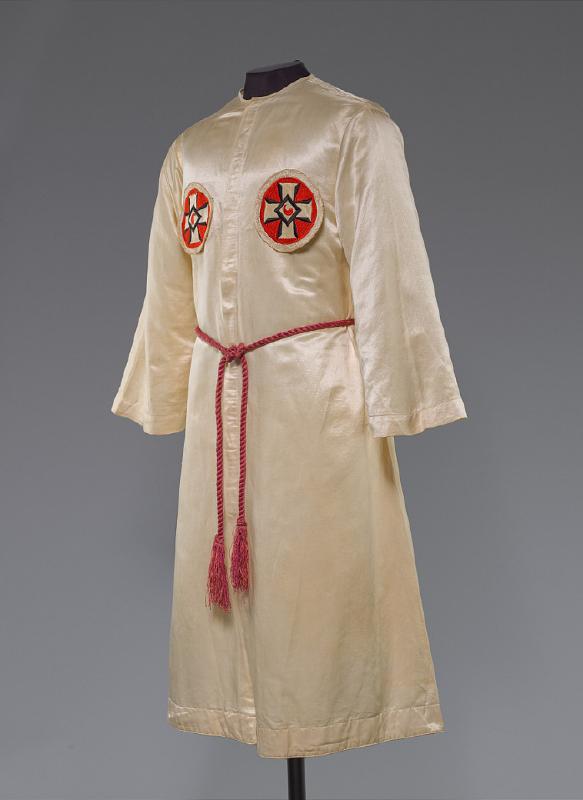
    <published>2024-12-13T06:16:55+00:00</published>
    <updated>2026-03-10T20:24:09+00:00</updated>
    <link rel="alternate" type="text/html" href="https://mail.spokanehistorical.org/items/show/964"/>
    <id>https://mail.spokanehistorical.org/items/show/964</id>
    <author>
      <name>G. K. Freed</name>
    </author>
  </entry>
  <entry>
    <title type="html"><![CDATA[The Arrival of the Paper Mill at Woodard]]></title>
    <summary type="html"><![CDATA[<img src="https://mail.spokanehistorical.org/files/fullsize/9f81b1a1a74ac86658c1a261fc9bf3d3.jpg" alt="The Paper Mill in its early days, early 1900s" /><br/><p>Originally called Woodard, or Woodard Station, after the family who owned the land on either side of the tracks, the district that is now Millwood was a little railroad town. The arrival of the Inland Empire Paper Company in 1910, however, changed the fate of the region. In 1909, W.A. Brazeau who was associated with the Nekoosa-Edwards Paper Company in Wisconsin was on one of his regular commutes to the Northwest. He chanced to pick up a Spokesman Review advertising land for a paper mill on the Spokane River. His interest was piqued and he was quickly able to gain the funding of his associates back east. </p><p>Construction of the mill began in 1910, supported by capital from Wisconsin. By 1911,  Woodard had been transformed into a company town, creating a new community. The town's name was one of the first things to change. The Inland Empire Paper Company wanted to call the town Milltown, but a combination of the two names was agreed upon by the Woodard family and the company. Thus Millwood was created.</p><p>Restaurants, barbershops, and hotels were opened to meet the needs of the company's employees, many of whom were relocated from the Midwest. The paper company encouraged its employees to build homes close to the mill. The Inland Empire Paper Company bought many of the lots surrounding the mill in 1923, in response to the national "Better Homes Movement" of 1922. The company even went so far as to offer an architectural-pattern book for the employees to follow. </p><p>Due to its close proximity to Spokane and other Spokane Valley settlements, Millwood never became isolated or exclusive like other company towns. Nevertheless, the mill was the very life of the town. Many social activities were centered around it. The Company built a baseball field, and put together a team every spring. The company also supported the local schools and the Presbyterian Church. A band was even formed in 1923 called the "Paper Makers Band," consisting of mill employees. </p><p>In the 1960s and 70s, the town's life slowed down and many of the commercial buildings were vacant. It wasn't until the 1990s that Millwood started to regain its former glory as people who wanted to preserve the history of the town became active in the community. Today, the mill continues to produce paper. The familiar whistle blasts at seven-o-clock, noon, 1:45, and 3:45 every day, continuing the tradition. Millwood maintains a distinct community and remains the only incorporated town in the Spokane Valley.</p><p><em><strong><a href="https://mail.spokanehistorical.org/items/show/545">For more (including 5 images) view the original article</a></strong></em></p>]]></summary>
    <published>2015-03-18T18:43:25+00:00</published>
    <updated>2026-02-12T21:42:36+00:00</updated>
    <link rel="alternate" type="text/html" href="https://mail.spokanehistorical.org/items/show/545"/>
    <id>https://mail.spokanehistorical.org/items/show/545</id>
    <author>
      <name>Hannah Bancroft</name>
    </author>
  </entry>
  <entry>
    <title type="html"><![CDATA[The Ghost Town of Burke]]></title>
    <summary type="html"><![CDATA[<img src="https://mail.spokanehistorical.org/files/fullsize/d543b18a98a347490aa62b44dc224b1e.jpg" alt="Burke postcard" /><br/><p>Nestled in a cramped canyon seven miles from historic Wallace, are the decaying remnants of the once-booming mining town that was built to house the miners of the Hecla, Hercules, Tiger-Poorman, and Bunker Hill mines. Burke was "all length and no width," and its railroad tracks also served as Main Street. </p><p>Short on space but thriving as a community, proprietors had to build the Tiger Hotel over railroad tracks, a road, and a stream. The trains of the Northern Pacific Railroad actually ran right through the lobby. The hotel wasn't the only place where Burke residents had to be creative. Cars had to stop and wait for trains to pass through, and it is said that store owners even had to roll up storefront awnings whenever the iron giants rolled through Burke.</p><p>The tiny town faced other challenges.  Starting in 1892, wage cuts provoked a strike against owners like Amasa Campbell of Spokane fame, and Burke was caught within the rising lawlessness more than once. The most famous of these occurrences was the hijacking of a Northern Pacific Railroad train in 1899. The takeover began in Burke, and after a few more stops in Wallace and Gem, the train was packed with more than 1,000 irate miners armed with dynamite and pickaxes. The wild ride culminated in the blowing up of the Bunker Hill Mine concentrator with 3,000 pounds of dynamite.  One of these men fed up with the robber-baron mine owners was the infamous Harry Orchard, who would later assassinate Idaho governor Frank Steunenberg with an improvised explosive device. </p><p>Today, Burke is visited by few and home to even fewer. Mining declined over the next century and by 1981, the mines in Burke were closed. Suggestive remnants remain, though.  Although the unique Tiger Hotel was torn down in 1944, visitors can still tour some of the looming mining structures of the Hecla Mining Company still standing today. Also, look at the steep hillsides and notice how the earth is scarred by terraces. This was how the town's previous residents created livable space. Now just a ghost of its former glory, Burke beckons you to drive through and be in awe of the tomb-like buildings.</p><p><em><strong><a href="https://mail.spokanehistorical.org/items/show/517">For more (including 3 images) view the original article</a></strong></em></p>]]></summary>
    <published>2015-03-03T18:52:23+00:00</published>
    <updated>2026-02-12T21:42:36+00:00</updated>
    <link rel="alternate" type="text/html" href="https://mail.spokanehistorical.org/items/show/517"/>
    <id>https://mail.spokanehistorical.org/items/show/517</id>
    <author>
      <name>Hannah Peterson</name>
    </author>
  </entry>
  <entry>
    <title type="html"><![CDATA[Whistalks Way: Fort George Wright Drive Renamed Whistalks Way ]]></title>
    <summary type="html"><![CDATA[<p><strong><em>After Colonel Edward Steptoe's defeat by local Native tribes, Colonel George Wright was sent to avenge the U.S. military. Wright's murderous rampage resulted in a street sign memorial in his name. Prof. Margo Hill contributed to a protest that resulted in renaming the street in 2020 as Whistalks Way. </em></strong></p><img src="https://mail.spokanehistorical.org/files/fullsize/7acd11d918e6355397855bd780af255b.jpg" alt="Whistalks Way signage changed in 2020 following Spokane City Council decree" /><br/><p>In 1858, tensions between the white settlers and the native population grew in the Palouse. In May of 1858, Col. Edward Steptoe led an expedition meant to end at Fort Colvile. His plan was to suppress Indian resistance. Steptoe and his men were ill equipped for battle, though, being small in number and carrying outdated weapons. He and his soldiers encountered an overwhelming force of warriors from local tribes, which ended in his retreat to Fort Walla Walla, Washington. After his defeat at the Tohotonimmee battlefield, at the present-day Steptoe Butte, Colonel Wright was sent to restore order. </p><p>Colonel Wright's invasion of the Spokane Valley was so  forceful and extreme that the Native resistance was immediately overwhelmed. On September 8, 1858, Wright slaughtered hundreds of Indian horses and demolished the tribe's food supply and economy. During his crusade, Wright also destroyed crops and food stores. He pronounced judgment </p><p>upon and hung many Indians whom he considered to be insurgents. Wright's battles against the Spokane, Coeur d’Alene, Palouse, and Yakama tribes culminated in a final victory at the new Fort Spokane, which was formally renamed Fort George Wright in 1899. </p><p>In Spokane, Washington, a street running alongside present-day Spokane Falls Community College was named Fort George Wright Drive in commemoration of Wright's military accomplishments. Margo Hill, a lawyer, Eastern Washington University Urban Planning professor, and member of the Spokane Tribe of Indians, became a spokesperson and contributed efforts to change the street name. In 2020, Hill united with African Americans, Asians, Muslims, Natives, and whites to conduct a protest march. On December 14th, 2020, the Spokane City Council unanimously approved the change and the street was officially renamed.</p><p>The name accepted by all of those concerned was Whistalks Way. The name honored the daughter of Chief Polatkin and the wife of Qualchan. Whis-talks was a Native American warrior that fought in combat in 1858. She "rode alongside her husband into battle and carried the medicine eagle feather staff into the U.S. military post to parley," Margo Hill wrote later. After Qualchan was hanged, Whis-talks and Lokout, Qualchan's half-brother, escaped Wright's grasp. They lived out their lives as domestic partners near the Spokane and Columbia rivers . Not only was the name change meant to honor the Native American warrior, but to honor Native American women in general.</p><p>After the successful change of the street name, Margo Hill wrote the article that exhibits her belief that the actions of George Wright in 1858, were hate crimes against Native American people. She explains, in her article </p><p>that the city resolution pronounced Wright's name a "continual stain" because of his acts of terrorism and genocide. In her opinion, Wright went beyond his duties as a general by murdering Indigenous peoples and destroying supplies that led to the disruption of their economy. Hill believes Wright intentionally engaged in terrorist acts against the Spokane, Coeur d’Alene, Palouse, and Yakama tribes. </p><p>Because of the successful efforts of the Spokane Tribe of Indians and other protestors, the city of Spokane now “honors the history of the original inhabitants, the Sp̓oq̓ínš, and their relationship to their sacred place. With ‘Whistalks Way,’ we honor women warriors and tell their story; we sing the songs of our ancestors and work to empower the next generation of Indigenous people,” Hill wrote. If you are driving near Spokane Falls Community College and see the street sign, remember the history and the struggles for change that resulted in Whistalks Way.</p><p><em><strong><a href="https://mail.spokanehistorical.org/items/show/935">For more (including 4 images) view the original article</a></strong></em></p>]]></summary>
    <published>2022-12-14T18:54:46+00:00</published>
    <updated>2026-02-12T21:42:40+00:00</updated>
    <link rel="alternate" type="text/html" href="https://mail.spokanehistorical.org/items/show/935"/>
    <id>https://mail.spokanehistorical.org/items/show/935</id>
    <author>
      <name>HarleyQuinn Wahl</name>
    </author>
  </entry>
  <entry>
    <title type="html"><![CDATA[The Davenport Hotel: MAC 100 Stories: A Centennial Exhibition ]]></title>
    <summary type="html"><![CDATA[<img src="https://mail.spokanehistorical.org/files/fullsize/995bb62ebdde46839bfaa79372c04ff7.jpg" alt="Davenport&#039;s Restaurant, 1908" /><br/><p>The Davenport Hotel was the brainchild of restauranteur/entrepreneur Louis Davenport.  Davenport was not a Spokane native, but he found himself in Spokane shortly after the great fire of 1889.  Davenport lent his hand to the cleanup and reconstruction efforts, and was able to set aside some money in the process.  Soon Davenport opened a small restaurant in a tent, which he would later replace with a more permanent waffle factory at the eastern end of the block where the Davenport Hotel stands today.</p><p>Davenport wasn't satisfied to stop with the restaurant, and began to make plans for the hotel.  Along with architect Kirtland Cutter and Gustav Albin Pehrson, Davenport set about designing a hotel for the Inland Northwest that would impress travelers from all over the world.  When completed in 1914, the Davenport Hotel was truly impressive with its opulent Spanish, Italian, French, and Elizabethan interiors.  It featured many modern touches, such as air conditioning, a central vacuum, and an electric sign which shone down brightly upon passers by.  </p><p>Time took its toll, and after the death of Louis Davenport in 1945, the condition of the hotel continued to decline until it closed in 1985.  The hotel was finally restored in 2000 after being purchased by the Worthy family.  It now stands open for business, with much of its original architecture still intact.</p><p>MAC 100 Stories: A Centennial Exhibition is told on the Northwest Museum of Arts & Culture campus in Spokane's Browne's Addition, with additional highlights at 15 sites in Spokane and eastern Washington. The exhibit experience (February 22, 2014 - January 2016) weaves stories and programs about Inland Northwest people, places and events by capitalizing on the MAC's extraordinary collection. www.northwestmuseum.org </p><p>Spokane Historical presents 15 regional and city tours in partnership with the Northwest Museum of Arts & Culture and its 100 Stories exhibition.</p><p><em><strong><a href="https://mail.spokanehistorical.org/items/show/69">For more (including 6 images&#32;&amp;&#32;1 video) view the original article</a></strong></em></p>]]></summary>
    <published>2011-06-06T07:21:34+00:00</published>
    <updated>2026-02-12T21:42:31+00:00</updated>
    <link rel="alternate" type="text/html" href="https://mail.spokanehistorical.org/items/show/69"/>
    <id>https://mail.spokanehistorical.org/items/show/69</id>
    <author>
      <name>Ian Reeves</name>
    </author>
  </entry>
  <entry>
    <title type="html"><![CDATA[Moore Mansion]]></title>
    <summary type="html"><![CDATA[<img src="https://mail.spokanehistorical.org/files/fullsize/aa794328a16d3ea37bd45762abef7254.jpg" alt="Moore Mansion" /><br/><p>In 1889, Frank Rockwood Moore and his wife Sarah Franicis Sherlock Moore began work on their residence in Spokane.  Moore had made quite a name for himself in the local community.  He was the first president of Washington Water Power, which would later become Avista Utilities, as well as an investor in mining and real estate.  The site on Spokane's lower South Hill was one chosen for its commanding view of the young city and its popularity among the wealthy and well-to-do.</p><p>Moore commissioned architect Kirtland Cutter to build the mansion.  Cutter's designs had gained him notoriety, and he brought his considerable talent to the task of designing the Moores' mansion.  In the spirit of European countryside estates, Cutter designed a home that would look as though it had already been on the site for centuries.  The result was a unique structure, one that was at once impressive, and yet was also the subject of a number of jokes told by the locals.</p><p>After Moore died in 1895, the house was purchased by Senator George Turner.  Turner made the house and the gardens which attended it the centerpiece of many Spokane social functions.  After Turner died, the house sat empty for a number of years until the bank which owned it had it torn down in 1940.</p><p><em><strong><a href="https://mail.spokanehistorical.org/items/show/83">For more (including 5 images&#32;&amp;&#32;1 video) view the original article</a></strong></em></p>]]></summary>
    <published>2011-06-08T00:39:49+00:00</published>
    <updated>2026-02-12T21:42:31+00:00</updated>
    <link rel="alternate" type="text/html" href="https://mail.spokanehistorical.org/items/show/83"/>
    <id>https://mail.spokanehistorical.org/items/show/83</id>
    <author>
      <name>Ian Reeves</name>
    </author>
  </entry>
  <entry>
    <title type="html"><![CDATA[“Uncle Dan” Drumheller, Spokane’s beloved Murderer?: How a Spokane icon got away with murder--perhaps?]]></title>
    <summary type="html"><![CDATA[<p><strong><em>Charged with the Murder of an Indian man in 1883, Dan Drumheller was never found guilty—but there's more to the story than meets the eye. </em></strong></p><img src="https://mail.spokanehistorical.org/files/fullsize/21e35eafaf3854f73e6653e9cd312b81.jpg" alt="&quot;Riverside Avenue in Stagecoach Days&quot;" /><br/><p>Daniel Drumheller, A pioneer of the Northwest and early Mayor of Spokane was perhaps one of Washington’s most iconic pioneers. Traveling across the plains from St. Joseph, Missouri, all the way to Sacramento, California, at age 14 in 1854, “Uncle Dan” Drumheller had already seen more of the new world than most kids would ever imagine seeing.</p><p>Drumheller was an adventurous young man, and luck was often on his side. After arriving in Sacramento, young Dan quickly became a full-time cowboy in northern California and eventually eastern Washington. He fought in the Pyramid Lake Indian War and allegedly served in the Pony Express covering a section known as the Carson Sink in Nevada, a notoriously dangerous stretch of “road.”</p><p>In 1860, at the ripe old age of 20, Dan decided it was time to move his roots to Walla Walla country. There he began to run sheep and cattle, and provided meat to a rapidly growing white population. In 1880 he made his way north to the pioneer village of Spokane Falls, becoming one of its earliest and most prosperous citizens.</p><p>Sometime shortly after the construction of the first bridge across the Spokane river in 1883, an apparently inebriated Indian man thought it would be funny to spook Drumheller and his sheep while Drumheller was crossing the bridge.  An enraged Drumheller struck the Native man with a stick, and the Indian left and returned with a gun. At that point, a police officer intervened and arrested the Indian, whose name is not given in any of the surviving accounts.</p><p>The Indian was placed in the town's makeshift jail, a rude timber structure with wide gaps between the logs. Like most prisoners in the unsecured and unguarded jail, he was chained to a large rock to prevent escape and left for the night. </p><p>The next morning it was discovered that the man had been shot. "Atrocious! A Dastardly Deed!" cried The Spokane Falls Review. It was reported that the killer had place a stub of candle on one of the logs and shot the Indian with a shotgun. </p><p>A week later, the Review reported that the wounded man was in pain and dying. “There is no one in this community who excuses the crime,” the paper said. An update at the end of the article read, “P.S. We understand that the Indian died Friday evening.” </p><p>Suspicion immediately fell on Drumheller as the possible murderer.  Even before the victim died, it was reported that "Friday evening Mr. Dan Drumheller was arrested on a warrant sworn out by an Indian named Lewis, and released on his own recognizance. Of course, no one believes that Drumheller was implicated in the shooting, but as he struck the man on the bridge the Indians have an idea that he must have desired the death of the prisoner."</p><p>Drumheller was quickly acquitted of the murder; a report on the proceeding claimed that: “A number of witnesses were examined but nothing new was elicited.”</p><p>Did Dan Drumheller murder the Indian man? We cannot say for sure. This brief run-in with the law in no way slowed the rise of Daniel Drumheller.  He build a slaughterhouse on the northern edge of the growing city at a site that today is known as Drumheller Springs.  One of the largest cattle ranchers in Eastern Washington, he had a herd of as many as 14,000 cattle. He organized the Traders National Bank in 1885, which eventually became a part of Seattle-First National Bank. Drumheller was elected  Mayor of Spokane in 1891. </p><p>In the early 20th century, an elderly Dan Drumheller was a beloved reminder of Spokane's frontier past. He was often a participant in parades and ceremonies, and in the 1910s he told his life story to a newspaperman, whose columns about Drumheller were combined into a popular book, Uncle Dan Drumheller Tells Thrills Of Western Trails In 1854.  </p><p>When he died in 1925, Daniel Drumheller left an estate of $118,000 to his seven children. In the newspapers, he was lauded as "one of the real pioneers of the Inland Empire." But no one ever mentioned that time in 1883, when he was charged with murdering an Indian man.</p><p><em><strong><a href="https://mail.spokanehistorical.org/items/show/878">For more (including 2 images) view the original article</a></strong></em></p>]]></summary>
    <published>2020-12-11T00:02:58+00:00</published>
    <updated>2026-02-12T21:42:40+00:00</updated>
    <link rel="alternate" type="text/html" href="https://mail.spokanehistorical.org/items/show/878"/>
    <id>https://mail.spokanehistorical.org/items/show/878</id>
    <author>
      <name>Jackson Gospodarek</name>
    </author>
  </entry>
</feed>
